Rudyard Kipling"
“When you're left wounded on Afganistan's plains and
the women come out to cut up what remains, Just roll to your rifle
and blow out your brains,
And go to your God like a soldier”
General Douglas MacArthur"
“We are not retreating. We are advancing in another direction.”
“It is fatal to enter any war without the will to win it.” “Old soldiers never die; they just fade away.
“The soldier, above all other people, prays for peace, for he must suffer and be the deepest wounds and scars of war.”
“May God have mercy upon my enemies, because I won't .” “The object of war is not to die for your country but to make the other bastard die for his.
“Nobody ever defended, there is only attack and attack and attack some more.
“It is foolish and wrong to mourn the men who died. Rather we should thank God that such men lived.
The Soldier stood and faced God
Which must always come to pass
He hoped his shoes were shining
Just as bright as his brass
"Step forward you Soldier,
How shall I deal with you?
Have you always turned the other cheek?
To My Church have you been true?"
"No, Lord, I guess I ain't
Because those of us who carry guns
Can't always be a saint."
I've had to work on Sundays
And at times my talk was tough,
And sometimes I've been violent,
Because the world is awfully rough.
But, I never took a penny
That wasn't mine to keep.
Though I worked a lot of overtime
When the bills got just too steep,
The Soldier squared his shoulders and said
And I never passed a cry for help
Though at times I shook with fear,
And sometimes, God forgive me,
I've wept unmanly tears.
I know I don't deserve a place
Among the people here.
They never wanted me around
Except to calm their fears.
If you've a place for me here,
Lord, It needn't be so grand,
I never expected or had too much,
But if you don't, I'll understand."
There was silence all around the throne
Where the saints had often trod
As the Soldier waited quietly,
For the judgment of his God.
"Step forward now, you Soldier,
You've borne your burden well.
Walk peacefully on Heaven's streets,
You've done your time in Hell."
COMMENT - History, homeland, and who belongs in Malaysia By Ranjit Singh Malhi
Sunday, July 26, 2026
Malaysiakini : Sanusi’s (above) suggestion that Chinese Malaysians have China as their homeland, and Indian Malaysians have India, has provoked widespread criticism.
Yet
the controversy extends beyond his specific claims. It reflects deeper
uncertainties about how Malaysians understand their shared history and
what it means to belong to this nation.
Understanding the logical flaw
The
controversy surrounding Sanusi’s remarks stems from a troubling
disconnect: they combine a legitimate historical proposition with a
conclusion that contradicts it.
Let me explain what I mean.
An
honest understanding of Malaysian history begins with a fundamental
fact: the Orang Asli - the peninsula’s first inhabitants - predate all
others.
This is not contested. Prominent scholars - including
Rupert Emerson, Leonard Andaya, and OW Wolters - affirm that the ethnic
Malays’ ancestral homeland was Sumatra, not the Malay Peninsula.
They migrated to the peninsula over centuries, eventually establishing themselves as the dominant political and cultural force.
Undeniably,
the Malays emerged as the “definitive people” of the Malay Peninsula,
shaping its enduring political, cultural, and civilisational identity.
The
Malay Peninsula has long been the historical homeland of the Malays.
Their institutions, language, customs, and rulers shaped the peninsula’s
identity over many centuries. This historical reality deserves
recognition and respect - and indeed, the Malaysian Constitution
explicitly honours it.
Two concepts of homeland
Much of this controversy stems from conflating two distinct concepts that must be carefully distinguished.
The
first is what may be called the historical homeland. The Malay
Peninsula is, indisputably, the historical homeland of the Malay people.
Their civilisation profoundly shaped its institutions and identity.
This is a historical fact that cannot and should not be denied or
diminished.
The second is what may be described as the
constitutional homeland. Modern Malaysia is the homeland of all its
citizens because citizenship - not ancestry - defines membership of the
nation.
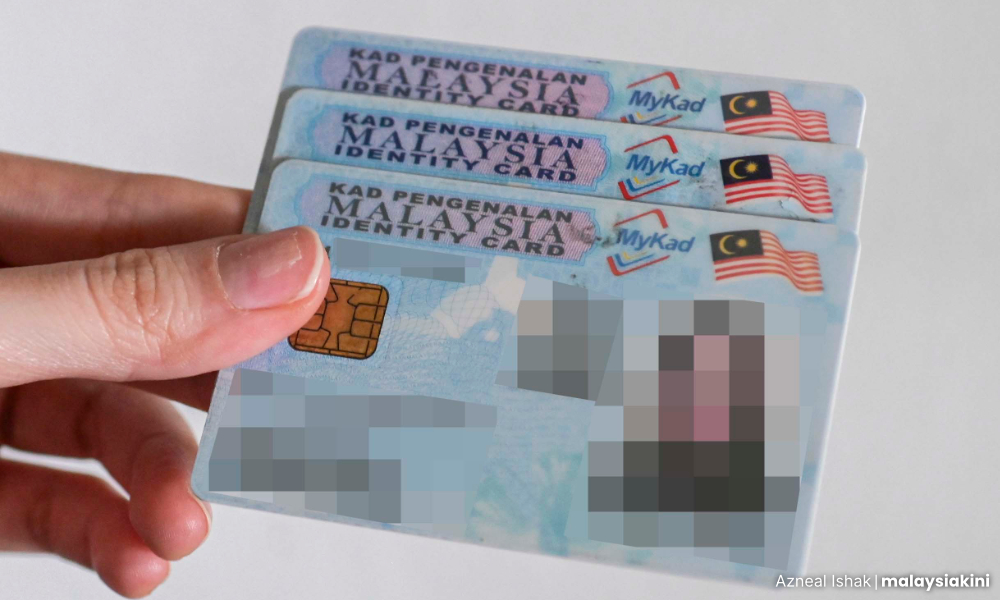
When someone acquires Malaysian citizenship, whether by
birth, descent, or naturalisation, Malaysia becomes their homeland in
the most meaningful sense: it is the country to which they owe
allegiance, in which they exercise rights and responsibilities, and
within which they build their lives and futures.
These two
concepts are not contradictory. Recognising the historical position of
the Malays does not diminish the rightful place of other Malaysian
citizens. Acknowledging the equal belonging of all citizens does not
weaken the historical or constitutional position of the Malays.
The constitutional settlement at Merdeka
Malaysia’s
founders understood this delicate balance. When independence was
negotiated, they did not attempt to erase the country’s historical
foundations. Neither did they seek to establish an ethnically exclusive
state.
Instead, they crafted a constitutional settlement that balanced historical continuity with inclusive citizenship.
The
Federal Constitution preserved the institution of the Malay rulers,
recognised Malay as the national language, established Islam as the
religion of the federation, and accorded the Malays a special position,
later extended to include the natives of Sabah and Sarawak following the
formation of Malaysia in 1963.
These provisions reflected the
historical reality of the peninsula and honoured the political role of
Malay rulers in the independence negotiations.
At the same time,
the Constitution established a common citizenship for those who
qualified under its provisions. It reflected the understanding that the
new nation would be built upon both its historical foundations and the
loyalty of citizens from different ethnic backgrounds.
This was not an accident or an oversight. It was a conscious design reflecting the vision of Merdeka.
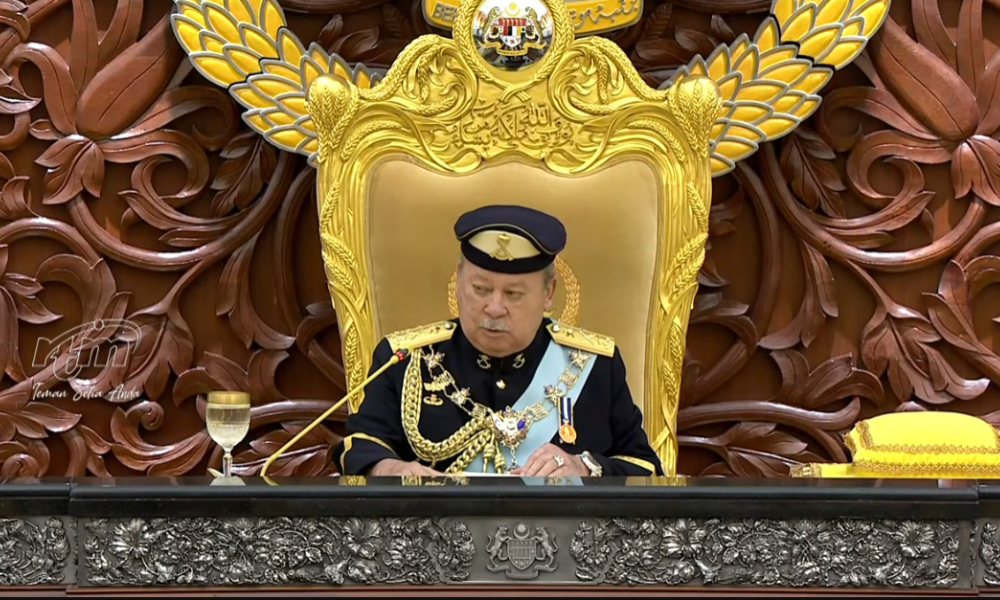
Article
153 illustrates this careful balance. It entrusts the Yang di-Pertuan
Agong with safeguarding the special position of the Malays and the
natives of Sabah and Sarawak while also protecting the legitimate
interests of other communities.
These
principles are complementary, not contradictory. The constitutional
settlement therefore recognised historical distinctions without creating
citizens who belong and citizens who merely reside.
Where the argument breaks down
Against
this historical and constitutional background, Sanusi’s statement
deserves careful examination. His opening premise contains an important
historical truth: the Malay Peninsula has long been the “homeland” of
the Malays, whose civilisation profoundly shaped its institutions and
identity.
Yet the conclusion he draws does not follow.
By
asserting that Chinese Malaysians have China and Indian Malaysians have
India, he conflates historical origins with current national identity -
implying that ethnicity, not citizenship, determines belonging. This is
where the logic fails.
Yes, ethnic Malays have ancestral roots in
Sumatra. Yes, some Chinese and Indian Malaysians trace their ancestry to
those nations. But this does not mean Indian Malaysians “belong” to
India or Chinese Malaysians “belong” to China.
Citizenship
supersedes ancestry. The Constitution is clear on this point. Malaysia
is the homeland of its Chinese and Indian citizens; their loyalty,
aspirations, and futures are rooted in this country.
China and
India may represent the lands of their ancestors, but they are not the
homeland of Malaysian citizens. Ancestral origin alone cannot determine
present-day national belonging.
Historical sacrifice and national belonging
We
should not forget that numerous Indians and Chinese, alongside their
Malay brothers-in-arms, sacrificed their lives in the struggle against
the communists during the 1948-1960 Emergency and the 1968-1989 Second
Emergency.
These sacrifices were not the actions of people with
divided loyalties. They were the actions of patriots who understood
Malaysia as their home and were willing to die defending it.
Sanusi
should also take heed of a remarkable declaration made in 2013 by Ahmad
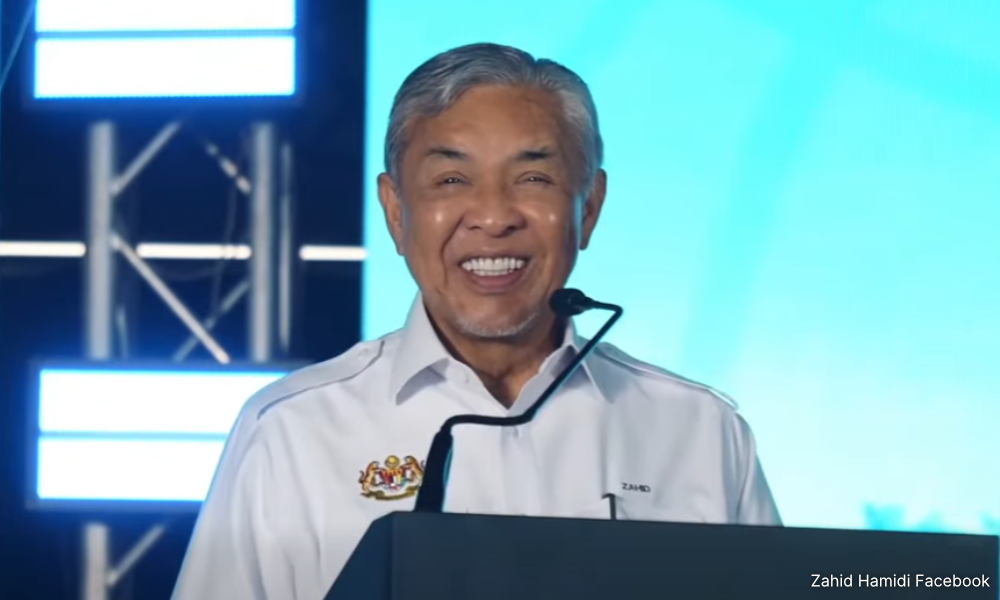
Zahid Hamidi, now a deputy prime minister and chairperson of BN.
Zahid said that more than half of Malaysia’s ministers were of Indonesian descent.
Deputy Prime Minister Ahmad Zahid Hamidi
This
is a profound statement. It demonstrates that the highest echelons of
Malaysian government have long been occupied by citizens whose ancestors
came from beyond the peninsula. Ancestry, clearly, has never been a
reliable measure of national belonging - nor should it be.
If the
descendants of Indonesian migrants can rise to become ministers and
deputy prime ministers, serving Malaysia with honour and effectiveness,
then the notion that ethnicity determines true homeland is patently
false.
These leaders are not guests or temporary residents. They
are Malaysians who have earned their place through service, capability,
and commitment to the nation.
A personal testament of belonging
I
am personally offended because these remarks erase the lives and
sacrifices of Malaysians like my late father, Sadhu Singh Malhi.
He
migrated to Malaya in the 1940s and joined the police force on July 1,
1952. He served with distinction until his retirement on June 1, 1983 -
more than three decades devoted to protecting the people and preserving
the security of the country he had made his home.
His was not the life of a transient outsider, but that of a man who gave the better part of his life to this nation.
His
service earned national recognition: the Yang di-Pertuan Agong’s Pingat
Pangkuan Negara (Dec 18, 1982), 16 commendations from the Perak police
chief, and 48 monetary awards from the government for diligence,
courage, and incorruptibility.
The
government granted him land in Tapah and Bidor, Perak - tangible
recognition that he had earned an honoured and permanent place in this
country.
My question to Hadi and Sanusi is therefore simple: by
what moral or national standard can a man who risked his life for
Malaya, served its people honourably, was decorated by the King, and was
granted land by the government still be dismissed as a “pendatang”?
My
father may have been born elsewhere, but through service, sacrifice,
and loyalty, Malaya - and later Malaysia - became unquestionably his
homeland. His seven children built their lives here and know no other
country as home. They are Malaysians, full stop.
History should unite, not divide
History
is far too important to be reduced to political rhetoric. When
presented honestly, it enables citizens to appreciate the complexity of
their shared past. When selectively interpreted, it becomes an
instrument of misunderstanding, resentment, and division.
Political
leaders therefore carry a special responsibility. Their words should
strengthen national cohesion rather than foster suspicion between
communities or question the belonging of citizens whose roots, service,
and future are firmly embedded in Malaysia.
A
confident nation can affirm the historical role of the Malays while
recognising, without qualification, the equal citizenship and belonging
of every Malaysian.
Sanusi’s remarks are dangerously flawed: they
perpetuate the toxic idea that some Malaysians belong more fully than
others. That idea must be rejected categorically.
The term “pendatang”
may accurately describe an immigrant at the point of arrival, but it
must never become a hereditary label imposed upon citizens generation
after generation.
Citizenship is not provisional, and belonging cannot be determined by ethnicity.
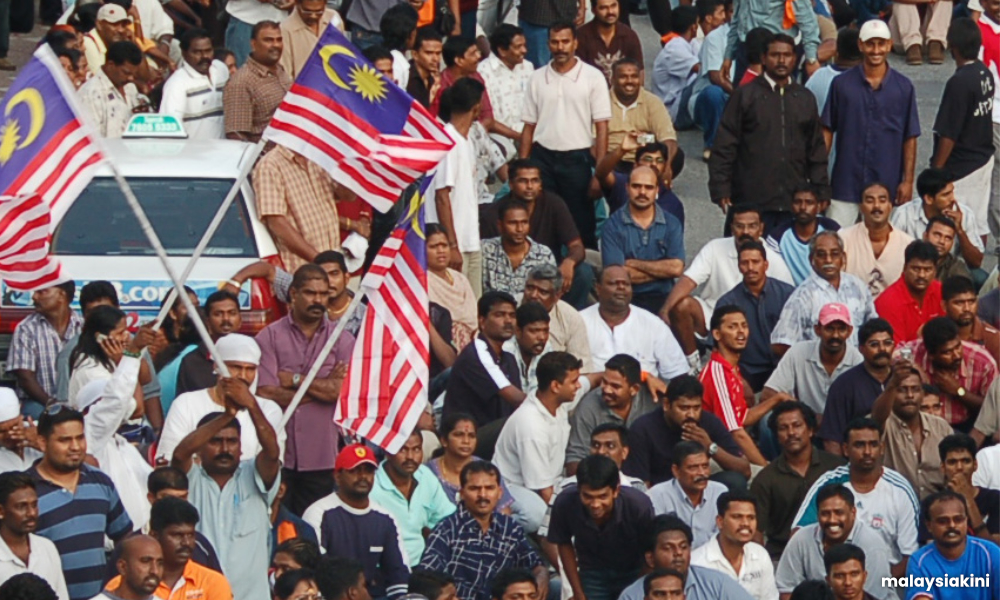
Non-Malay
Malaysians are not guests, temporary residents, or second-class
citizens. They are rightful citizens and co-owners of this nation, bound
to it by birth, loyalty, service, sacrifice, and a shared future.
Their
ancestral connections to China, India, Indonesia, or elsewhere do not
make those countries their homeland any more than the ancestral origins
of other Malaysians diminish their belonging here.
Malaysia is their one and only homeland. It is ours to build together, as equals, as citizens, as Malaysians.