Rudyard Kipling"
“When you're left wounded on Afganistan's plains and
the women come out to cut up what remains, Just roll to your rifle
and blow out your brains,
And go to your God like a soldier”
General Douglas MacArthur"
“We are not retreating. We are advancing in another direction.”
“It is fatal to enter any war without the will to win it.” “Old soldiers never die; they just fade away.
“The soldier, above all other people, prays for peace, for he must suffer and be the deepest wounds and scars of war.”
“May God have mercy upon my enemies, because I won't .” “The object of war is not to die for your country but to make the other bastard die for his.
“Nobody ever defended, there is only attack and attack and attack some more.
“It is foolish and wrong to mourn the men who died. Rather we should thank God that such men lived.
The Soldier stood and faced God
Which must always come to pass
He hoped his shoes were shining
Just as bright as his brass
"Step forward you Soldier,
How shall I deal with you?
Have you always turned the other cheek?
To My Church have you been true?"
"No, Lord, I guess I ain't
Because those of us who carry guns
Can't always be a saint."
I've had to work on Sundays
And at times my talk was tough,
And sometimes I've been violent,
Because the world is awfully rough.
But, I never took a penny
That wasn't mine to keep.
Though I worked a lot of overtime
When the bills got just too steep,
The Soldier squared his shoulders and said
And I never passed a cry for help
Though at times I shook with fear,
And sometimes, God forgive me,
I've wept unmanly tears.
I know I don't deserve a place
Among the people here.
They never wanted me around
Except to calm their fears.
If you've a place for me here,
Lord, It needn't be so grand,
I never expected or had too much,
But if you don't, I'll understand."
There was silence all around the throne
Where the saints had often trod
As the Soldier waited quietly,
For the judgment of his God.
"Step forward now, you Soldier,
You've borne your burden well.
Walk peacefully on Heaven's streets,
You've done your time in Hell."
Mentega Terbang's religious exploration scares theocrats By Commander S THAYAPARAN (Retired) Royal Malaysian Navy
Monday, July 07, 2025
Malaysiakini : What is important to understand here is that the state is going to prosecute two filmmakers based on a vague law with no clear definitions and solely on the fact that “feelings were hurt”, a point made by lawyer N Surendran.
“What
is wounding the feelings of one person is not wounding to another
person. It is completely subjective as each person reacts differently.
“Looking
at the Criminal Procedure Code, there is no definition of what wounding
religious feelings consists of,” Surendran said.
Objective to control Muslims
What
this means is that any kind of speech, when it comes to religious
sensitivities, could be deemed as hurtful, but more importantly, the
state can prosecute anyone they choose to with this law.
Religious
sensitivity has been weaponised in this country, and while the
discourse revolves around how it has been weaponised against the
non-Malay community, its real purpose is to turn the Malay/Muslim
community into a monolithic polity, which would be easier to control.
Take Perlis mufti Asri Zainul Abidin, for instance. When he insulted
the Hindu community with his cow poem and faced no sanctions from the
state, from reportage - “His poem had, among others, touched on ‘cow
worshippers’ and the caste system and stated that there were limits to
tolerance and patience.”
Basically, he was claiming that Hindus
needed to be self-reflective when it came to their religion, and he, as a
Muslim, was exercising his right to free speech by writing that poem.
He
claimed this was because there were aspects of culture and religion
that were not exempt from criticism, as tolerance and patience have
their limits.
Of course, he would never impose such thinking on
his religion, but the point remains that religions need to be open to
debate, especially by adherents of the religion.
In this country, the dominant polity gets it worse. Why do you think this is?
Well,
because speech which includes art that deviates, offends, and genuinely
tackles social issues goes against the political and religious
narratives of the state.
“Hurt feelings” and “cause confusion” are the tools that keep the majority polity in check.
It
may seem like the targets are non-Malay/Muslims, but the objective is
to ensure compliance when it comes to the narratives of the religious
state.
Religious exploration taboo, but deception is fine
In this film, a young girl explores other religions in hopes of seeking answers to her questions.
It
really does not matter what her questions are, only that to the
religious far-right, their religion and those who have control over it,
provide all the answers one will ever need.
Religious exploration is normal, especially during teenage years.
Now, someone like Firdaus Wong, however, would have non-Muslim teenagers lie to their parents.
Firdaus Wong
This preacher uploaded a video
on how to enable minors to lie to their families, subvert religious
rituals (prayers in toilets), empower teachers to transmit religious
dogma to minors under their tutelage and make it very clear that
religious morality trumps legal requirements.
Hence, for him, religious exploration and deception go hand in hand.
In
a democracy, religious exploration is normal, but this does not apply
to Muslims in this country because any kind of religious exploration is
met with sanctions by the religious state.
This is why moderate
Muslims always preface their objections to anything that comes to
religion by claiming that they are not religious scholars. In no other
religion do believers do this.
The exploration of the Islamic
faith by the filmmakers of “Mentega Terbang” is verboten because such
works of art would confuse the average Malay.
In other words, the
only interpretation of religion should come from the state and all other
intellectual thought is considered anathema.
Madani laying groundwork for theocracy
The banning of this film is in line with the Madani goal of controlling the religious narrative.
Do not take my word for it, take the word of Madani’s Minister in the Prime Minister's Department (Religious Affairs) Na'im Mokhtar,
who said: “I would also like to advise creatives to be more careful in
producing and distributing content to the public so that the
government’s goals for Malaysia Madani can be achieved.”
Minister in the Prime Minister's Department (Religious Affairs) Na’im Mokhtar
The problem with Anwar Ibrahim’s Islamisation is that it gives cover to Perikatan Nasional when it decides to do the same thing.
If
PN eventually comes to power, what it will rely on is the blueprint set
out by Anwar and the support of the non-Malays who did not raise any
objections to Anwar’s Islamic agenda.
This is already peddled to
the base if people are actually paying attention and not merely getting
their news from the echo chambers of the Pakatan Harapan support system.
We
are talking about a film here, but keep in mind that Madani’s religious
czar believes that the Malay polity could be so easily “confused” that
he wanted “guidelines for Muslims attending non-Muslim” events.
If
you care to remember, these were things that could offend the
sensitivities of Muslims - speeches or songs in the form of propaganda
and the distribution of religious pamphlets, performances or speeches
that insult or mock Islamic religious beliefs, carrying out the event
during Muslim prayer times, event location close to a surau, mosque,
Muslim cemetery, or wakaf (endowment) land, and the premises containing
non-Islamic religious symbols.
All laws are created to discourage certain types of behaviour and thinking.
What were these rules or guidelines designed to discourage?
You
only have to look at Muslim culture in Malaysia before the religious
bureaucracy, enabled by political cretins, took over to see how diverse
it was.
And you only have to look at the scholars, artists, and
thinkers that the religious state goes after to understand why they want
to stamp out any kind of plurality in the polity.
Imagine the diverse voices being snuffed out all over the world by theocracies or would-be theocracies.
Ultimately, these laws are designed to discourage questioning. This is the first principle of the theocratic state.
Madani's nightmare about to begin By Mariam Mokhtar
Saturday, July 05, 2025
Malaysiakini : What this saga has done is to paint a more negative picture of him
and his administration. Sadly, the reputation of the judiciary will also
be dragged down.
Anwar’s inaction has also highlighted a lack of
leadership, signalled to the rakyat an institutional breakdown and
reflected poor management practices.
This will only lead to a
further loss of trust and erosion of confidence in the coalition
government and a decline in our faith in the judiciary.
Only an irresponsible leader will think that the power vacuum in the judiciary is not dangerous.
Fearless, balanced, fair
More’s
the pity, especially as Tengku Maimun has, through her own stellar
leadership in the past six years, managed to restore our trust and
confidence in the judiciary. She was fearless, balanced and fair in her
judgments.
Tengku Maimun, who was appointed Malaysia’s first
female CJ in 2018, has been described by Universiti Malaya’s Prof
Emeritus Shad Saleem Faruqi as “transformative” with her independence
and landmark judgments.
PM Anwar Ibrahim arriving in Rome, Italy for an official visit
Anwar may have thought that he had avoided the rakyat’s opprobrium because he had to attend to matters of state, on his official visit to Italy, France, and Brazil.
But
as his visit coincided with Tengku Maimun’s official day of retirement,
his absence was all the more jarring and only fuelled further
speculation.
We may recall that the convicted felon, Najib Abdul Razak, would also plan overseas trips to avoid various crises at home.
Nevertheless,
Anwar’s failure to extend Tengku Maimun’s contract by six months, which
incidentally is stipulated under Article 125(1) of the Constitution,
was highly irresponsible.
On the defensive
Stung by the criticisms, Anwar went into defensive mode and accused his critics of politicising the appointment of judges. He even had the brass neck to claim that the prime minister plays no part in judicial appointments.
He
said, “... regarding civil servants, or judges, when any official
reaches their retirement age, there is a procedure in place. One does
not get their tenure extended automatically upon retirement.”
MACC chief commission Azam Baki
He failed to explain how the MACC chief’s tenure was extended thrice.
It is disingenuous of Anwar to claim that the PM has nothing to do with judicial appointments. Of the nine members of the Judicial Appointments Commission (JAC), five members are the PM’s appointees.
Of
the five, one is a Federal Court judge, whilst the remaining four
non-judges are selected after prior consultation with the Malaysian Bar,
the Sabah Law Association, the Advocates Association of Sarawak, the
attorney-general of the Federation, and the attorney-general of a state
legal service.
None are from the executive or public service.
It
is clear that the PM’s five appointees have the majority and decisive
vote, and can exert considerable influence in recommending who becomes a
judge.
Just imagine these appointments as a version of Najib’s
“You help me, I help you” axiom. It is something we know that happens in
everyday life. A boss and an employee. A benefactor and beneficiary.
The politician and his constituency. A lecturer and his pupil.
Think power, position, perks and promotion. Why bite the hand that feeds you?
Why not extend Tengku Maimun’s tenure?
Acting Chief Justice Hasnah Hashim
Two days after the former CJ’s retirement, the chief registrar of the Federal Court announced that the Chief Judge of Malaya, Hasnah Hashim, would temporarily serve as the chief justice until the vacancy was filled.
Why
overload her work with both the powers of the CJ and her own? This
preposterous decision appears as if it were a knee-jerk reaction to our
criticisms.
It would have made perfect sense to allow Tengku
Maimun to continue for another six months without disrupting both
women’s roles and the smooth functioning of the courts.
In the judicial/constitutional crisis of 1988, the judiciary was emasculated by the erstwhile prime minister Dr Mahathir Mohamad.
After
an internal Umno dispute about election rigging in 1987, High Court
judge Harun Hashim declared Umno “an unlawful society”.
A livid
Mahathir sought revenge, with the forced suspension and removal of the
Lord President of the Supreme Court, Salleh Abas, and two other senior
judges.
In the second scandal, 19 years later, the VK Lingam video clips showed how Malaysian justice was sold to the highest bidder.
The
nation was in turmoil, and a royal commission of Inquiry was set up. In
2009, the Malaysian Bar proposed the formation of the JAC to vet
judicial candidates.
These judicial scandals sent shock waves throughout Malaysia and the world.
Last March, Tengku Maimun spoke at the 24th Commonwealth Law Conference in Malta and urged the removal of the role of the PM in the appointment of judges.
Removing the PM’s role had also been echoed three years earlier by Negeri Sembilan Yang di-Pertuan Besar Tuanku Muhriz Tuanku Munawir.
Malaysians
desperately yearn for judicial independence and constitutional
supremacy, but as recent events have shown, are we at risk of another
judicial crisis?
Why the outrage over PAS' 'Chinese PM' remark? By Commander S THAYAPARAN (Retired) Royal Malaysian Navy
Monday, June 30, 2025
Malaysiakini : I would be outraged if I were told that there was something wrong if a
non-Malay/Muslim were to be the prime minister of this country.
But
the system is not set up this way. Non-Malay/Muslim political
operatives do not participate in the process as equals. In fact, they
make sure that the base and the younger generation of non-Malays/Muslims
know their place in the ketuanan system.
The quote
that opens this piece is from 2017, when PAS mooted the idea of making a
constitutional amendment to make the post of prime minister solely for
Muslims.
Non-Malays/Muslims have internalised the fact that they
could never be prime minister of this country, and even if they dreamt
such dreams, the non-Malay/Muslim political establishment would shut
them down.
Remember how MCA weaponised this issue back in the day? In 2011, Lim Guan Eng had to fend off accusations by the MCA that he wanted to be prime minister.
DAP chairperson Lim Guan Eng
"Chua
(Soi Lek) is unethical, immoral, and irresponsible for referring to a
Facebook page '1M Malaysians Support Lim Guan Eng To Be Prime Minister
Of Malaysia' when making his remarks," Guan Eng told the media in
Butterworth.
"It seems that the MCA is now working with Utusan Malaysia to attack us; they are in the same boat, playing the same dirty tactics."
Equality
Also
keep in mind that the non-Malays/Muslims and the DAP base would never
entertain the idea of a non-Malay/Muslim prime minister because that
would not be “pragmatic”.
This, of course, proves the big lie that
of fighting for equality and the non-Malay/Muslim place under the
Malaysian sun is a desideratum of the DAP.
“Equality” is,
unfortunately, an all-or-nothing proposition, and while there will
always be systemic imbalances that need to be addressed, there should
always be equality before the law and a constitution that recognises
such imperatives.
I realise that many non-Malays/Muslims do not
subscribe to my views on this issue, but ultimately, when we pick
through the wreckage of this country, historians will realise that we
never really had a chance because we never really had a committed civil
rights movement to stem the tide of racial and religious supremacy.
Two
years ago, the grand old man of Malaysian politics and someone who,
even though I have criticised, I still consider one of the few remaining
Malaysian originals, Lim Kit Siang, was investigated by the state for
having the audacity to claim that one day Malaysia may have a non-Muslim
prime minister.
DAP veteran Lim Kit Siang
From reportage:
He spoke of the possibility of a non-Malay prime minister in Malaysia
when commenting on how Barack Obama, who is African-American, could
become the president of the United States after more than 230 years
since the founding of the country.
Kit Siang, however, said that
for a non-Malay to become the prime minister is a "statement of fact",
not a "statement of reality", and he did not expect it to happen within
the next 100 years.
According to Kit Siang, his statement was also
supported by the fact that the Federal Constitution provides that
non-Malays can become prime minister.
PAS and ketuanan establishment
PAS and the ketuanan
establishment obsess over a "Chinese PM” because they are acutely aware
of how the non-Muslim bumiputera of Sabah and Sarawak have just as much
right as anyone (in Malaysia) to aspire to the highest office in the
land.
They realise that there is an awakening in Sabah and
Sarawak, and who knows what kind of political realignment will emerge
from a nationalistic Sabah and Sarawak. And if non-Muslims in Sabah and
Sarawak who are bumiputera can become prime minister, why not
non-Muslims in the peninsula?
Non-Malay/Muslim political
operatives exhibit outrage because it is good politics for their base.
It doesn't mean that they want to change the system, and indeed they
wouldn’t because this would give ammo to the ketuanan establishment.
Of course, PAS wants to distance itself from what Hadi’s son-in-law said, but that is just for politics, too.
Hadi’s
son-in-law sparks outrage after using Johnny Lim’s promotion to
lieutenant general to craft a fictional “future” where a Chinese prime
minister emerges via foreign-born lineage.
Keep
in mind when Hadi’s son-in-law says this: “There was no explicit or
implicit insult or belittling of the appointment. I meant to say that
appointing a non-Muslim bumiputera is a norm, but a non-Malay PM should
not be treated as normal like non-Malay appointments in the armed
forces.”
This is exactly what the mainstream political establishment, Malays and non-Malays, subscribe to.
And,
of course, all of this detracts from the failings of the reform
government, which was supposed to bring reforms but instead relies on
the BN era social contract to control the non-Malays/Muslims and appease
the religious state through tax ringgit.
What did Noam Chomsky
say? “The smart way to keep people passive and obedient is to strictly
limit the spectrum of acceptable opinion but allow very lively debate
within that spectrum - even encourage the more critical and dissident
views.
“That gives people the sense that there’s free thinking
going on, while all the time the presuppositions of the system are being
reinforced by the limits put on the range of the debate.”
Notice
how everyone in Pakatan Harapan is attempting to define this outrage
about a non-Malay/Muslim getting a promotion (the highest ever) in the
armed forces, but nobody in Harapan is asking what is wrong with
Malaysia having a Chinese prime minister?
We're already heading towards clerical rule By Commander S THAYAPARAN (Retired) Royal Malaysian Navy
Monday, June 23, 2025
Malaysiakini : The quote that opens this piece is exactly what is wrong with the way Islam is practised in this country.
Ex-minister Zaid Ibrahim
Here
is another snippet from the interview, the context of which was a
statement Nurul Izzah Anwar had made at the time – “But scholars have no
influence in Malaysia; only religious bureaucrats.
“Nurul Izzah
is brave to express an opinion; but in Malaysia, Muslims have no right
to an opinion on their own religion. They can be punished. Only the
state can issue opinions.”
So, Islamic policy here is defined by the religious bureaucracy and enabled by ethnocentric politicians.
So, the test is whether the state and its religious bureaucracy would allow Muslims to be moderate?
Let
us talk about Iran and its clerical rule. Why do you think that young
people, women and various minorities - yes, there are minorities in Iran
- are rejecting clerical rule, the religion of the state and there is a
growing movement towards authentic pre-Islamic Persian traditions?
Why
do you think the Mahsa Amini protest and its ancillary demands of
social freedoms happened? All this was a rejection of clerical rule that
doesn’t allow the majority of Iranians to be “moderate” in their belief
in God.
One Islamic narrative
People who vote for PAS understand exactly what they are signing up for.
It
doesn’t matter if it is the clerical leadership or any of its other
branches of internal power; what people want from PAS is the kind of
atavistic religion that the state has indoctrinated them to want.
With
each passing day, its party president Abdul Hadi Awang and his bunch of
religious extremists are getting stronger. They are getting stronger
because they believe the state security apparatus and religious
bureaucracy are on their side.
The history and culture of Islam in Malaysia are tributaries of religious expressions, a kind of Islam Nusantara, if you will.
You can witness the polychromatic nature of Islam in Malaysia in bygone books and films.
The
problem with the religious dialectic in this country is that it is
defined between Muslim and non-Muslim, and this is what the people in
power want.
While the state attempts to control the Islamic
narrative, there are a myriad of Muslim voices attempting to be heard
and express themselves while constraining against the confines of the
religious bureaucracy.
This is why books, films and plays by
scholars, poets, academics and average Muslim citizens are banned by the
state. The religious class wants you to believe that there is only one
Islamic narrative. This is why there is this obsession by the state
about ideas that "confuse" Muslims.
Religious bureaucracy
There
is very little daylight between the religious bureaucracy and PAS, and
it really doesn't matter which coalition controls the religious
bureaucracy.
PAS doesn't need to be in power to reap the benefits of Madani’s religious policies.
Take the proposed mufti bill, which in essence is merely a religious power grab by the Madani state.
Lawyer Latheefa Koya, in a piece
every rational Malaysian should read, issued this chilling warning -
“It will give power to the government through the mufti to control or
police every aspect of the life of Muslims in this country.
“No government should have such powers over its people in a democracy, purportedly under the guise of religion.”
Sisters in Islam (SIS), which recently succeeded
in its legal challenge against the Selangor state fatwa committee
labelling it deviant and had parts of the fatwa overturned, said -
“Without oversight and recourse for appeals or legal challenges, the unchecked powers of institutions or figures directly undermine the rule of law and justice.”
All this points to the reality that this country is already heading towards clerical rule.
Meaninglessnon-Malayvotes
PAS
just has to be patient and Madani will deliver a theocracy to PAS, and
best of all, it would have the stamp of approval of non-Muslims, because
their representation in Parliament bends the knee to the religious
class.
When PAS gains federal power, it will lead the effort to
disenfranchise the non-Malay vote even more and perhaps make the
non-Malay vote meaningless.
This is the plan, and PAS has been very open about it.
Just
four years ago, before the general election, then-PAS central committee
member Khairuddin Aman Razali said: “There are long-term (needs) that
require us to win the next general election with a two-thirds majority.
“(Upon achieving this) the electoral boundaries need to be changed to benefit Muslims.
“We also need to increase the number of parliamentary seats in Malay-majority areas.”
By
making the non-Malay vote irrelevant, what they are doing is making
non-Malay political power inconsequential - this is the very definition
of “pak turut” (yes man).
This is why Perikatan Nasional is enjoying the antics of someone like Umno Youth chief Dr Akmal Saleh.
He
is a constant reminder to non-Malays that their political power is
meaningless. Their role within this unity government is to be the “pak turut”.
When
you use religion as a political tool, you then have to demonstrate how
much commitment you have towards the religion. Then the narrative
becomes Manichaean.
You either support the religion wholeheartedly
or you do not. PAS gets to claim that their Islam is more powerful
because they have demonstrated their will to turn the states they rule
into a theocracy or as near to it as possible.
This is why the
prime minister is enabling the religious apparatus and demonstrating his
religious bona fides at every opportunity.
He knows that a good chunk of the majority believe that PAS, as a religious party, can deliver a religious state.
In the name of God
Zaid
claimed that “… there is one aspect of PAS which proved to be the party
members’ greatest asset, which would also benefit the country - their
genuine fear of God.”
Here is the thing. People who believe in the
kind of religion that PAS advocates, that the religious bureaucracy
advocates, do not really fear God.
They fear losing dominance over others in the name of their God.
This is why they do not want moderate believers. They want believers who will abide by what they say in the name of God.
If
Zaid really believes that clerical rule and PAS are the panacea for
what ails this country, all I can say is that this cure is worse than
the disease.
Anwar knows who he wants to be PM for By Commander S THAYAPARAN (Retired) Royal Malaysian Navy
Monday, June 16, 2025
Malaysiakini : What reform-minded individuals want is for the government to
demonstrate that there is the political will to carry out these reforms
and the necessary engagement with stakeholders by the State.
Secondly, by admitting this, what the prime minister demonstrates is that our already gerrymandered votes mean bupkis.
Apparently,
the voice of the rakyat is secondary to the class the prime minister
belongs to and the various power structures that define the political
terrain in Malaysia.
It would be helpful if the prime minister defined exactly what reforms these elites need to be convinced of.
The
prime minister claimed that Umno/BN are the core pillars committed to
these reforms, so I assume that these elites are not opposed to reforms.
So, what about the rest of the coalition?
Nobody takes the prime
minister’s declaration of ignorance seriously. Everyone knows the
problem. The point is, nobody wants to solve it.
Connective tissue
So,
what is the problem in Malaysia? Take your pick - systemic racism,
corruption, the degradation of our public institutions, religious
extremism and the systemic dismantling of our civil liberties.
All these problems seem insurmountable, but they are not.
The
connective tissues between all these issues are the racial and
religious agendas of successive governments that desire a narcotised
majority and a disenchanted, aggrieved minority.
This plays into the Manichean political narrative that communal agendas need to safeguard political interests.
The prime minister blames the so-called “liberal”
media for calling out the slow pace of reforms, but had no problem
running to the liberal media in the decades he was out in the political
cold.
In those days, the prime minister had all the answers. He
was determined not only to point out the mendacity of the system but
also the hypocrisy.
During an interview with CNN
a decade ago, Anwar said this about the deliberate politicisation of
race and religion of that time: “The antidote for this behaviour is to
restore credibility to the institutions of civil society.
“The
media should be free, politicians must be held accountable through free
and fair elections, and the judiciary must be able to operate without
interference from politicians.
“Economics also factors importantly into the equation. Income inequality in Malaysia is among the worst in the world.
“Despite
decades of an affirmative action policy designed to uplift the poor and
marginalised Malays, in Malaysia, the rich get richer while the poor
stay poor - and that includes poor Malays, Chinese and Indians.
"We
need to revisit the design of economic policy and how the country
allocates welfare and resources. Affirmative action remains essential to
ensure that the poor and marginalised are not forgotten.
"But
there is no reason to exclude poor Chinese and Indians from the policy,
as has been the case for so long. Endemic corruption has enriched a few
well-connected businesspersons and politicians, but the vast majority of
their wealth never trickles down.”
So, we understand that a few
well-connected businesspeople and politicians are engaged in endemic
corruption, and these people would be hostile to reform, right? The
question remains: Why are these people still allowed to operate?
What
we get under the Madani regime, as far as political stability is
concerned, are institutions that appear to be weaponised, enabling the
religious bureaucracy, turning a blind eye to the corruption
scandals-laden personalities that form this coalition government,
coddling religious and racial agitators within the regime, and of
course, a clampdown on free speech.
Reforms of state institutions
that minimise corruption and deregulation, which minimise cronyism, are
some things we can all agree with and, perhaps, the most economically
viable way to sway the Malay public opinion.
This is why PAS, in particular, wants this to be about a culture war.
Role of religion
When
it comes to the role of religion in this country, the prime minister
has taken every opportunity to demonstrate his religious bona fides.
He proclaims victory over the demolition of a 100-year-old temple. He oversees the religious conversion of minority youth.
The
concept of Madani is based on Islamic philosophy, and he enables the
religious bureaucracy to an extent never witnessed before in this
country.
Close to a decade ago, Anwar said this of politicians who
proudly display the religious flag: “In Malaysia, such posturing by
Muslim leaders has much more to do with politics than religion and
ideology.
“The ruling government hopes that by taking a hard
line, it will curry some favour with an increasingly radical right wing
upon which its party is increasingly based.”
I do not know if
those words were prophetic, but the underlying cause for the religious
turmoil was not the hate speech of Perikatan Nasional but rather the
policies of Madani.
Malay rights have been weaponised to the point
that the Madani regime would rather not carry out any utilitarian
policies that would benefit everyone, especially the Malays, for fear of
the opposition claiming that Malay/Muslim rights are being sidelined
because of the DAP.
Public institutions have been weaponised,
giving more political ammo to PN, or weaponised against free speech,
which only enables the hate speech of PN.
By designating DAP as anathema, PN has done Pakatan Harapan a huge favour.
The
prime minister and his staunchest allies understand that the DAP base
will never vote for PN or abstain from voting because they fear the
“Green Wave” of PAS, but will either overlook or are in denial of the
green waves emanating from Harapan.
Anwar has decided who he wants to be a prime minister for, and his policies reflect this.
DAP,
his staunchest ally, also knows who he wants to be a prime minister for
and enables Putrajaya. It remains to be seen if the base he hungers for
wants him.
Term limits derail power trips of old men By Commander S THAYAPARAN (Retired) Royal Malaysian Navy
Monday, June 09, 2025
Malaysiakini : This is what term limits achieve, and this is why politicians and their factotums hate the idea of a shelf life.
Anyone
at any age who is of sound mind and physical capability should be
allowed to run for political office, but there should be strict limits
on how long they can stay.
This is about a system which privileges
old men and women, not because of their wisdom or experience, but
because of the various ecosystems they nurture, a culture of corruption,
incompetence, and theocratic authority.
This is why the system is
based on the repression of young people, either through state
interventions in how they experience education, or how they worship god.
It
is worse for the majority who are brainwashed by state and federal
institutions, and through various propaganda organs, into believing that
their ethnicity and religion are under siege.
Youthsjust waiting their turn
And
it is much more insidious than old people with decrepit ideas remaining
in power. These ideas infect the younger generation of politicians who
are patiently biding their time for a spot on the gravy train.
They
spend their working hours hoping these old people who have been in
“service” for so long will allow a younger person to get a taste.
In
2017, Syahredzan Johan, one of the more interesting young political
operatives in play, responding to a spate of surveys describing the
apathy of young people when it comes to voting, wrote:
“These
young politicians must be able to understand the aspirations and
concerns of the youth of Malaysia, beyond the sloganeering and rhetoric.
“They
must not merely echo the words of their more senior leaders. They must
be able to know what the young people of Malaysia want and need.”
Bangi MP Syahredzan Johan
This
is why, under various propagandistic tools like Asian values or
whatever morality that religions peddle, the idea that young people are
ignorant and have to be subservient to values that supposedly served an
earlier generation, while ignoring context, is drummed into the minds of
young people.
This is why you see young politicians in positions
of power kowtowing to older politicians because: (1) They want to get to
that position of power and influence, and (2) They understand that
these old politicians could potentially be around for decades.
Now, if there were term limits, the system would be in a constant state of flux.
When
people know that their time is always running out, they understand that
what they do will be open to scrutiny and accountability by the next
person who comes in.
Indeed, their conduct while in office or as
an MP could be weaponised for various reasons, and this is a good thing
because if their conduct was above reproach, they would have nothing to
fear.
Dangerous comfort of stability
People
like to talk about stability and consistency, but what they do not seem
to understand, or maybe they do all too well, is that systems of
corruption and nepotism thrive on stability and consistency.
Here’s
the thing, if MPs do not have a term limit, and they are bad for the
country, they will still get voted in by people who do not care, or care
only because the politicians tell them what they want to hear, even
though it is bad for the country.
So, term limits are not a panacea but rather a democratic hurdle that makes it harder for old ideas to endure.
Did
I say political operatives do not want to change the paradigm? What I
mean is, they do not want to change the paradigm unless it suits their
purposes.
Sometimes the agenda of political operatives aligns with
the rakyat, but most times, especially in Malaysia, we have been
programmed to accept their agenda as something pragmatic because sacred
cows are in reality beasts meant to frighten the rakyat from speaking
truth to power.
PAS president Abdul Hadi Awang is in his late 70s and has been leader of the Islamist party since 2002
This
is why term limits for elected office are never considered by the
people who want to remain in power forever. This is not about age in the
sense that old people should be constrained in their political careers,
but rather how old people want to stay in power merely to sustain a
kakistocracy.
Fadiah Nadwa Fikri, who earned the ire of the state for various reasons, said it best:
“Any attempt to break the fortress built around this existing system in
order to democratise the space for people to assert their political
existence is often met with harsh criticism and rebuke.
“As a
result, the power to shape the future and direction of the country
remains in the hands of the privileged few, thus further alienating the
voices of the many, in particular the marginalised.
“Genuine democracy, which seeks to place people at its heart, therefore remains out of reach.”
Take Madani City. Only a politician who has been in the system for decades and who knows how things work could come up with something like this.
By the early 19th
century, the Ibans had expanded into the Rajang (Rejang) Valley, and by
the early 20th century, their settlements extended across much of
Sarawak’s interior, including Ulu Layar, Baleh, Belaga, and Baram.
The
Iban population in Sarawak grew from 190,326 in 1947 to 303,461 in
1970. They were predominantly concentrated in rural districts such as
Kapit, Saratok, Betong, Sri Aman, Julau, and Lubok Antu.
A Sarawak Iban longhouse
A
cornerstone of Iban social organisation was the longhouse (rumah
panjai), which served not only as a dwelling but also as the centre of
communal life. Comprising rows of individual family units built
adjacently, longhouses varied in size and construction.
Some
housed as few as four families, while others accommodated up to 80
families with over 500 residents. Access was typically via notched-log
ladders or stairs leading to an uncovered porch (tanju) used for drying
clothes and goods.
A roofed verandah (ruai) functioned as a
communal walkway and workspace, while each family’s bilik (apartment)
contained sleeping quarters, a kitchen, and storage for heirlooms.
The
Tuai Rumah (chief) and his immediate relatives occupied the central
biliks. Above the bilik, a loft (sadau) was used to store rice and
served as sleeping quarters for unmarried daughters.
These
longhouses were usually built near water sources and oriented eastward,
reflecting spiritual significance. Communities often consisted of
extended families or the descendants of siblings.
Although
traditional longhouses still exist in some remote and rural parts of
Sarawak, their numbers have been steadily declining due to
modernisation, urban migration, and a growing preference for
contemporary housing.
During the Brooke Raj in Sarawak
(1841–1946), James Brooke and later Charles Brooke introduced a system
of local governance that included titles such as tuai rumah (headman),
penghulu (regional chief), and temenggong (paramount chief).
These
positions facilitated colonial administration, taxation, and helped
curtail practices such as headhunting, thereby reshaping Iban societal
structures to align with colonial rule.
Occupations
Traditionally,
the Ibans practised shifting cultivation and hunting. Their subsistence
economy centred on hill rice cultivation through slash-and-burn
methods, with plots averaging one hectare.
Secondary crops
included pumpkins, maize, cucumbers, gourds, and cassava. Jungle produce
was exchanged for essential items such as iron tools, salt, and cloth.
Fishing,
once a key protein source, was conducted using sophisticated methods,
including traps and large nets. However, widespread logging over the
years has caused river siltation, resulting in reduced fish populations.
Hunting,
primarily for wild pigs and deer, employed dogs, spears, and traps.
Most families also reared chickens, pigs, and dogs, while water buffalo
were used in ceremonial sacrifices. Eggs held ritual significance in
Iban ceremonial offerings.
An Iban woman
In
modern times, many Ibans have moved to urban areas in search of better
economic opportunities. While some continue to practise traditional
agriculture, many others have become civil servants, teachers, military
personnel, entrepreneurs, and skilled professionals.
Language and identity
The
Iban language belongs to the Malayic branch of the Austronesian
language family. It remains widely spoken and is a vital marker of
ethnic identity.
Despite the dominance of Bahasa Malaysia and
English in formal settings, serious efforts to preserve the Iban
language are ongoing through its inclusion in school curricula, the
publication of literature, and the use of the Iban language in print and
broadcast media.
Keen interest in Iban songs and music, fuelled by social media, has also helped language retention.
Oral
traditions are key to the preservation of Iban history and values.
Stories handed down through generations emphasise themes such as
bravery, honour, and communal harmony. These narratives, whether epic
tales or genealogies, continue to be an integral part of Iban identity.
Customs and traditions
Iban customs, or adat, guide numerous aspects of life, including marriage, inheritance, dispute resolution, and rituals.
Gawai
Dayak, celebrated on June 1, is the most important cultural festival.
Marking the rice harvest, it features traditional music, feasting,
rituals, and dancing.
The Ngajat dance, noted for its rhythmic and
symbolic movements, is often performed during these events. Weaving,
particularly the crafting of pua kumbu cloths by women, holds ritual
significance and is a deeply respected art form.
The traditional Ngajat dance
Marriage and family life
Marriage
among the Ibans is both a social and spiritual union, often involving
elaborate ceremonies that include dowry exchanges and communal feasting.
Family
life is centred around the longhouse, where multiple generations live
under one roof, fostering a strong sense of community and mutual
support.
Elders are respected for their wisdom, and communal decision-making is a hallmark of Iban society.
Religion
Originally,
the Ibans practised animism and maintained a complex spiritual system
that revolved around a pantheon of deities, with Bunsu Petara as the
creator god.
Rituals and ceremonies are conducted to appease
spirits and seek blessings, especially before major undertakings like
farming or hunting. Ritual specialists such as manang (healers) and
lemambang (bards) hold central roles in Iban spiritual life.
The
arrival of Christian missionaries, particularly during the Brooke era
and British colonial period, marked a significant religious
transformation among the Ibans.
A church in Sarawak
Today,
the majority of Ibans identify as Christians, with Anglicanism, Roman
Catholicism, and Methodism being the predominant denominations.
However,
elements of traditional Iban spiritual beliefs – such as reverence for
ancestral spirits and nature deities – continue to coexist with
Christian practices.
It is evident, especially during major
cultural celebrations like Gawai Dayak, where rituals and offerings
often reflect a syncretic blend of old and new faiths.
Traditional attire and dress
Traditional
Iban dress is colourful and symbolic. Men wore loincloths adorned with
beads, feathers, and intricate tattoos denoting spiritual protection and
warrior status. Women wore handwoven skirts called kain kebat and
matching blouses, accessorised with silver jewellery.
While modern
western attire is popular these days, the traditional garments continue
to hold pride of place among Ibans, especially during official and
ceremonial occasions as well as cultural performances.
Cuisine
Tuak alcoholic drink
Iban
cuisine is rooted in natural ingredients and traditional preparation
methods. A signature dish is pansuh, where meat is cooked in bamboo
tubes with aromatic herbs over an open fire.
Tempoyak, or
fermented durian paste, is also popular. Tuak, a rice wine brewed for
festivals, remains an essential part of celebrations.
Food rituals reinforce communal bonds and are central to festivals, ceremonies, and daily life.
Contributions to nation-building
Sarawak’s first chief minister Stephen Kalong Ningkan
The
Ibans have made significant contributions to Malaysia, especially in
the realms of politics and the military. Among the most prominent Iban
leaders is Stephen Kalong Ningkan, who served as the first Sarawak chief
minister (1963–66).
Ningkan founded the Sarawak National Party in
1961, a party that championed the rights and interests of indigenous
communities. He played a pivotal role in facilitating Sarawak’s
incorporation into Malaysia.
Another towering Iban statesperson
who made a major contribution to nation-building in the formative years
of Malaysia was Jugah anak Barieng, who served as the paramount chief of
the Ibans. He was also a signatory to the Malaysia Agreement 1963,
which laid the foundation for the formation of Malaysia.
Jugah was deeply revered for his wisdom and foresight, encapsulated in his famous remark: “Anang aja Malaysia tu baka tebu, manis di pun, tabar di ujung”
(Let’s hope that Malaysia will not end up like sugarcane, sweet in the
beginning but less sweet at the end), cautioning against unfulfilled
promises.
Jugah anak Barieng, former paramount chief of the Ibans
Building
upon the legacy of earlier Iban leaders, Leo Moggie anak Irok emerged
as a prominent figure in national politics and public service.
He
held several key ministerial portfolios, including energy,
telecommunications and posts (1978–89), works (1989–95), and energy,
communications and multimedia (1998–2004).
Beyond his ministerial
roles, he holds the distinction of being the longest-serving Tenaga
Nasional Berhad chairperson (2004–20), contributing significantly to
Malaysia’s energy and infrastructure development.
Former minister Leo Moggie anak Irok
In their service to the nation’s armed forces, the Ibans have earned an outstanding reputation for bravery and sacrifice.
The
late Kanang anak Langkau, who retired as a first warrant officer in the
Royal Ranger Regiment, is a national hero who received both the
Panglima Gagah Berani and Seri Pahlawan Gagah Perkasa (1981) medals for
his extraordinary courage in fighting the communist insurgents.
Notably, Langkau is the only Malaysian soldier to have been awarded both gallantry awards.
Former soldier Kanang anak Langkau
Beyond politics and the security and defence services, the Ibans have also made significant strides in academia and sports.
The
late Benedict Sandin was a distinguished Iban ethnologist and historian
who served with distinction as the curator of the Sarawak Museum
(1966–74).
He played a pivotal role in preserving and documenting
Iban oral histories, genealogies, and cultural traditions. His most
acclaimed work, “The Sea Dayaks of Borneo Before White Rajah Rule”
(1967), remains a seminal contribution to the study of Iban heritage.
Another
prominent contemporary Iban academic is Professor Jayum Anak Jawan, a
respected Malaysian political scientist. He is widely recognised for his
extensive scholarship on Malaysian politics, ethnic relations, and
indigenous governance, particularly in relation to the Iban community of
Sarawak.
Late historian Benedict Sandin
Among
his notable publications are “The Iban Factor in Sarawak Politics”
(1993) and “Malaysian Politics and Government” (2003), both of which
offer valuable insights into the complexities of political dynamics in
Malaysia.
In the realm of sports, Watson Nyambek, known as “The
Flying Dayak”, attained fame as a 100m sprinter. He set a new national
record of 10.3 seconds in 1998, which stood for 18 years.
Former sprinter Watson Nyambek
Rentap: ‘Inland Rajah’ of Sarawak
Any
account of the Ibans in Sarawak would be incomplete without
highlighting the legendary exploits of Rentap, who has been described by
S Baring-Gould and CA Bampfylde in their book “A History of Sarawak
under its Two White Rajahs 1839-1908” (1909) as “an active, crafty, and
determined man” who was “the centre of all opposition to the rule of the
Rajah of Sarawak.”
Rentap, born Libau anak Ningkan, is remembered
as a formidable Iban leader who organised resistance against the Brooke
government. His battle cry was, “Agi idup, agi ngelaban” (As long as I live, I will fight).
Referred
to as the “Inland Rajah”, Rentap led a series of attacks to preserve
Iban independence and traditions. He resisted the attempts of the Brooke
government to put an end to piracy and headhunting, which were age-old
practices among the natives.
In 1853, Rentap attacked the British
fort at Nanga Skrang, killing officer Alan Lee. In 1861, Rentap’s
stronghold at Mount Sadok was captured by an expedition led by Charles
Brooke.
Rentap managed to flee to the Entabai branch of the Kanowit River, where he died a few years later.
Rentap, a formidable Iban leader
Challenges and way forward
Despite their achievements in diverse fields, the Iban community continues to face several challenges.
Land
rights remain a major issue, particularly concerning native customary
rights (NCR) lands, which are often affected by logging and commercial
development. Disputes over land ownership threaten not only the
livelihoods but also the cultural identity of the Ibans.
Rural-urban
migration has led to the depopulation of longhouses and the declining
transmission of cultural practices. Many young Ibans now speak Malay or
English as their first language, raising concerns about language
attrition.
Educational and infrastructural gaps persist,
especially in remote areas where access to quality education and
healthcare is limited.
Nevertheless, various organisations and
community leaders are endeavouring to address these challenges. Among
others, the Sarawak Dayak Iban Association, founded in 1919 under the
name of Dayak Federation, continues to advocate for the rights and
welfare of the Iban community, focusing on cultural preservation and
socio-economic development.
Political parties such as the Sarawak
National Party (1961–2013), Parti Bansa Dayak Sarawak (1983–2004), Parti
Pesaka Bumiputera Bersatu, and Parti Rakyat Sarawak have also played
crucial roles in representing Iban interests (and that of other Dayak
communities) at both the state and national levels.
Conclusion
The
story of the Iban people is one of courage, resilience, and remarkable
transformation, anchored by a steadfast commitment to their cultural
heritage.
From warriors who valiantly defended their land and way
of life to nation builders who have contributed immensely to Sarawak and
Malaysia, the Ibans embody the spirit of independence and self-respect.
Their journey stands as a powerful testament to the enduring strength that comes from embracing both tradition and progress.
As
Malaysia navigates its path into the future, it must ensure that the
Ibans – like all indigenous communities – are empowered to preserve
their rich cultural heritage, rise above socio-economic challenges, and
contribute fully and meaningfully to nation-building.
We
Malaysians, especially those of us from West Malaysia and those in
positions of leadership, must make a sincere effort to deepen our
understanding of the history, culture, and aspirations of our Iban
compatriots.
Only then can we rightfully call ourselves an
inclusive and just nation – one that truly respects and honours all its
citizens, across both physical and social boundaries.
Can Anwar escape hairdryer treatment at White House? By R Nadeswaran
Monday, June 02, 2025
Malaysiakini : Although Najib told Parliament that he did not pay to meet Trump, it
was subsequently revealed in court hearings that Grammy Award-winning
rapper Prakazrel "Pras" Michel of the Fugees hip-hop group was convicted
for conspiring with Malaysian financier Low Taek Jho (Jho Low) to
orchestrate a series of foreign lobbying campaigns aimed at influencing
the US government.
Michel
was charged with 10 counts of crimes, including conspiracy, acting as
an agent of a foreign government, witness tampering, and falsifying
campaign finance records.
Prosecutors accused him of plotting with
the Malaysian businessperson to attempt to influence the
administrations of US presidents Barack Obama and Trump.
Najib
offered to contribute in terms of ideological warfare because you need
to win the hearts and minds and make the US safe – and with that, the
world safe.
Donald Trump and Najib Abdul Razak in 2017
"We
are committed to fighting IS, Al-Qaeda, Abu Sayyaf - you name it. They
are the enemy of the United States; they are also the enemy of Malaysia,
and we will do our part to make sure that our part of the world is
safe.
"…the key to it is to support moderate and progressive
Muslim regimes and governments around the world because that is the true
face of Islam; that is the authentic face of Islam.
“The more you
align with progressive and moderate regimes, the better it would be in
terms of winning the hearts and minds of the Muslim world," Najib told
Trump during their meeting at the White House Cabinet Room almost a
decade ago.
Cuttinghospitality
However,
if Anwar secures the appointment with Trump, he must be prepared to
risk the possibility of receiving the "South African" treatment.
Last
month, in an extraordinary Oval Office meeting, Trump confronted South
African President Cyril Ramaphosa with a doctored video promoting claims
of a “white genocide” in South Africa.
The meeting turned tense
after the Trump administration screened the documentary. Responding to
the footage, Ramaphosa said the chants don't represent government
policy.
Ramaphosa and his delegation went to Washington hoping for
a boost and a reset after months of acrimony with the Trump
administration.
Instead, they engaged in brutal, high-stakes
diplomacy peppered with insults and played out to millions worldwide in
real-time. It was like a painful job review conducted by a boss on the
microphone.
Trump's
claims of white genocide conflict with the actual racial persecution
and massacres that took place during the two centuries of colonisation
and nearly 50 years of apartheid in South Africa.
Anwar’s
proposed meeting with Trump will be far different from the usual
shouting down at those who choose to disagree. Remember the infamous
incident where Anwar shouted down a student who asked for meritocracy in
education?
The prime minister cut the student off before she could explain, saying he already understood the question and had already answered a similar question.
Anwar
also said the student should have refrained from discussing the quota
system and instead should have pointed out specific cases of non-Malays
being denied entry, allowing the government to address the situation.
Showing receipts
Could
someone indifferent to opinions and ideas withstand a “lecture” from
Trump or US vice-president JD Vance, who made a cameo appearance in the
meeting with Ukrainian leader Volodymyr Zelensky?
What if Trump
orders the lights to be dimmed during Anwar's meeting and plays various
videotapes of Malaysians throwing insults at the US and burning its flag
outside the embassy?
How will Anwar address the issue of his links to Hamas
leaders, which he has made no secret of? What if such support of Hamas
is rightly or wrongly interpreted as antisemitic by Trump?
Anwar Ibrahim with Hamas leader Ismail Haniyeh, who was killed last year
What about the calls made by various quarters to boycott
American brands and products, which have had a severe impact on
businesses? Isn't seeking trade asking for discounts on tariffs with the
same country condescending?
What if reports of racial and
religious discrimination in Malaysia were in front of the cameras for
the world to see, as was the case with Ramaphosa and Zelensky before
him?
Although such claims may be exaggerated, the damage done to Malaysia's reputation as a moderate nation will be significant.
Whatever happens at the meeting, and if it does happen, like Najib's “triumphant return”
after meeting Trump in 2017, the usual rent-a-crowd mob will be at the
airport with banners reading: “Selamat Kembali, Wira Malaysia
LGBTQ+ vilified, child predators enabled By Commander S THAYAPARAN (Retired) Royal Malaysian Navy
Malaysiakini : In 2023, former Klang MP and one of the few genuine politicians in this country, Charles Santiago, said, “PAS has been targeting the LGBT community recently when there are serious issues it needs to deal with in Kelantan and Terengganu.
“For
example, Chief Justice Tengku Maimun Tuan Mat has expressed concern
over the high number of child sex abuse cases, totalling 59, recorded in
Kelantan in 2022.”
Now you will not see posters that propagate
the hate of the child sexual abuse acts in Terengganu, Kelantan, or any
other states that follow this LGBTQ+ hate strategy. Keep in mind that
child sexual abuse and the way it is handled in Malaysia, for lack of a
better word, is “sensitive”.
In 2016, when a Reuters report detailed how Malaysia allows child abuse
to go unpunished, it briefly fuelled an outrage that was immediately
doused by the corruption scandals that plagued the Najib Abdul Razak
administration.
A couple of interesting points were made in the
article that demonstrate how insidious the problem is. Defending the
rather dubious practice of not publishing child sexual abuse data
because it is protected under the Official Secrets Act, Ong Chin Lan,
who was then the head of the Sexual, Women, and Children Investigation
Division of the Royal Malaysia Police, said, “We don’t want people to
misinterpret it.”
I get how data could be misinterpreted, but why
would anyone want to misinterpret child sexual abuse data? On the other
hand, is this a political issue? Another move to save face because of
governmental policy, lack of enforcement, generally ill-defined laws,
and a lack of empathy with child victims?
Protecting children from abusers
DAP’s
Kashturi Patto wrote in 2016, “While I know her (Ong’s) heart is in the
right place, by not revealing data on this type of crime, the issue
remains largely unaddressed and will inadvertently contribute to the
increase in the number of potential paedophiles
and abusers. By also concealing information like this, it makes victims
and victims’ families hesitate to make reports, thinking that the
matter is taboo.”
Indeed, in a piece demanding urgent action for
child protection reform after the Global Ikhwan Services & Business
Holdings (GISBH) scandal, Dr Amar-Singh HSS and Briget Welsh wrote - “A
vital part of improving administration is studies that look more carefully at child protection and do so professionally.”
Police rescue children from a GISBH home, Sept 21, 2024
“For
too long, the issues of child protection have been overlooked,
downplayed and even denied and covered up, as there has been resistance
to addressing these serious social problems in Malaysian society. There
needs to be independent studies on the scope of problems.”
In 2016, Al Jazeera reported on Malaysia’s child brides.
The report is a litany of marriage as a defence against rape, an
indictment of the fact that rape within marriage is not illegal and the
reality that poverty plays a role when it comes to child marriages in
Malaysia.
As Shareena Sheriff, programme manager at advocacy group
Sisters in Islam, said, “Child marriage is actually exacerbating the
abuse of the children by making it legal.”
She
also highlighted the fact that politicians and religious personalities
make statements advocating child marriages, which in turn makes it
conducive so that those “who want to go down that road will feel that
it’s perfectly all right to do so.”
In 2010, Sisters in Islam called for an end to child marriage. A passage from the press statement
- “Any campaign to reduce the practice of child marriage in Muslim
societies faces particular criticisms and challenges from conservative
religious forces, as can be seen in the controversy over the two recent
cases of child marriage in Kelantan.”
Child grooming on the rise
And of course, all this LGBTQ+ hate is coming at a time when grooming of minors by social media influencers is on the rise, according to Bukit Aman’s Sexual, Women, and Child Investigation Division principal assistant director Siti Kamsiah Hassan:
“Such
cases are on the rise because these so-called idols or influential
figures are now sprouting like mushrooms on social media platforms,
compared to before.
“Not all influencers are just social media
content creators. Teachers, artistes, athletes, or religious figures are
also often idolised by the public.”
So, rational Malaysians have
to ask themselves, why is the state and the religious class attacking
the LGBTQ+ community instead of calling on the majority of Malaysians to
hate child sexual abuse? Why is the religious state enabling hate
against a minority community instead of protecting children? Why is the
political class enabling the hate of a minority while enabling the
proclivities of degenerates?
A child types on a tablet device
PSM Youth had to postpone
its LGBTQ+ workshop because of safety concerns. Keep in mind that the
state security apparatus, by curtailing the inclusive speech of PSM and
enabling the hate speech of groups opposed to this event, is merely
setting the foundation to sanction other events using national laws to
protect racial and religious interests.
Today, it is the LGBTQ+
community, tomorrow it could be anything that pressure groups supportive
of the state or outsourced groups deemed detrimental to the state or
their paymasters.
Keep in mind that Section 505(c) of the Penal
Code criminalises statements likely to incite tension between races or
religions, which by precedent means anything the majority deems
inciteful.
The Selangor Muslim Youth Movement (Abim) said, “In
Malaysia, and particularly in Selangor, we must not succumb to the
pressures of cultural liberalisation that seek to dismantle the
civilisational foundations which have long shaped the identity of our
nation.”
Indeed, Selangor Abim called on all segments of society
“to unite in safeguarding the moral and spiritual integrity of this
country against the threat of deviant ideologies disguised as human
rights.” This is exactly the kind of American culture war rhetoric that
you would see rather dumb Malaysians use when vilifying the LGBTQ+
community.
This is the problem with culture wars. It is meant to
distract. And the state wants to make everyone complicit, and they are
enabled by the rather dumb supporters of the imported American culture
wars, who fail to understand that in a country like this, the
demonisation of the LGBTQ+ community is merely the picking of
low-hanging fruit.
Ultimately, the rights of minorities will be
whittled away or erased because of the societal norms and religious
values of the majority.
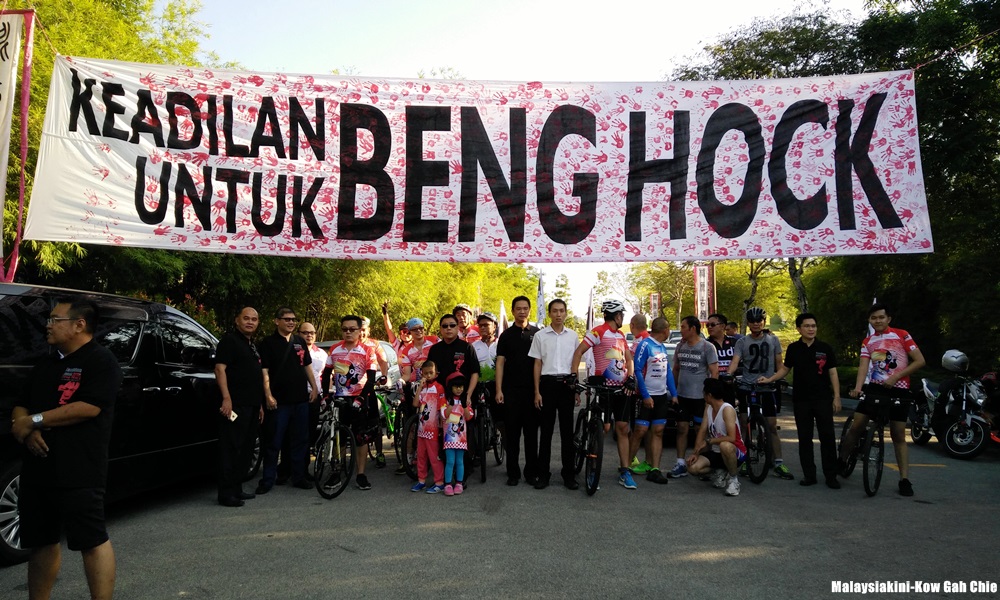
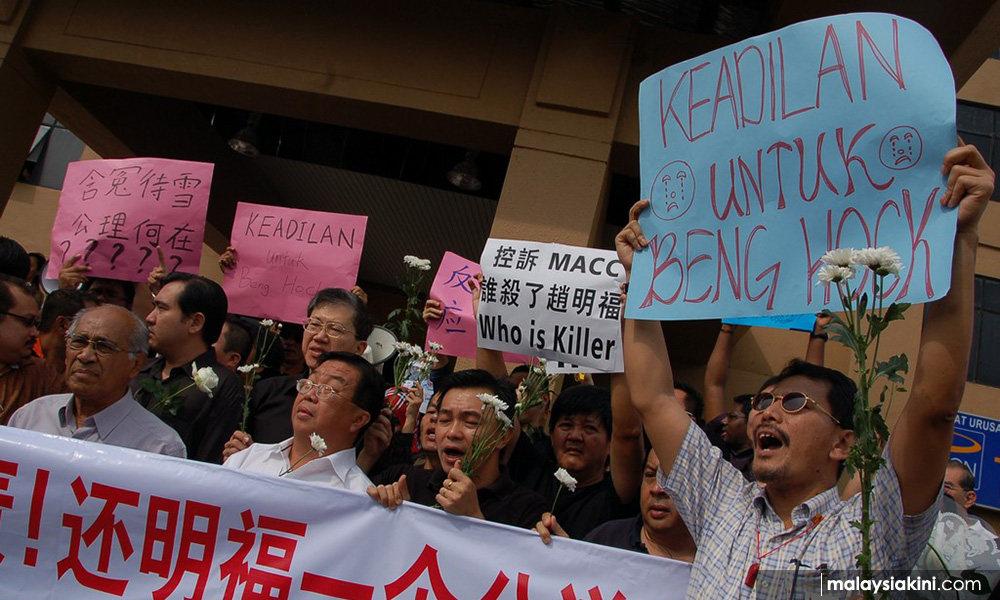
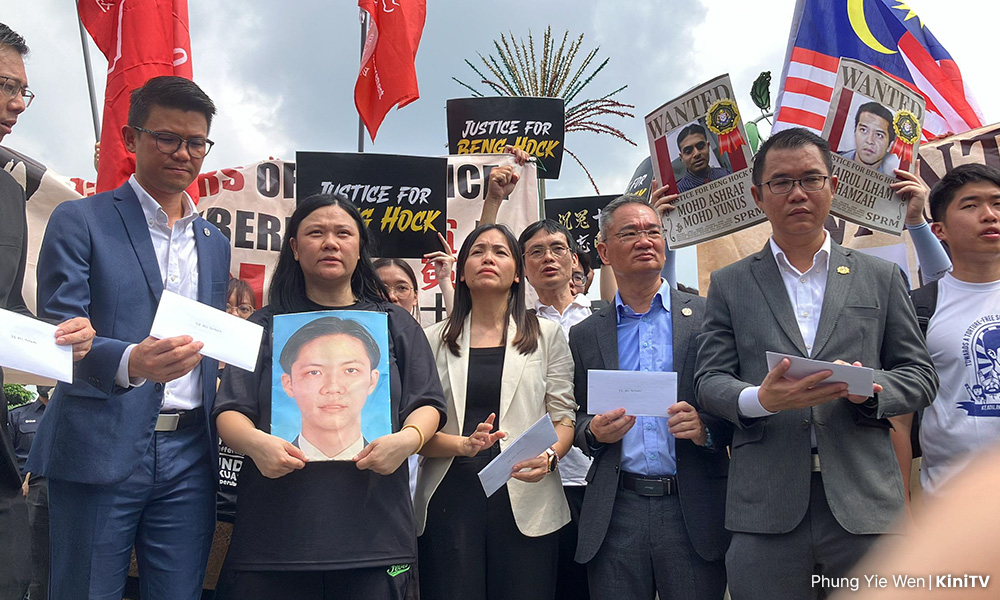
Teoh Beng Hock tragedy: How to get away with murder By Commander S THAYAPARAN (Retired) Royal Malaysian Navy
Tuesday, May 27, 2025
Malaysiakini : This coming from the Royal Malaysia Police, which has had no trouble
interviewing witnesses or compelling them to come forward and of course
claimed that the family of Beng Hock, the victim, was uncooperative.
The
attorney-general’s brief statement, unlike what the courts concluded,
that “the police investigations into Beng Hock’s death did not find
sufficient evidence to prove wrongdoing by any individuals”, is a rubber
stamp on the narratives that the state has been pushing for 15 years
and enables cretins to claim that there is no evidence, hence no crime.
As
reported in the press, the family’s lawyer wondered if this
investigation, which by the way in no way reflects the intent of the
court, was done merely as a formality or more accurately in the minds of
rational citizens a legal legerdemain to make it seem that the police
was complying with the ruling of the court.
Indeed,
by never investigating this crime as a murder, the state enables the
narratives that this was a suicide. By never investigating this crime as
a murder, the state denies the family justice by never acknowledging
the crime and gives credence to cretins who delight in claiming that
this was a suicide.
I often wonder how these “persons” live with
themselves? Are they going about their duties to the state and carrying
out whatever religious obligations as though they did nothing sinful? I
wonder what they think when they read in the press how Beng Hock’s
family is grimly pursuing justice for their murdered son.
Who was there that night?
For
instance, when Beng Hock’s sister Lee Lan said at the 2014 verdict:
“Now it is clear the court, in its final decision, says that the death
is caused by unlawful acts of a person or persons, including the MACC.
“His
death is not due to suicide. We want the IGP (inspector-general of
police) and AG (attorney-general) to reopen investigations into this
case and charge those responsible.” – I wonder if the perpetrators were
worried that the state would do something?
Were they fearful when
Pakatan Harapan took over with the DAP’s 40 MPs in tow, that they might
finally face a reckoning? Or were they secure that they got away with
homicide? Did they realise they were untouchable when it came to
justice?
And that’s the problem, right? The state security
apparatus obviously does not care what the courts rule. They certainly
do not care about being seen as mendacious or duplicitous or even
murderous, as the numerous deaths in custody demonstrate.
This
is what the prime minister said when he met with the family of Beng
Hock: “I have heard the grievances and several requests from the family.
I have been closely following this case for a long time and deeply
understand the sorrow and suffering of the family who have long been
fighting for justice for the deceased.
“I affirm the government’s
position that it agrees for the police to reopen the investigation into
the death of the late Beng Hock.”
You have to wonder, why the police had trouble finding witnesses when the key question
posed by the Court of Appeal verdict and articulated by Teoh Beng Hock
Association for Democratic Advancement (TBH-ADA) chairperson Ng Yap Hwa
was, “They want the police to shift their attention to the MACC officers
who were present at the Selangor office on the night Beng Hock died, as
these individuals are the most suspicious.”
This is not a
high-tech case. Indeed, this is not even a complicated case. Successive
governments have created this narrative that any investigation into the
death of Beng Hock is a complex, arduous process.
In fact, why
was the state security apparatus even harassing Beng Hock’s family about
his state of mind when the court had already ruled that the death was
caused by a person or persons unknown?
Indeed, if the police
followed the ruling, all they would have to do is investigate those
individuals who were there the night Beng Hock was murdered. But here is
the thing. Politicians are hoping that the passage of time dulls the
feelings of outrage. They want the rakyat to forget or, worse, believe
that this is a communal issue.
Lee Lan lamented that we seem to be
trapped in a BN-era rule and said, “The same MACC remains
unaccountable. The same police force refuses to investigate the MACC.
The same opaque conclusions are drawn, and the same murderers walk
free.”
This,
of course, is an indictment of this unity government, the brief Harapan
regime, the brief Perikatan Nasional regime, but more importantly, the
same political players who continue to enable the people who are
responsible for Beng Hock’s death.
Death of a DAPcomrade
TBH-ADA
said it “believes that DAP leaders should not hide behind the excuse of
cabinet collective responsibility without taking action”.
Two
minor DAP MPs have made noise, but the big guns in the party are silent
on the death of their comrade. Former party secretary-general Lim Guan
Eng, who used Beng Hock’s death as a political talking point for years,
is too busy squabbling with the current chief minister of Penang.
Meanwhile, the DAP’s big cheese would most probably remind everyone that
cool heads prevail or some such nonsense.
And this is the most
shocking part. All those MPs who in the past made use of the death of
Beng Hock have not said a word. Can you imagine the message this sends
to cretins like Umno Youth chief Dr Akmal Saleh and the rabid,
far-right, theocratic state-in-waiting?
In
fact, they would say, unlike them, the DAP does not even care about the
death of their comrade, much less someone from their community. Online
trolls rejoice in the fact that the non-Malays will continue supporting
DAP even though their political leaders do nothing.
Gerakan is on point when it reminds
everyone that DAP used this issue for years, but they are part of a
virulent Malay uber alles coalition, which, in terms of outcome, amounts
to the same as this coalition government.
But what is shocking
and unnerving is when a sister of a slain citizen said, “Under Anwar’s
‘Madani Malaysia’ slogan, will the government stand with the officials
who killed a civilian, or with the victim’s family seeking truth and
justice? The people are watching closely.”
But are the people
watching closely? It certainly does not seem that way. Here is a family
who believes that officials within the government murdered their son,
and this was confirmed by the courts. They commiserate with the prime
minister of this country, and what they get is no further action.
Imagine if this were your brother, father, or loved one. Could you move on?
Of
course this is about accountability and it is a two way street. We
cannot really blame political parties for not holding the state
accountable because we the rakyat do not hold political parties
accountable.
What does Rafizi want PKR to be? By Commander S THAYAPARAN (Retired) Royal Malaysian Navy
Thursday, May 22, 2025
Malaysiakini : And the embattled deputy president makes sense because not only has
Rafizi, over the course of his career in PKR, involved himself in
various palace intrigues for the benefit of Anwar, the old maverick has
publicly stated that Rafizi was rude or some such nonsense.
Frustration with unclear reform agenda
To be honest, everything about this federal government must irk the Pandan MP.
Rafizi, over the years, has made it clear what he thinks of big tent strategies when it comes to winning elections.
Keep
in mind the last time in 2022 when Rafizi was vying for the number two
spot in PKR, he made it clear that he thought this type of big tent
strategy for Malay support was madness:
“Although
there are no signs that this ‘big tent’ approach will work, it appears
to be the only option considered by Pakatan Harapan’s entire leadership.
“It is as though they have run out of ideas to regain public confidence.”
Here
is the thing. I like Rafizi’s bull-in-the-china-shop style of politics.
Former US ambassador and Umno big chief Nazri Aziz has the same style.
But I do not know what Rafizi wants PKR to be.
Indeed,
his detractors have called on him to talk about issues, but I suppose
Rafizi would argue that what PKR is, or what it has become, is the
issue. Still, I would like to know what the incumbent deputy president
wants PKR to be.
Rafizi says less than 30 percent
of the Malay polity backs PKR and that the coalition is bleeding
non-Malay support. The question is what he thinks are the strategies
needed to address these issues.
He also said, “Everyone wants to show Anwar, ‘Datuk Seri, you are great, everything is good’.”
PKR supporters
Ok,
has anyone told the prime minister that the reason why he is losing
non-Malay support is because of all the Malay uber alles things he’s
doing, which antagonise the base that put him in power?
Has anyone
told him that Umno is running riot with its Youth chief, Dr Akmal
Saleh, defining the racial and religious narrative of this government
that makes Anwar look weak to the Malays?
More people believe that the prime minister views PKR as a placeholder for Umno than that Harapan wants to carry out reforms.
And keep in mind that this bodek (apple polisher) culture has got Rafizi into trouble with the Big Cheese of PKR before. Three years ago, Rafizi warned of a bodek culture that was seeping through PKR.
“What is important for the party and the new leadership is not really to try to physically ‘bodek’ Anwar or defend Anwar. Anwar Ibrahim is Anwar Ibrahim, he doesn’t need to be defended.
“What we need to do is to appeal to the people and try to win again,” Rafizi said.
“He knows his focus, his role. He is no longer Rafizi di pinggiran (on the sideline).
“The person you were talking about just now is Rafizi di pinggiran. Today’s Rafizi is in the party’s top leadership.”
Internal dysfunction, uncertaingoals
And
it is funny because Nurul Izzah talked about the youth vote and yes,
the prime minister in the past has acknowledged that he is not
attracting the youth vote as before - “Of course, I do not have the
strength to attract youth’s support, unlike 40 years ago.”
But here is the thing. What is PKR offering to youths that is different from what Perikatan Nasional is offering?
Rafizi talks about a luxury culture
seeping into PKR. He talks about how new members are only there for the
positions and perks. But here is the thing. All this happened under
Anwar’s watch.
PKR members
Perhaps
if Rafizi had support, we would not have all these opportunists
infecting the party. Honestly, all those reformasi stalwarts who were
claiming that Anwar had changed were correct, but unfortunately, they
were shouted down.
Rafizi said, “Over the years, Anwar has been
given the power as the party president to allow any new party member to
contest in an election despite not meeting the one-year minimum
requirement, and Rafizi has publicly said he wants to end this power.
The question is, how much sway do these opportunists have over the party and over the prime minister?
What is PKR fighting for?
What
is PKR really fighting for? PKR is now in the position to offer the
bounties of government to the flotsam and jetsam of the Malay political
establishment. People are essentially fighting over positions in a
moribund political party, which may very well be wiped out in the next
general election.
Sure, they may cling on to power in various
states, but the reality is that if by now PKR has not got a grip on what
it is and what it hopes to achieve, this may very well be the death
knell of the party.
And haven’t we all heard this before? Anwar and his second-in-command sniping behind the scenes before it becomes public?
PKR supporters and their proxies in the media have to take sides, while the situation in the country gets worse.
This,
in turn, creates the optics that, as the “Malay” vote-getter in
Harapan, PKR is failing miserably, which then allows detractors to
wallow in the kind of racism, especially on social media, which feeds
into the narratives of the Malay uber alles parties.
Maybe Rafizi
has defined what PKR is or has become, three years ago when he said this
- “This whole idea that you bring someone to the top that he becomes a
messiah, we have seen this for decades, and that is the reason we are in
trouble now.”
By his speeches, Rafizi has defined this fight as
one between himself and Anwar, with Nurul Izzah as a proxy for the
latter. It remains to be seen even if Rafizi wins, what kind of PKR he
would be leading.
Madani vs P Ramasamy By Commander S THAYAPARAN (Retired) Royal Malaysian Navy
Sunday, May 18, 2025
Malaysiakini : News of the charges against Ramasamy has brought out the schadenfreude
(malicious glee) of some sycophantic DAP supporters, who believe he
betrayed the party because he was rejected by the mandarins in power.
This is to be expected, but of course, the idea of reforms, which was supposed to be the raison d’être of DAP and Pakatan Harapan, has been tossed aside in favour of replicating BN-era politics and policies.
I
suspect the reason why there is so much vitriol against Ramasamy is
because, when he left DAP, he has been saying what many non-Malays
believe or, more importantly, feel about politics in this country.
Those
of us who knew that the political parties promising reform were merely
gaslighting the base got the proof we needed, while those who still
wanted to believe in reform were angry that someone who was part of the
system was now turning against it for supposedly selfish reasons.
A system of goodies
Indian
political operatives are told to be grateful for whatever positions
they achieve in DAP. They are reminded by the base that the only reason
they are there is because they were voted in by the Chinese community.
Former Batu Kawan MP Kasthuri Patto
You
can observe this on news sites and social media. In fact, when Ramasamy
left DAP for various reasons - not all of which had to do with the
“Indian” community - former Batu Kawan MP Kasthuri Patto said this: “For 15 years, he enjoyed the power, privilege and perks that came with the job and most importantly because of DAP.”
This
is not a good line of attack because it exposes the reality that
political operatives benefit from a system of goodies and that their
effort and drive in politics are geared towards sustaining this position
of privilege instead of serving the rakyat.
Non-Malay political
operatives cannibalise each other for the benefit of maintaining a place
on the Malay uber alles table instead of securing a place under the
Malaysian sun, which is the social contract of Malaysian political life.
To
go after Ramasamy in such an overt manner means what he’s saying is
gaining traction. After all, the Malay uber alles types really do not
care what he says or does, because he’s just ammo for them against
Harapan.
But
for the Harapan component of this government, Ramasamy, even though he
speaks of the Indian community, is shining a spotlight on the failures
of the coalition to live up to its secular and democratic values.
The
fact that he was part of the system means he knows how he helped the
system fail and how to course correct it, but of course all this is lost
on those DAP supporters who believe that either DAP/Harapan can do no
wrong or that voting for DAP/Harapan is the only alternative to the
green wave.
Frivolous charges, political persecution
What
Madani pinned on Ramasamy is extremely suspect. Ramasamy’s lawyer, as
reported in the press, said the Penang Hindu Endowments Board (PHEB)’s
accounts were audited yearly by the auditor-general and were given clean
certificates.
Former DAP MP for Klang Charles Santiago
He wondered why it took so many years for these “red flags” to be detected. “These charges are frivolous,” he said.
Charles
Santiago, a loyal DAP soldier, reminded the peanut gallery, “The
allegations levelled against Ramasamy were nothing new and had been
brought to MACC’s attention previously.”
This should make any
rational Malaysian wonder how much DAP is complicit in this alleged
political persecution. Ramasamy, as reported in the press, pointed out
that PHEB’s decisions were made collectively by the board. “Every
payment had the board’s approval. I’m not the only signatory,” he said.
All
of this is made worse by the fact that MACC is probably one of the most
untrusted public institutions in this country. Even PKR vice-president
Nurul Izzah Anwar, daughter of the current prime minister and a step
away from power, said the contract extension of MACC head honcho Azam
Baki was unwelcome.
“The
party (PKR) needs to stand for reforms - and we require the support of
the rakyat and our members to do this. We ask brave and courageous civil
servants and personalities to rise to the occasion,” she said.
There
is really no genuine reason to believe that either Nurul Izzah or this
government wants to reform the MACC. It has come to a point where nobody
is even pretending anymore. This is all about who holds on to power,
and the non-Malays are merely the vote bank of a coalition which knows
it is imploding.
Going after Ramasamy merely gives him a louder
platform and the relevancy he needs to keep stoking agitations in the
Indian, but more importantly, the non-Malay community. However, I doubt
that the non-Malay community, which is the base of Harapan, is going to
abandon the coalition.
Ramasamy, meanwhile, is taking this
opportunity to grab the spotlight on what he considers a reckoning of
the system he served for decades, but as an opportunity to gather more
to his banner.
Speaking to reporters after his first day in court,
he said, “Charging me (in court) is actually a blessing because I think
Urimai is going to be more popular.”









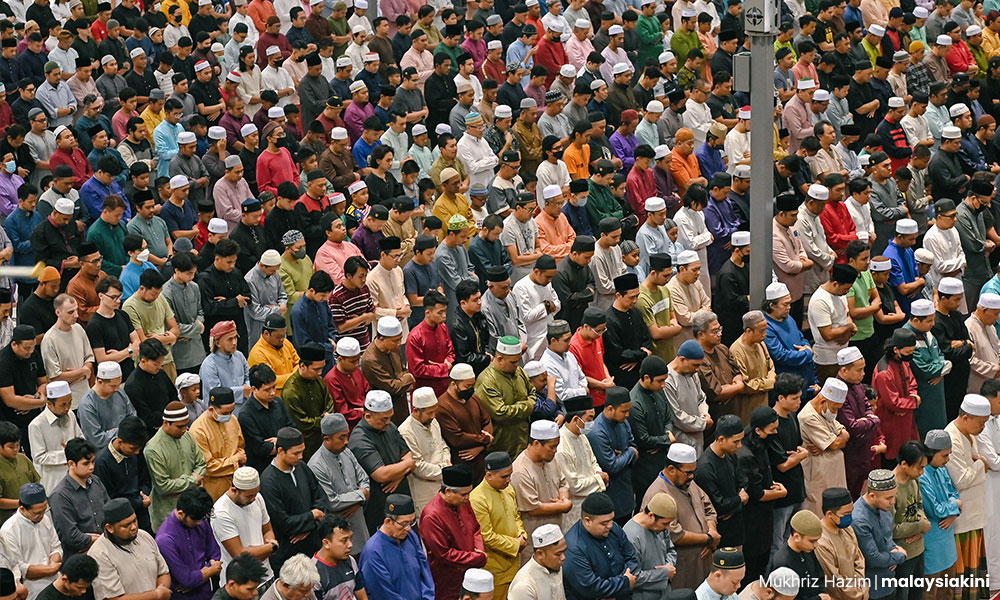
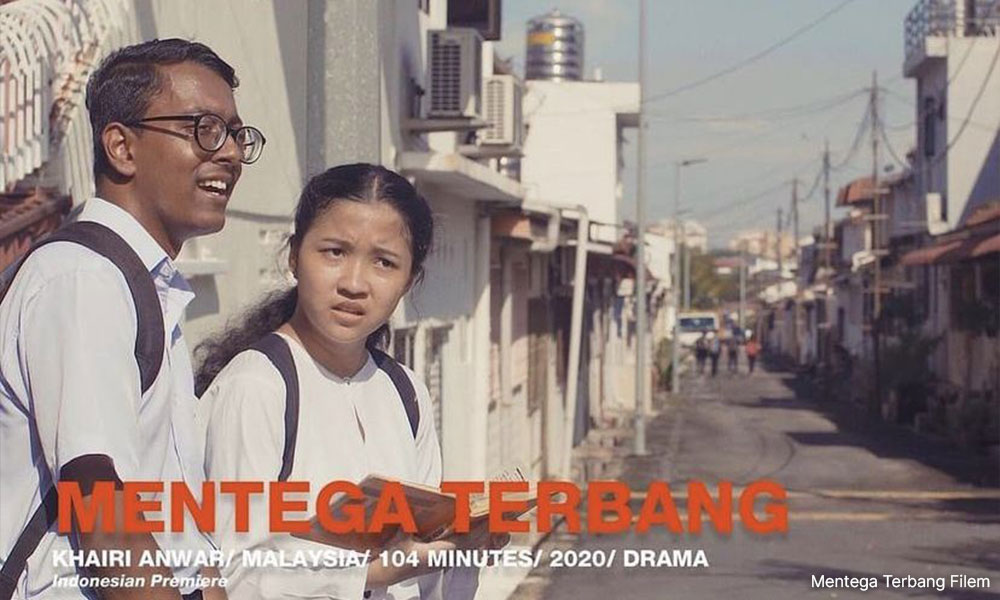
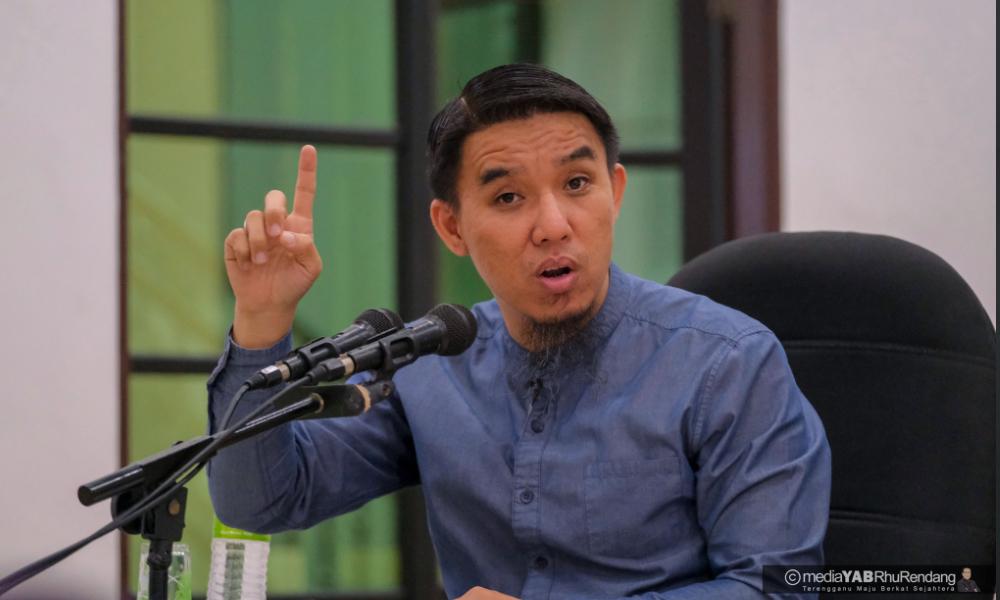
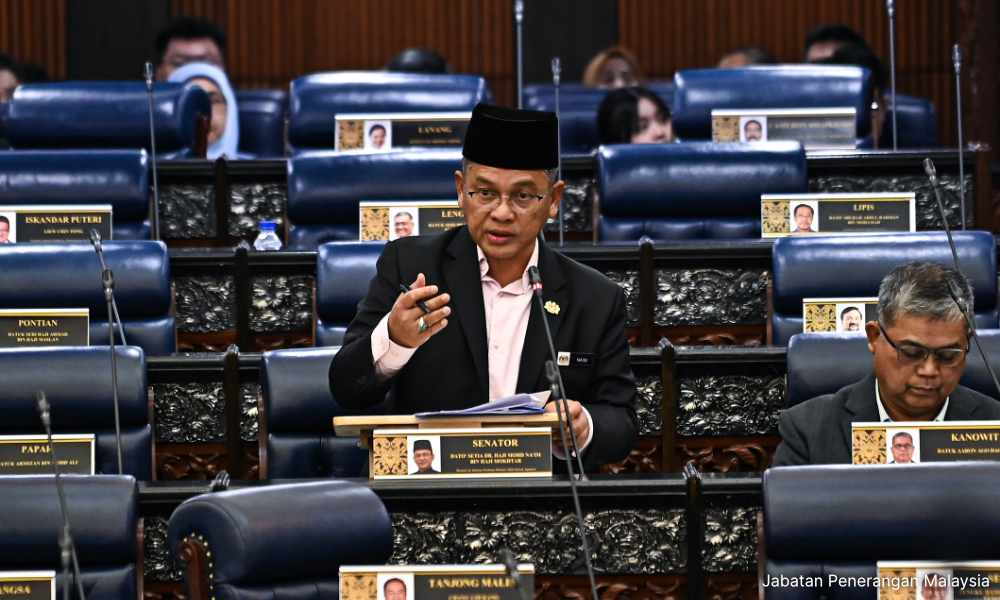

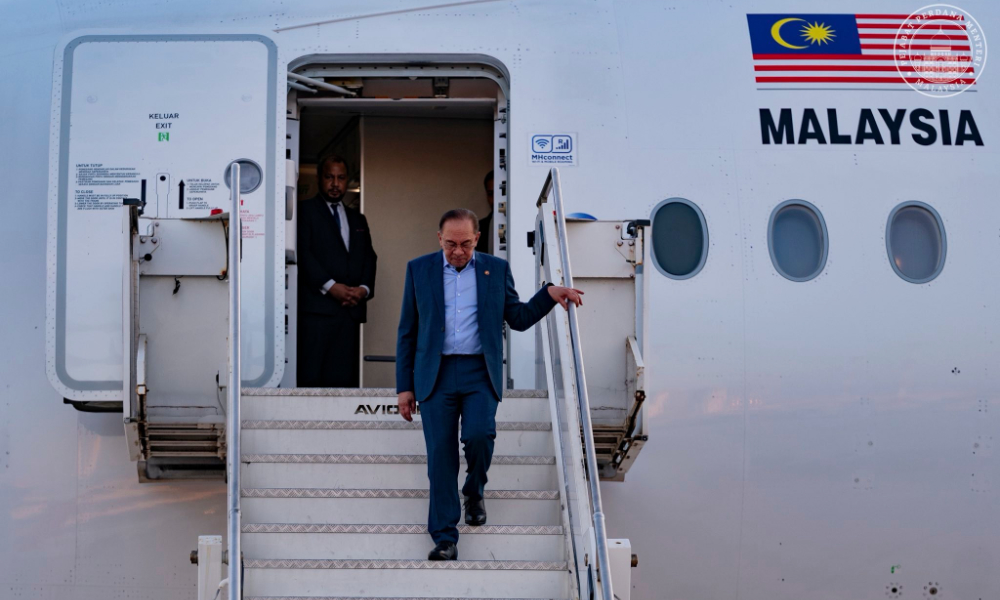
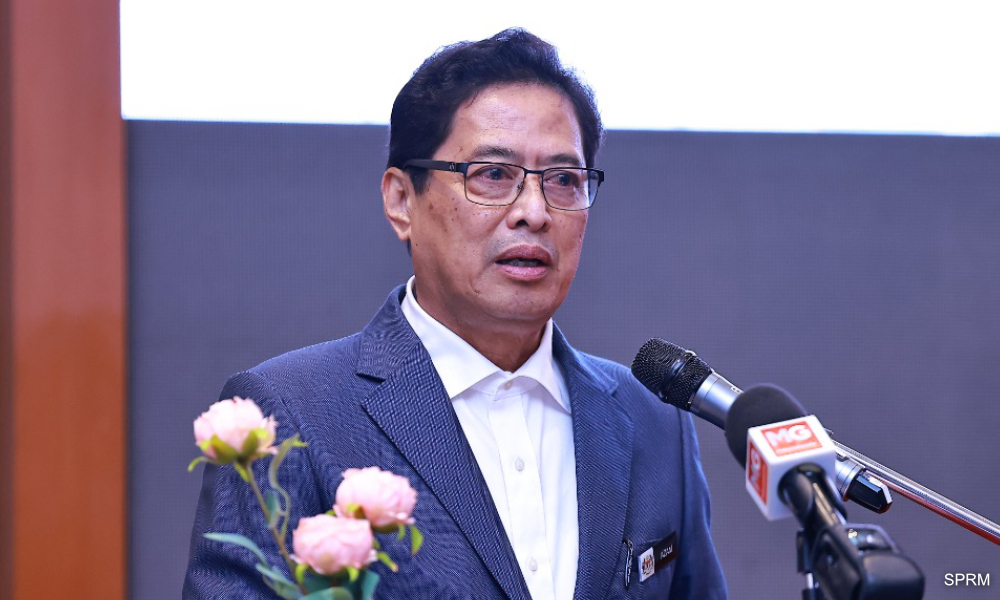
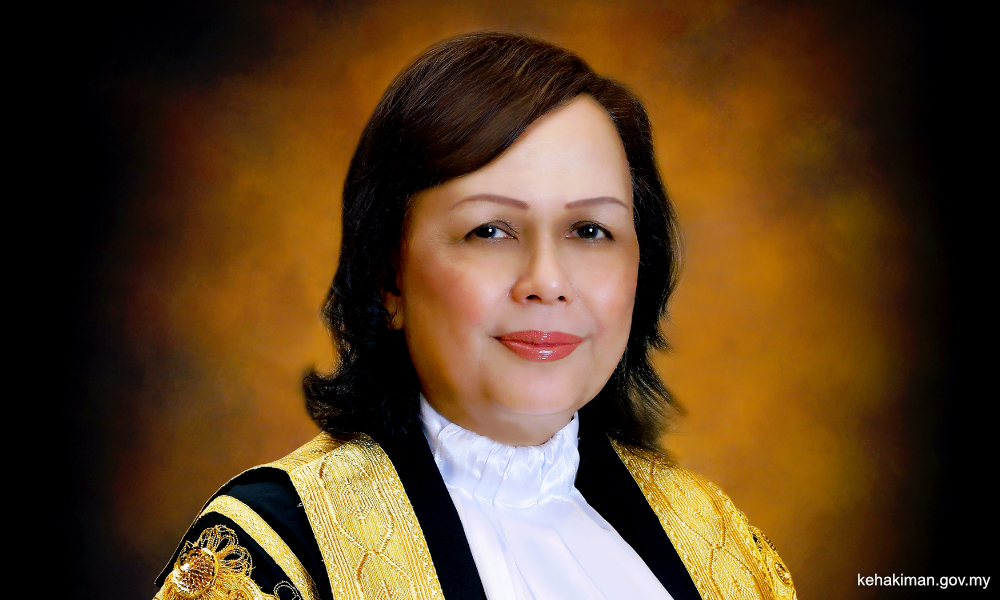


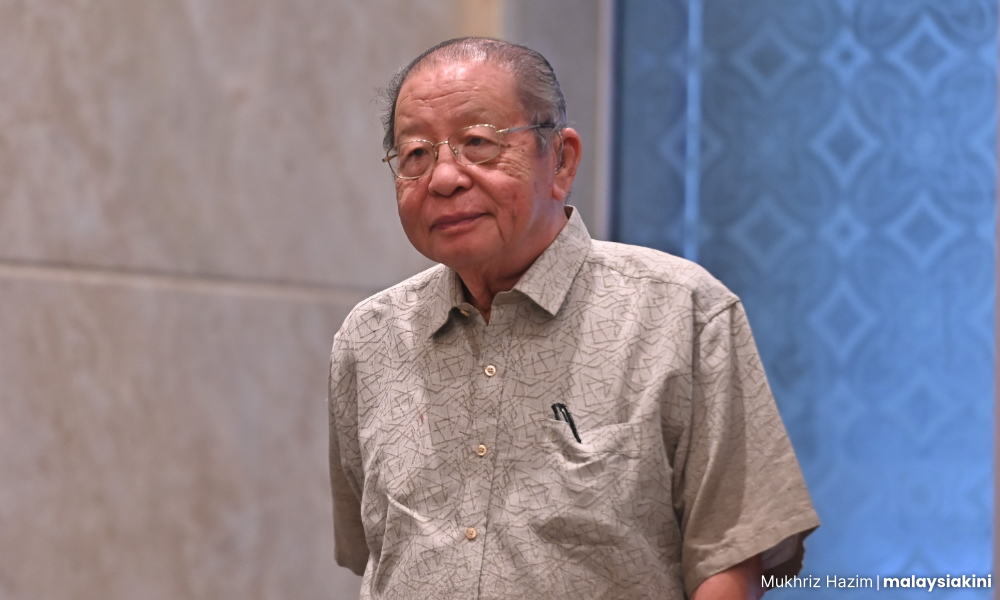
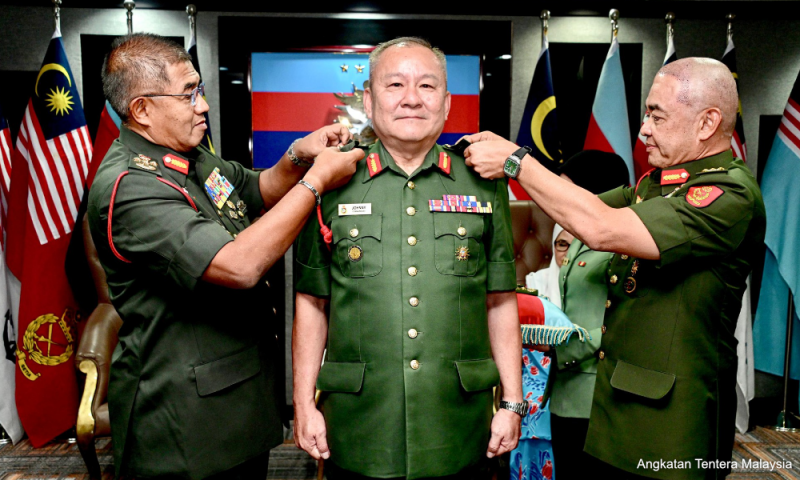
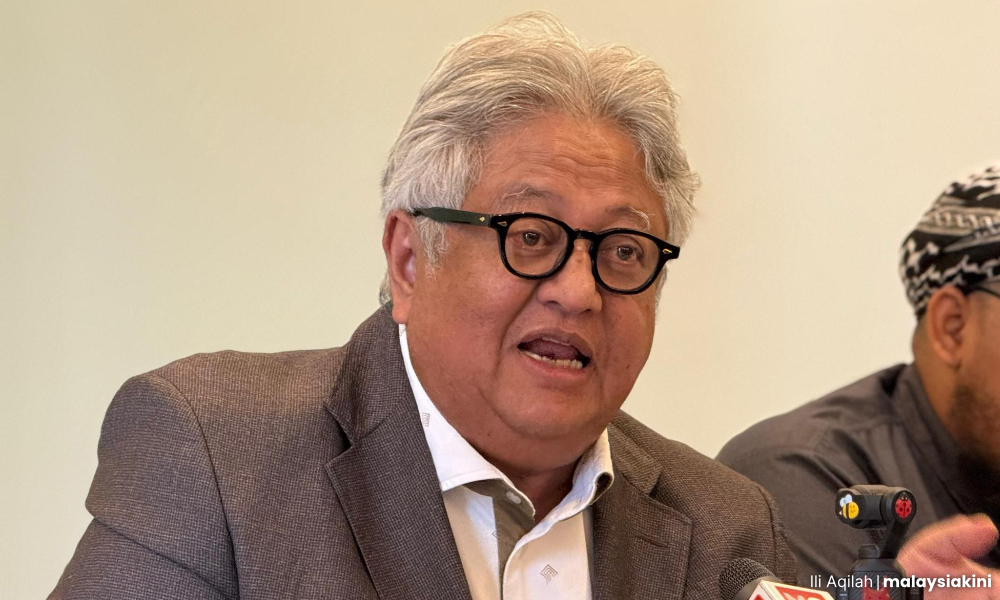
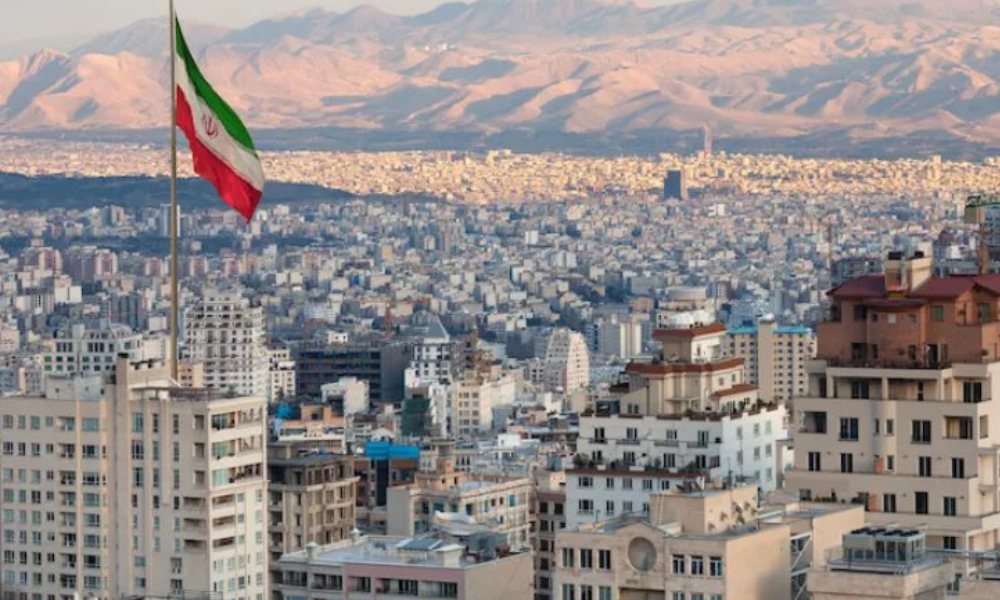
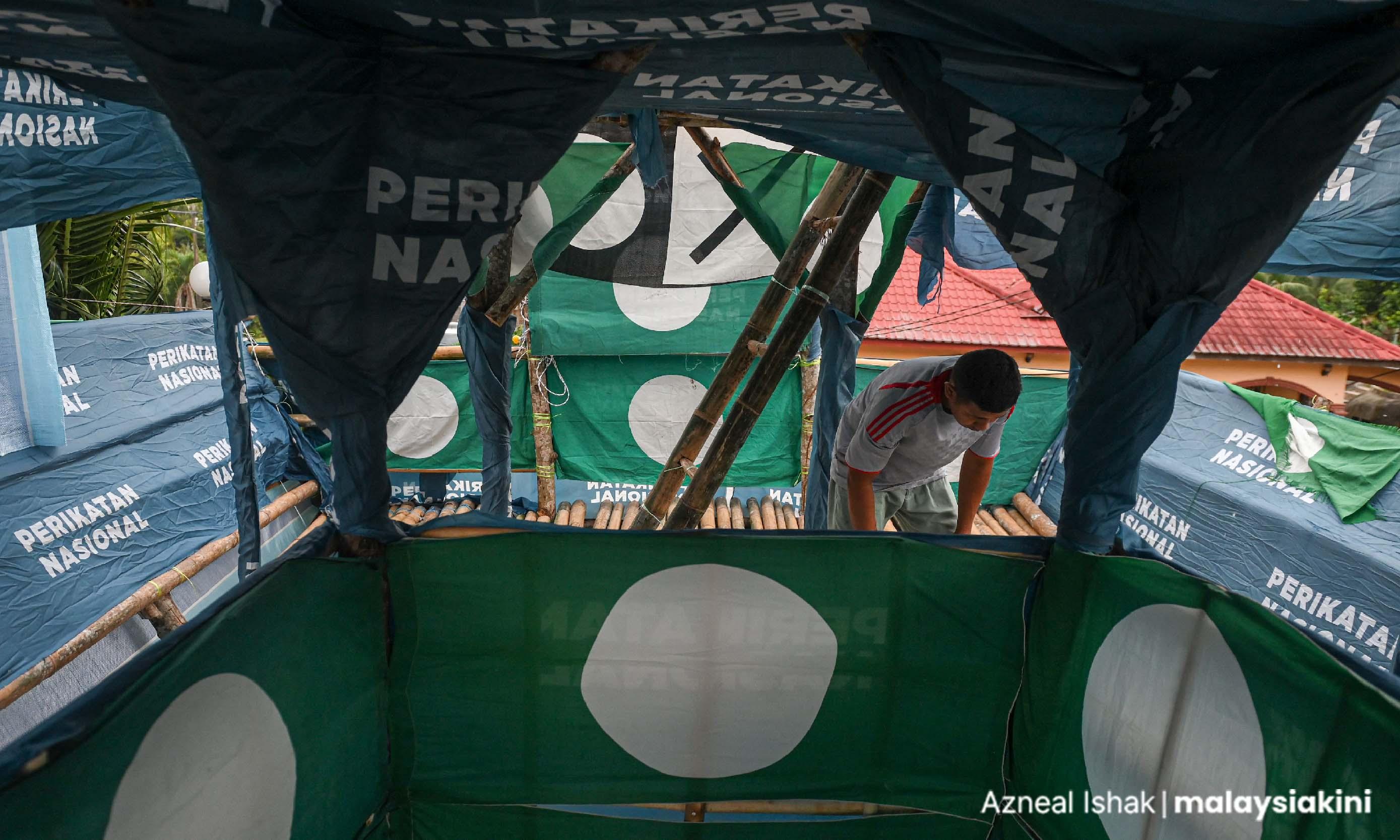
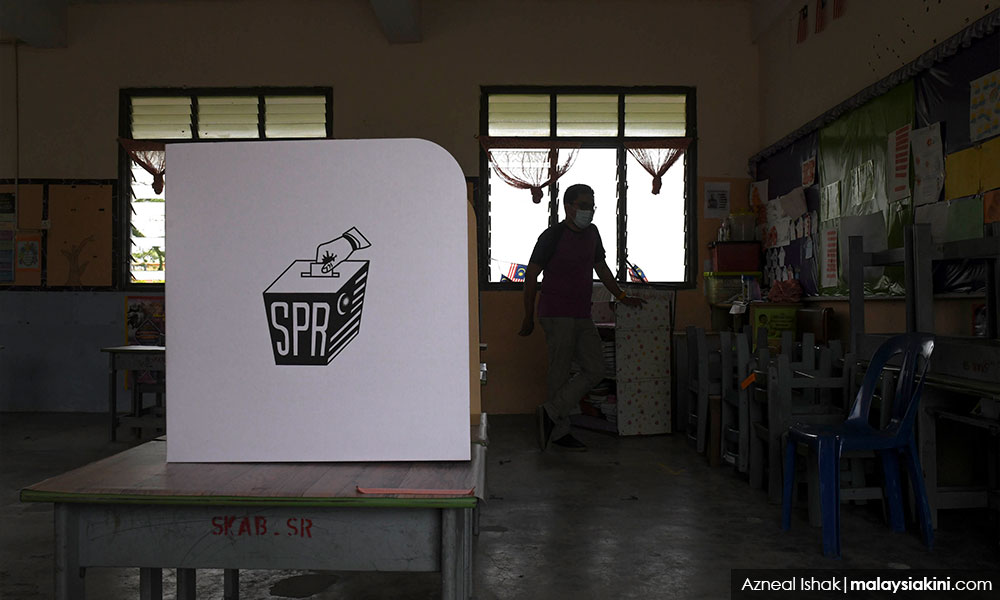
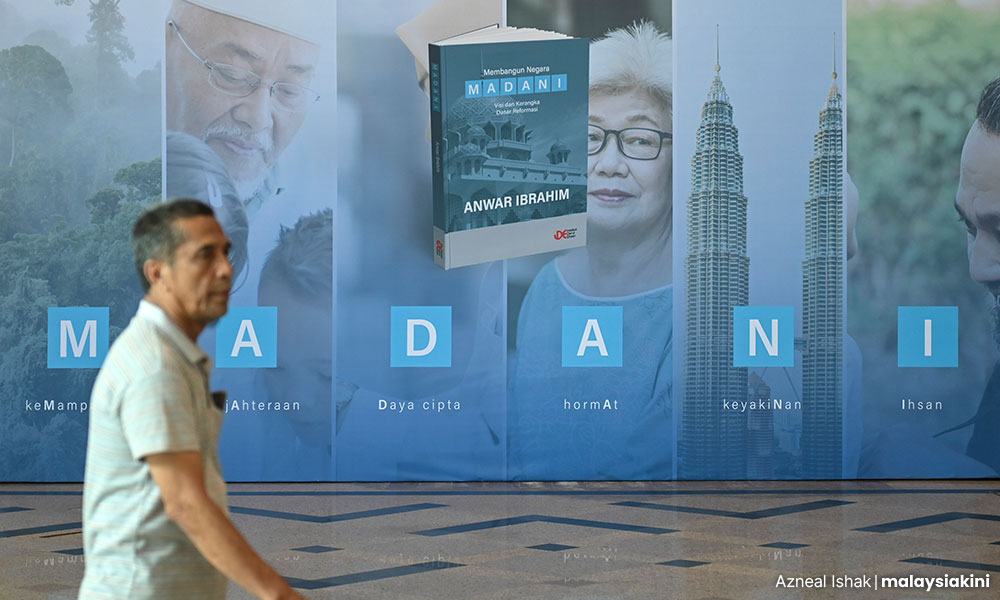
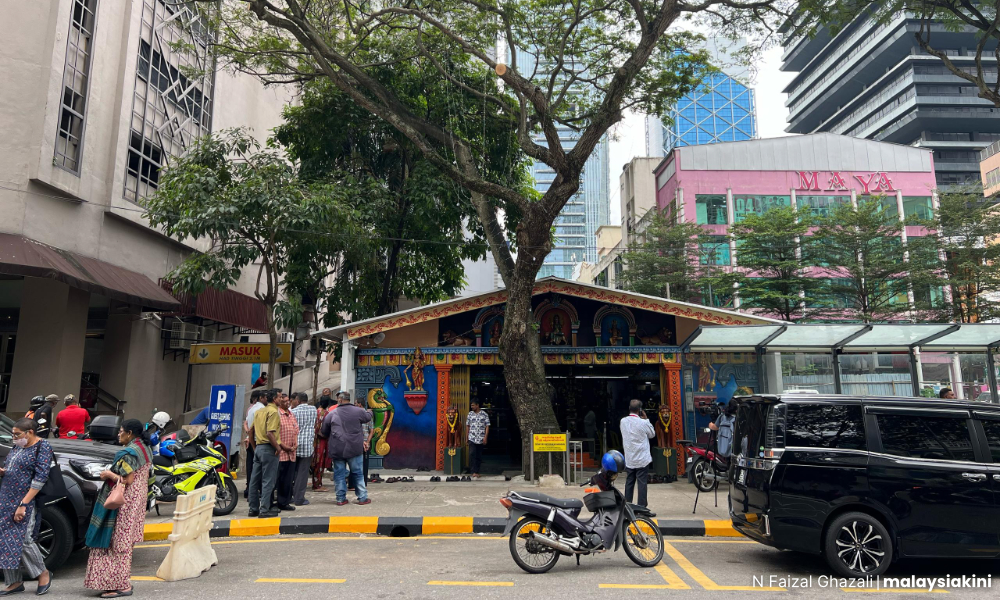
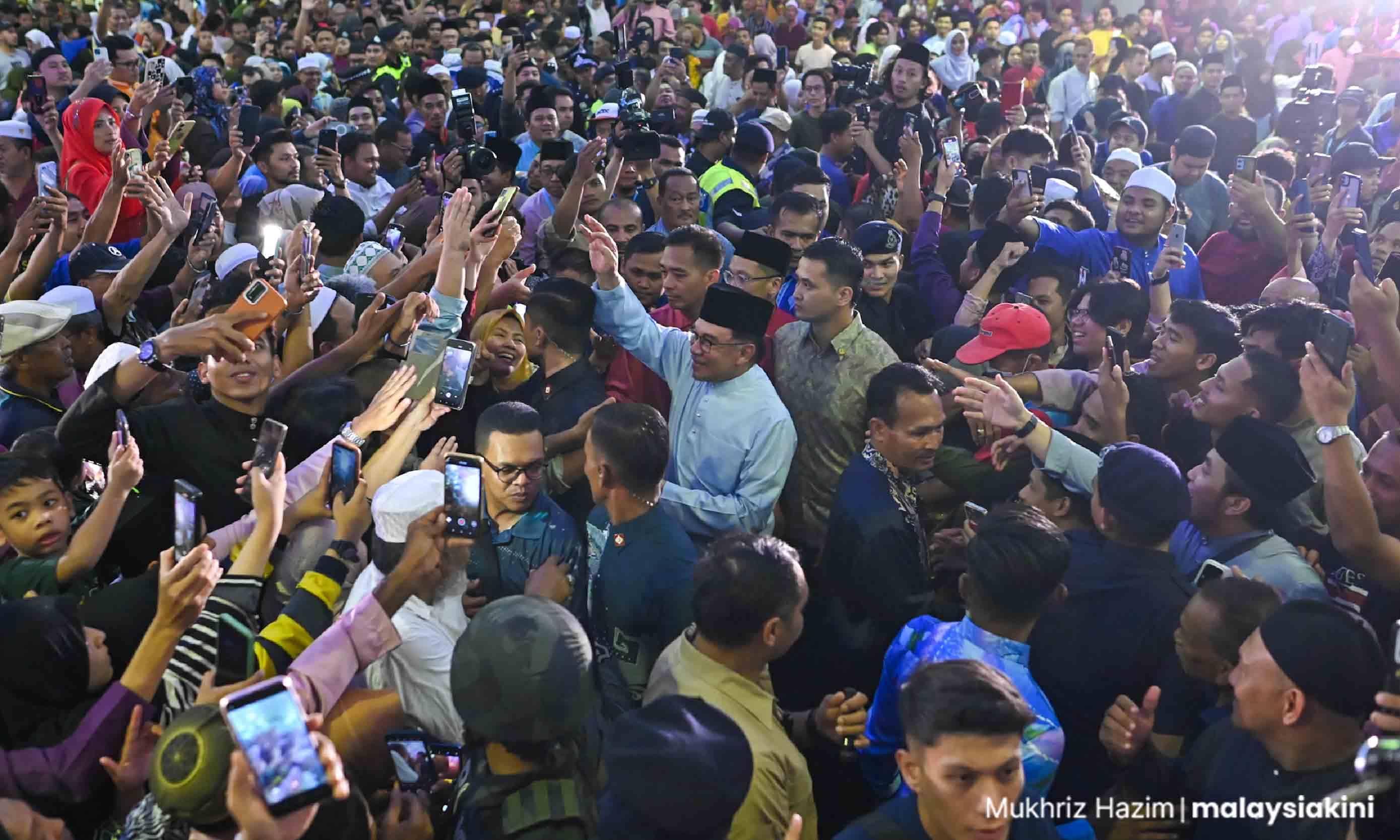

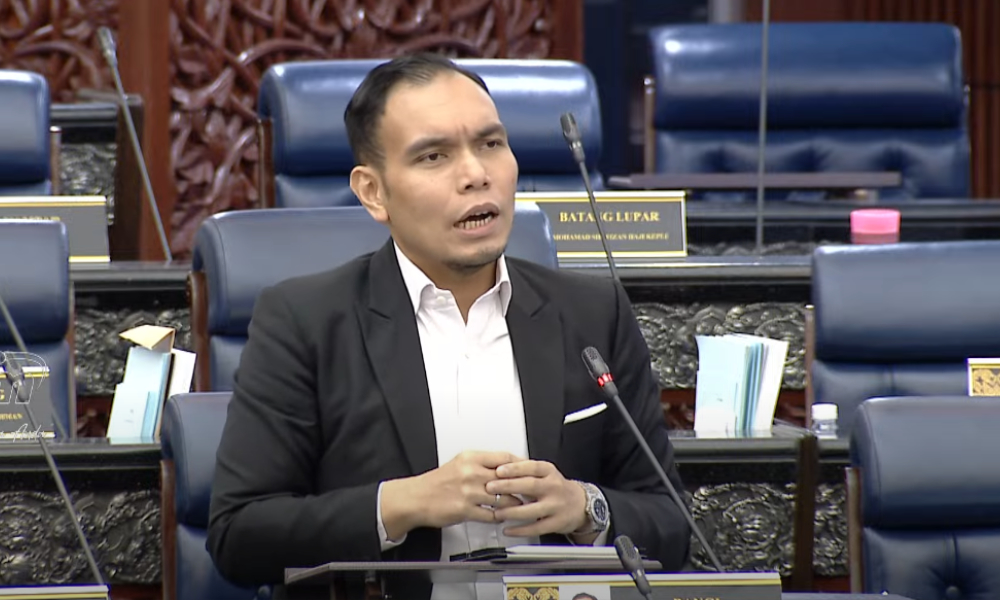
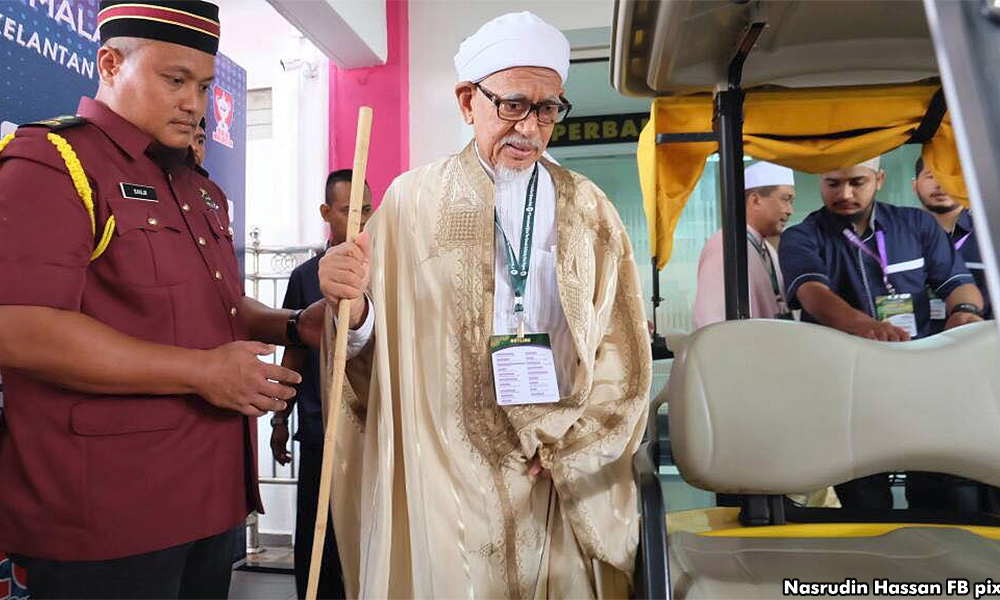
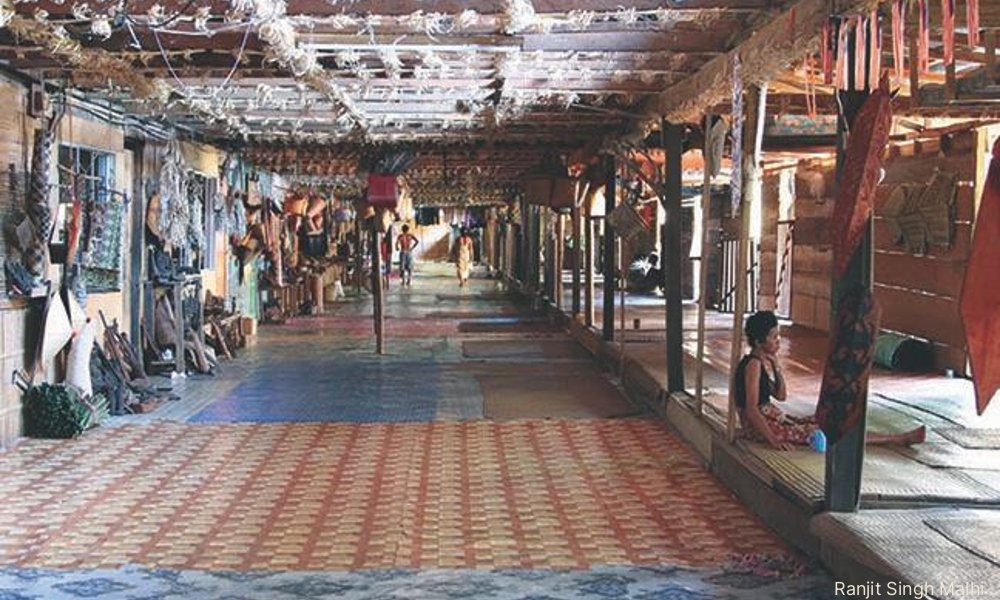

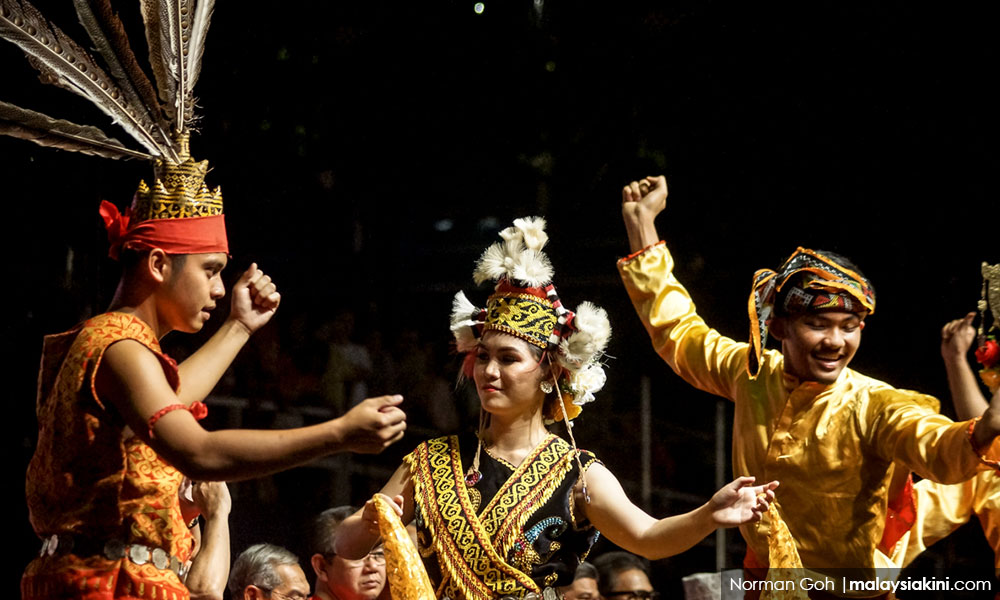

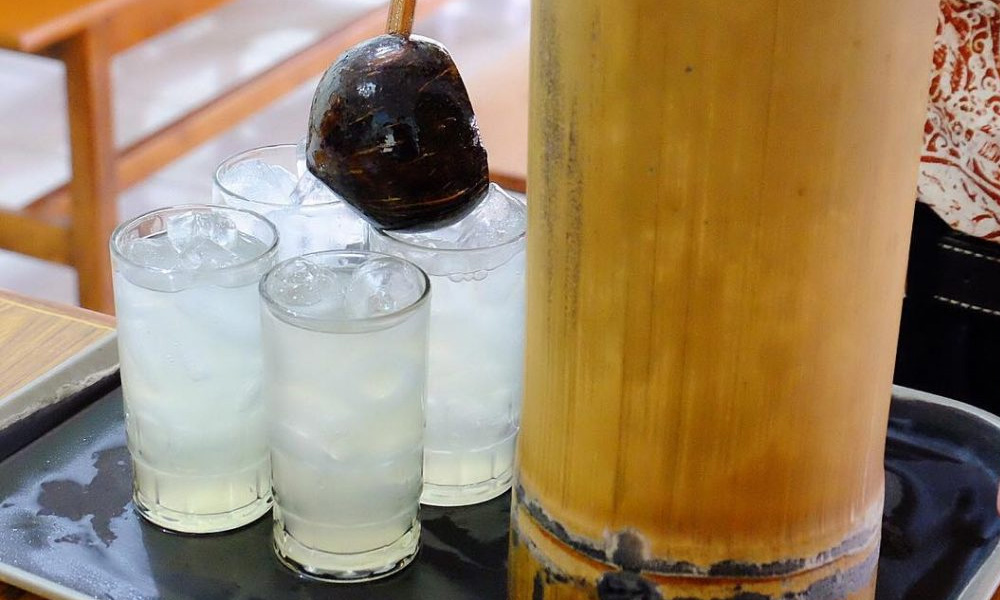
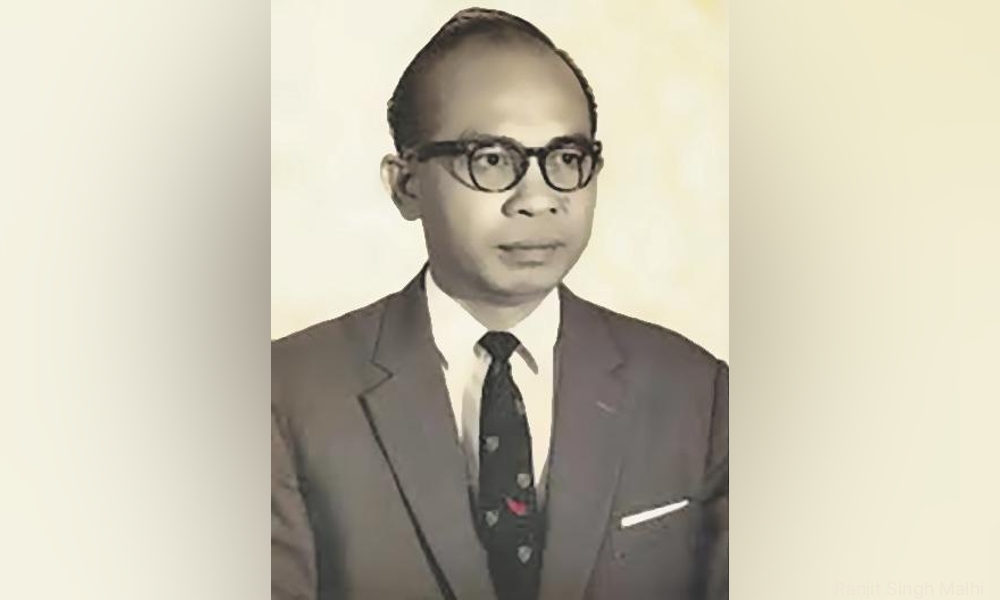
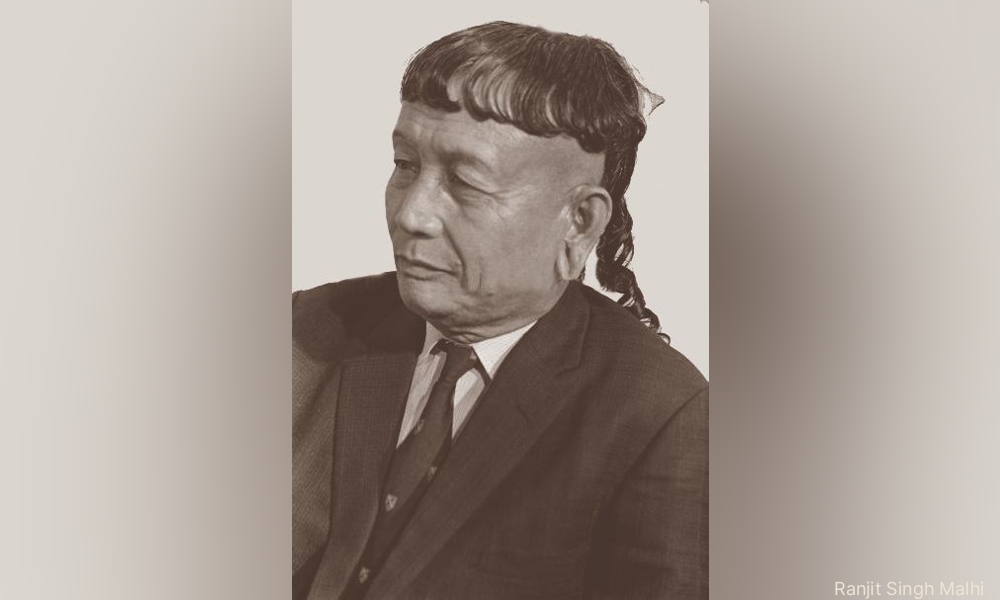
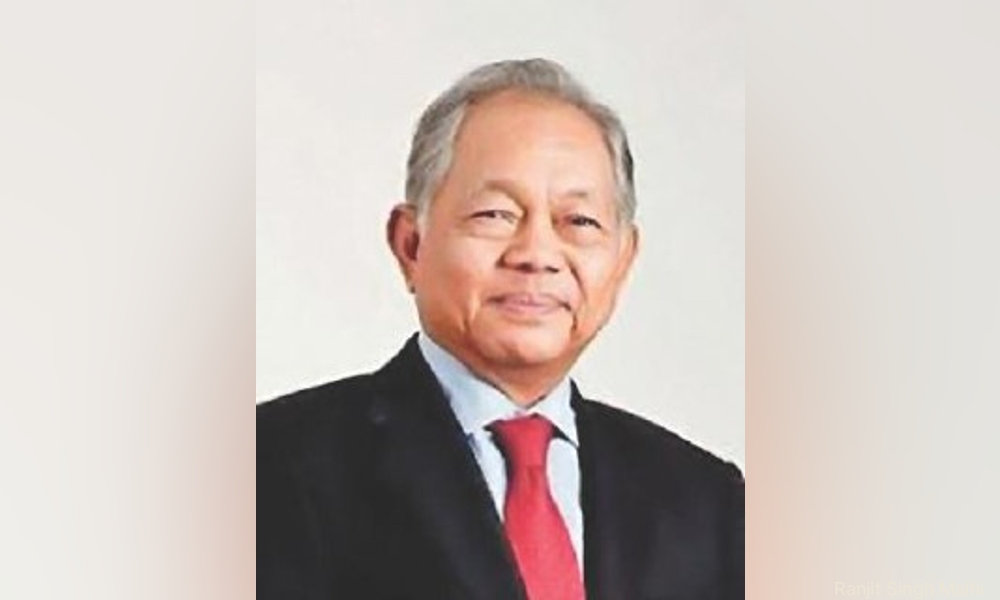
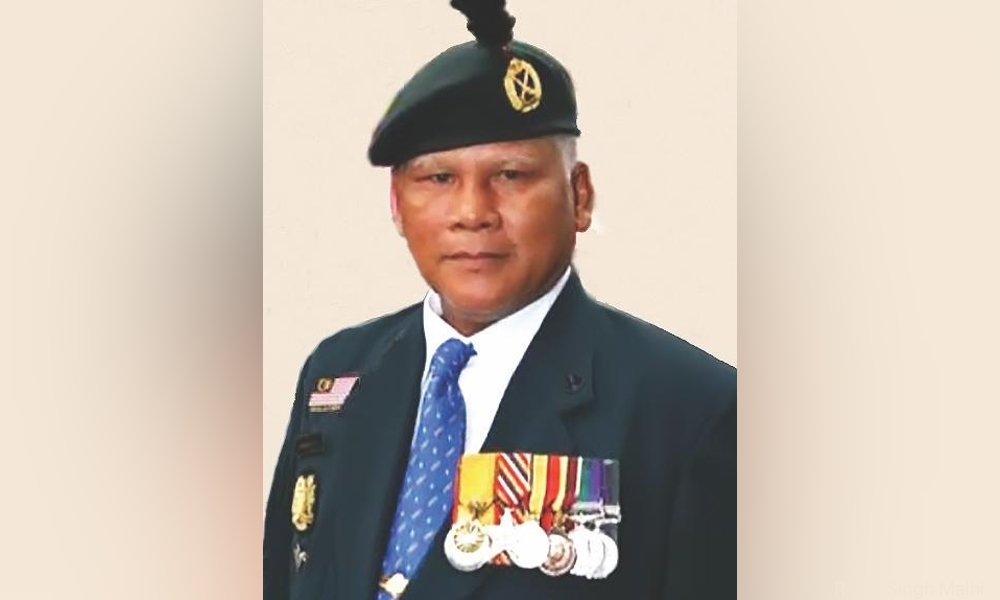
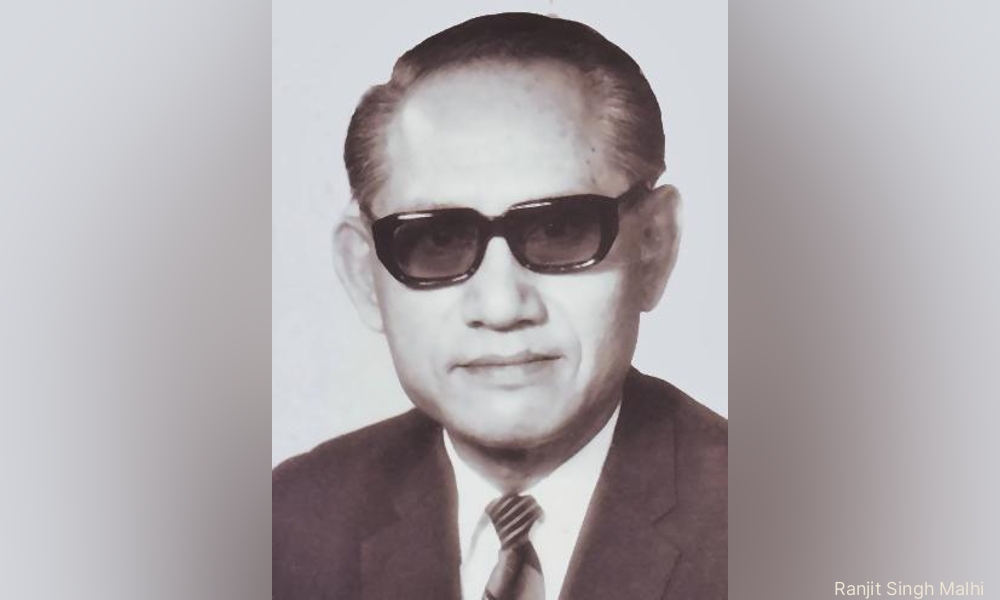
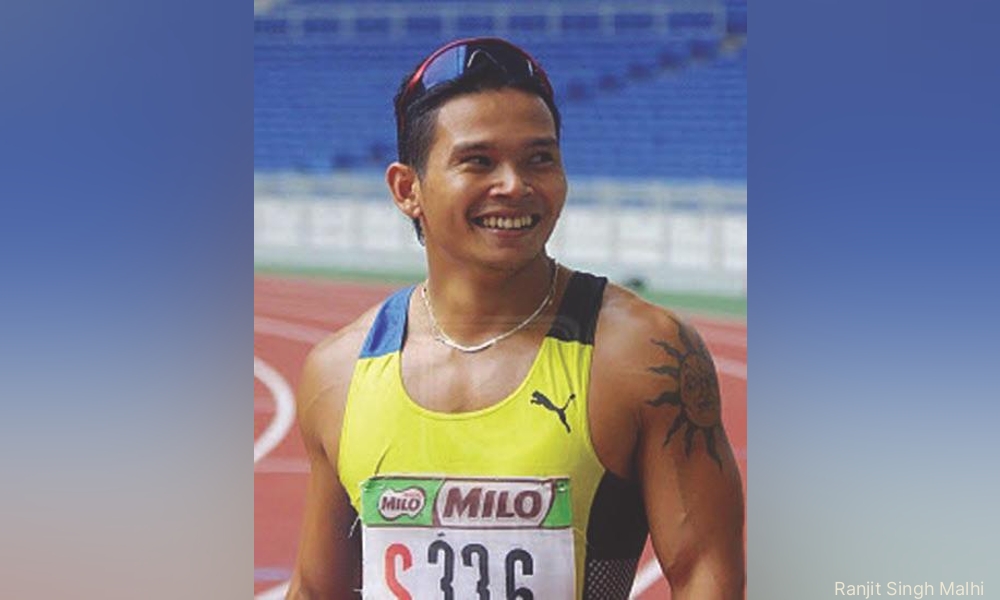
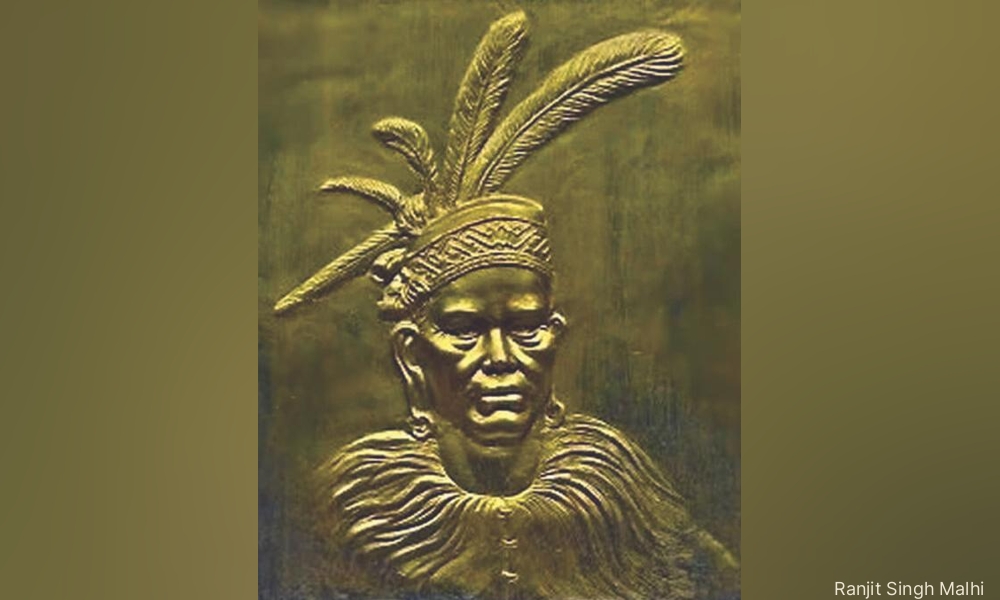
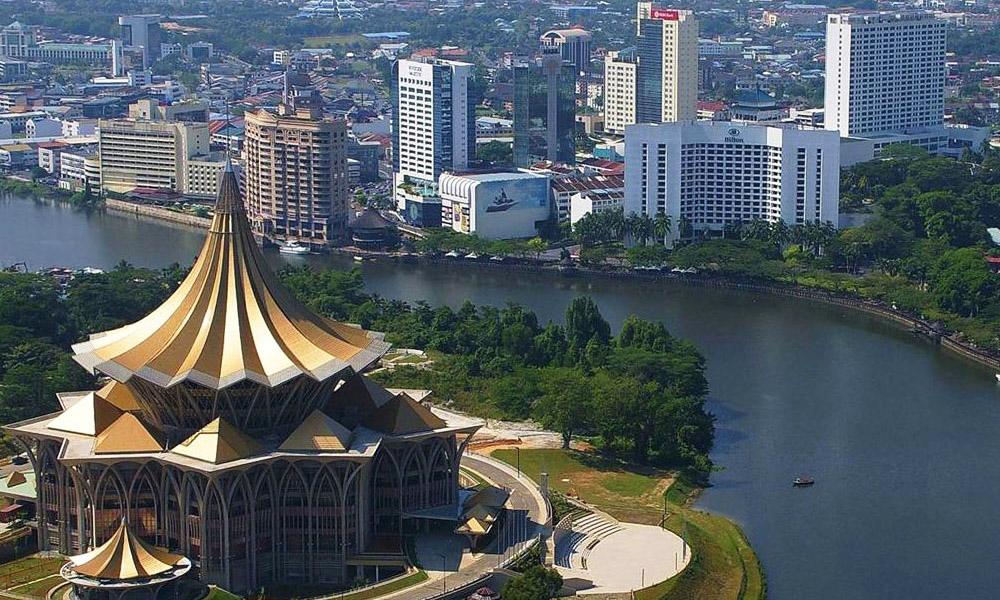
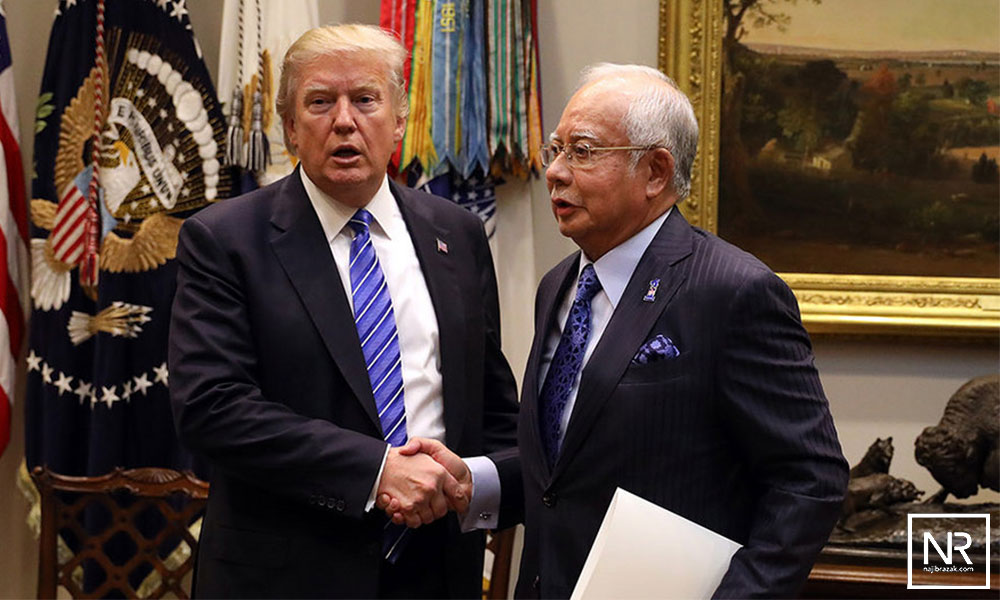

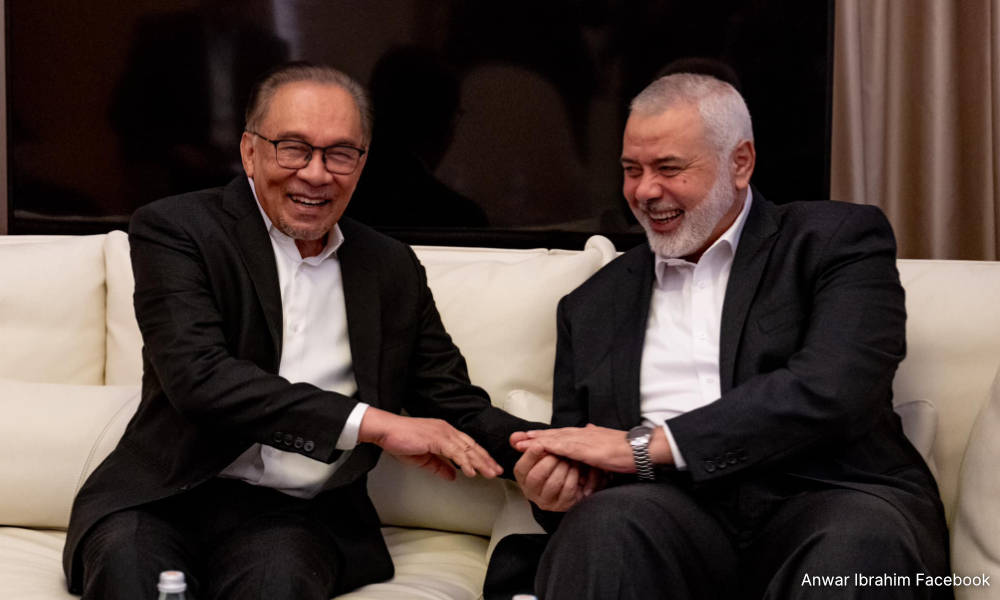
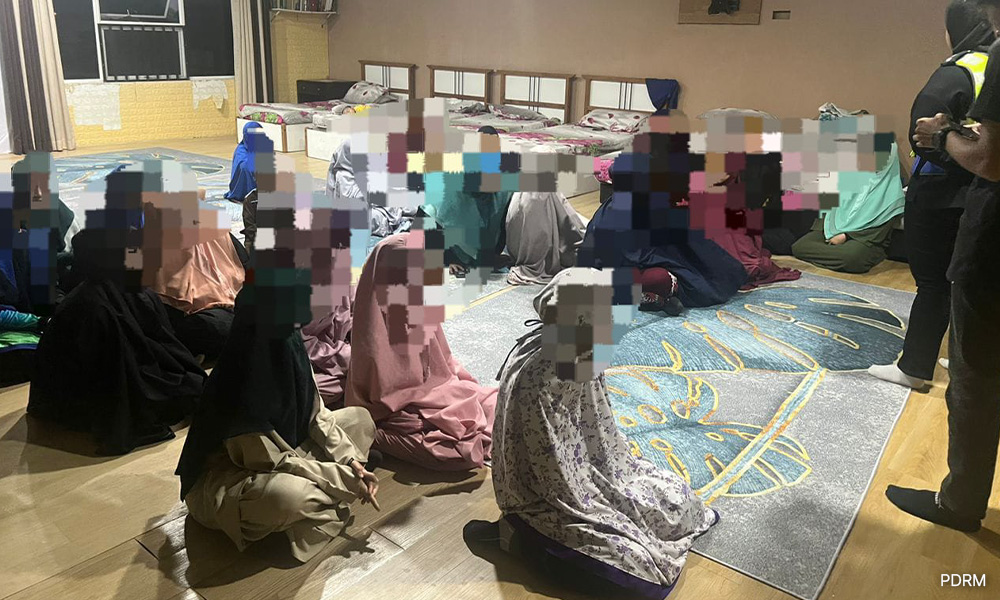
 And of course, all this LGBTQ+ hate is coming at a time when grooming of minors by social media influencers is