Rudyard Kipling"
“When you're left wounded on Afganistan's plains and
the women come out to cut up what remains, Just roll to your rifle
and blow out your brains,
And go to your God like a soldier”
General Douglas MacArthur"
“We are not retreating. We are advancing in another direction.”
“It is fatal to enter any war without the will to win it.” “Old soldiers never die; they just fade away.
“The soldier, above all other people, prays for peace, for he must suffer and be the deepest wounds and scars of war.”
“May God have mercy upon my enemies, because I won't .” “The object of war is not to die for your country but to make the other bastard die for his.
“Nobody ever defended, there is only attack and attack and attack some more.
“It is foolish and wrong to mourn the men who died. Rather we should thank God that such men lived.
The Soldier stood and faced God
Which must always come to pass
He hoped his shoes were shining
Just as bright as his brass
"Step forward you Soldier,
How shall I deal with you?
Have you always turned the other cheek?
To My Church have you been true?"
"No, Lord, I guess I ain't
Because those of us who carry guns
Can't always be a saint."
I've had to work on Sundays
And at times my talk was tough,
And sometimes I've been violent,
Because the world is awfully rough.
But, I never took a penny
That wasn't mine to keep.
Though I worked a lot of overtime
When the bills got just too steep,
The Soldier squared his shoulders and said
And I never passed a cry for help
Though at times I shook with fear,
And sometimes, God forgive me,
I've wept unmanly tears.
I know I don't deserve a place
Among the people here.
They never wanted me around
Except to calm their fears.
If you've a place for me here,
Lord, It needn't be so grand,
I never expected or had too much,
But if you don't, I'll understand."
There was silence all around the throne
Where the saints had often trod
As the Soldier waited quietly,
For the judgment of his God.
"Step forward now, you Soldier,
You've borne your burden well.
Walk peacefully on Heaven's streets,
You've done your time in Hell."
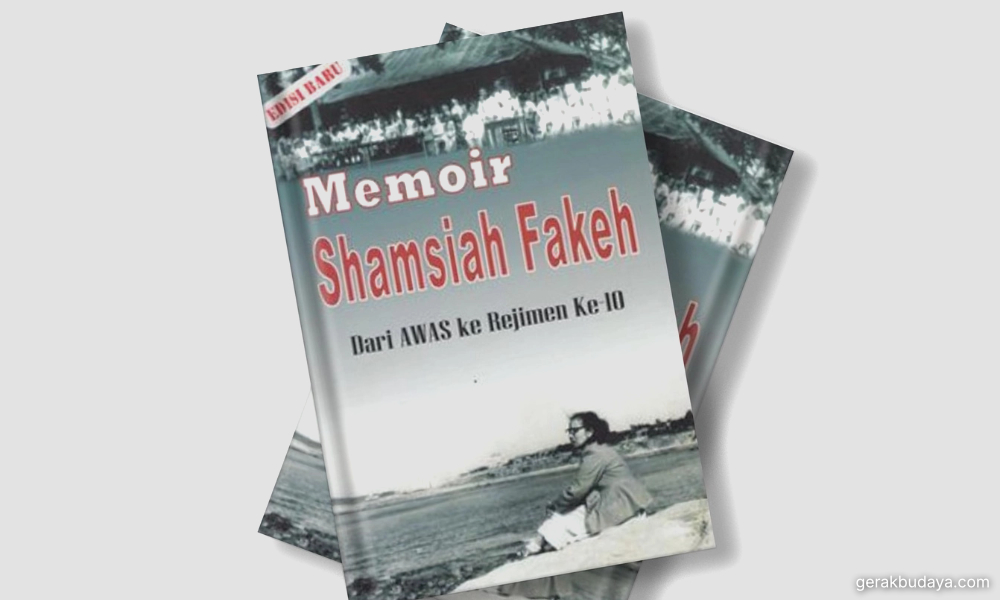
COMMENT - Shamsiah Fakeh: Reclaiming a nationalist legacy By Ranjit Singh Malhi
Monday, April 20, 2026
Malaysiakini : Yet such reasoning, while superficially defensible, collapses
under careful scrutiny when weighed against the imperatives of
historical scholarship and the public’s right to understand its own past
in all its complexity.
At
the centre of this controversy stands Shamsiah Fakeh (1924-2008), a
figure who occupies a contested yet undeniably significant place in
Malayan history.
She was a prominent leader of
Angkatan Wanita Sedar (Awas), established in 1946 as the women’s wing of
Parti Kebangsaan Melayu Malaya or the Malay Nationalist Party (MNP).
Awas
is widely recognised in scholarly literature as the first organised
nationalist women’s movement in Malaya, and Shamsiah’s leadership within
it marks her as a pioneer of women’s political mobilisation.
At
a time when Malay women were largely confined to traditional roles, she
mobilised them to participate actively in the struggle for the nation’s
independence.
Jungle or jail
The
declaration of the Malayan Emergency nationwide on June 18, 1948,
followed by the banning of MNP, Awas, and related organisations,
dramatically altered the trajectory of nationalist politics in Malaya.
Faced with the prospect of detention without trial, many left-wing Malay nationalists were forced underground.
As
Helen Ting, a respected academic and public intellectual, aptly
observes, Shamsiah “was confronted with the dilemma faced by many other
left-wing leaders: either retreat into the jungle or, like thousands of
others, be detained without trial at the pleasure of the colonial
power”.
It was within this context - not in a vacuum
of ideological fanaticism - that Shamsiah chose to continue her struggle
for Malaya’s independence by joining the Malayan Communist Party (MCP).
This
decision must be situated within its historical context. As Cheah Boon
Kheng notes in “Red Star Over Malaya: Resistance and Social Conflict
During and After the Japanese Occupation of Malaya, 1941-46”, the MCP
during this period attracted individuals motivated less by doctrinaire
communism than by a shared commitment to ending colonial rule.
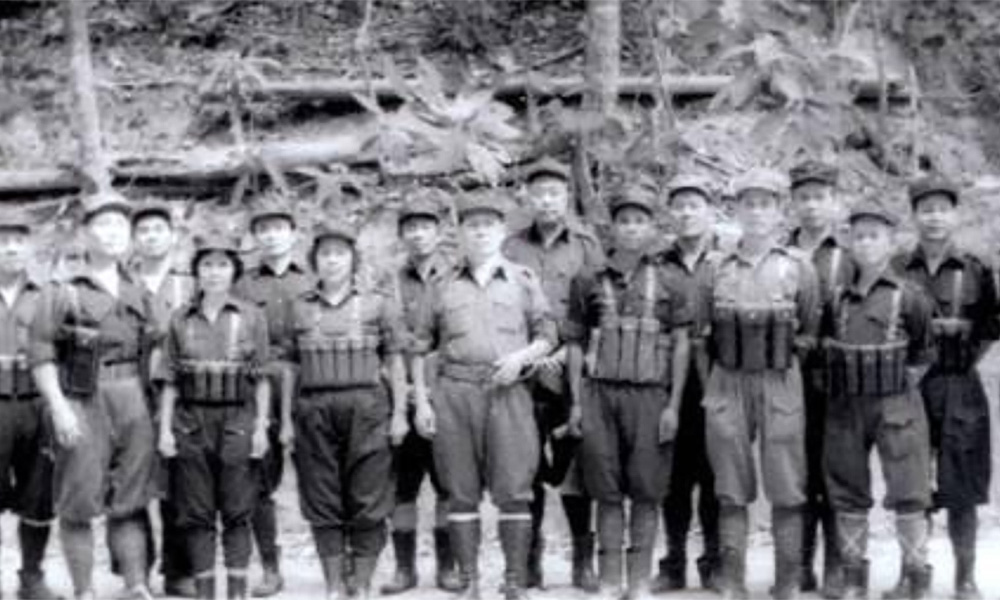
MCP guerilla fighters
Many
left-wing Malay nationalists saw communism not as an end in itself but
as a vehicle for independence and social transformation. To reduce their
struggle to mere ideological subversion is to flatten the rich and
complex motivations that drove anti-colonial resistance.
Within
the MCP’s armed wing, the Malayan National Liberation Army (MNLA),
Shamsiah rose to prominence in the 10th Regiment, the Malay guerrilla
unit formed on May 21, 1949.
The
10th Regiment was not a marginal formation. Scholarly estimates suggest
that it comprised several hundred members, drawn largely from Malay
communities in states such as Pahang, Perak, Kelantan, and Terengganu.
Many
Malays from Pahang, including Siti Norkiah, the Awas leader from Benta,
joined the MCP in 1948. Others, such as Pak Saud and his wife Mak Tijah
from Arau, Perlis, also became part of this movement.
Their
participation decisively challenges the simplistic narrative that
communism in Malaya was an exclusively Chinese phenomenon.
Staunch feminist
Shamsiah’s
own motivations were deeply personal as well as political. As Mahani
Musa notes in her article “Women in the Malayan Communist Party,
1942-89” (2013), Shamsiah was driven to join the nationalist struggle
“by her own marital breakup and wish to free women from the bondage of
feudalism, capitalism, imperialism, and masculine oppression”.
Divorced when she was eight months pregnant, she transformed personal adversity into political commitment.
Her own words in her memoir capture this dual struggle with remarkable clarity: “Aku
hanya seorang pejuang wanita yang berjuang melawan British untuk
kemerdekaan tanah air dan untuk emansipasi (kebebasan) wanita.”
(I am only a woman fighter who fought against the British for the
independence of the homeland and for the emancipation [freedom] of
women).
This
statement is not the voice of an ideologue, but of a nationalist and a
feminist - one who saw independence as inseparable from the emancipation
of women.
In 1991, the Malay magazine Dewan Masyarakat
published a seven-part series of articles on Shamsiah written by Fatini
Yaacob, reflecting sustained scholarly and public interest in her life.
Such
engagement underscores an important point: Shamsiah is not an obscure
or marginal figure, but one whose life story opens a window into the
broader currents of Malayan history - anti-colonial struggle,
ideological contestation, and the role of women in nation-building.
Who are we to judge?
To label her simply as a “communist insurgent” is therefore historically reductive and morally questionable.
Who
are we to judge and condemn her without understanding the circumstances
that shaped her choices? Was she not, in many respects, a freedom
fighter who was compelled by circumstance to adopt a radical path in
pursuit of national independence?
She was, arguably, a
“victim of circumstances”, joining the MCP to avoid detention and to
continue her struggle when all legal avenues had been closed.
Indeed,
according to Aisyah AB Rahim in her Master’s thesis (2012), entitled
“Shamsiah Fakeh (1924-2008): Kajian Terhadap Perjuangan Wanita Islam di
Tanah Melayu”, Shamsiah was “seorang nasionalis sejati dan anti-British
yang tegar” (a true nationalist and a staunch anti-British figure).
More
fundamentally, her life challenges the dominant narrative that
independence was achieved solely through moderate, elite-led politics.
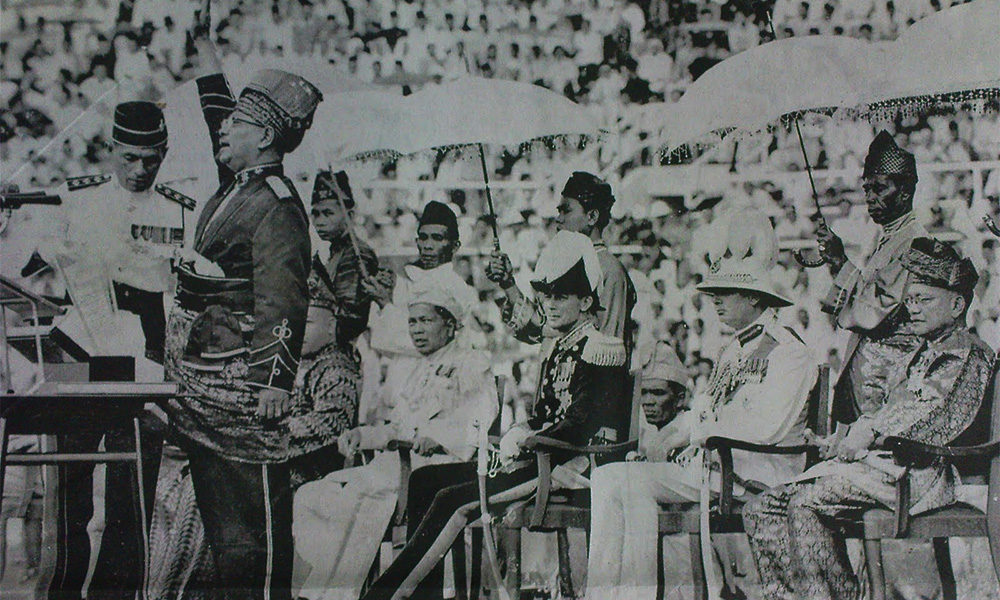
Tunku Abdul Rahmah declares Malaya’s independence from the British on Aug 31, 1957
While
constitutional negotiations and diplomatic efforts were undoubtedly
crucial, armed struggle, labour movements, and left-wing activism also
played significant roles in weakening colonial rule and shaping the
political consciousness of the masses.
To erase these contributions is to present a sanitised and incomplete version of history.
Propaganda is not knowledge
This
brings us to the crux of the matter: the banning of these books is not
merely an administrative act, but an assault on historical inquiry.
There are several compelling reasons why such a ban is unjustified.
First,
historical scholarship cannot be equated with ideological endorsement.
The study of communism in Malaya does not promote communism any more
than the study of colonialism endorses imperialism.
Academic
and memoir works such as “Memoir Shamsiah Fakeh” are essential for
understanding the past in its full complexity. To suppress them is to
conflate knowledge with propaganda.
Second, the ban undermines intellectual freedom and the right of Malaysians to access diverse perspectives on their own history.
A
mature nation does not fear its past; it confronts it, debates it, and
learns from it. Shielding the public from “uncomfortable truths” only
perpetuates ignorance and weakens critical thinking.
Third, the prohibition distorts the historical record. Hundreds of Malays did, in fact, join the communist insurgency.
This
is not a matter of opinion but of documented history; to deny or
obscure this reality is to falsify the past. A nation that selectively
remembers its history risks building its identity on fragile
foundations.
Fourth, the ban marginalises the
contributions of left-wing nationalists who, despite their ideological
affiliations, were part of the broader struggle for independence. Their
sacrifices, motivations, and aspirations deserve to be studied and
understood, not erased.
As Pierre Le Moyne, a
17th-century historical theorist, reminds us, “Truth is the very soul of
history.” Hence, we must not marginalise the contributions of the
left-wing nationalists and the communists in the struggle for national
independence.
Where’s the line?
Finally,
the banning of these works sets a troubling precedent. If historical
narratives can be suppressed on the grounds of ideological sensitivity,
where does one draw the line?
Today, it may be
communism; tomorrow, it could be any interpretation that challenges the
official narrative, such as that the Orang Asli are the truly indigenous
people of Peninsular Malaysia or that Parameswara died a
Hindu-Buddhist.
An artist’s impression of Parameswara
Such a trajectory is incompatible with a democratic and intellectually vibrant society.
Shamsiah’s importance lies not only in what she did, but in what her story reveals.
It
reveals a Malaya in flux, where competing visions of independence
coexisted and clashed. It reveals the agency of women in a patriarchal
society. It reveals the moral ambiguities and difficult choices faced by
those who lived under colonial rule.
Above all, it
reveals that Malaysian history is far richer, more contested, and more
inclusive than conventional narratives often suggest.
To
understand Shamsiah is to understand that history is not a monolithic
tale of heroes and villains, but a tapestry of human experiences shaped
by context, conviction, and circumstance.
She was a
nationalist, a freedom fighter, and a champion of women’s emancipation -
albeit one who chose a path that remains controversial. But controversy
is not a reason for erasure; it is a reason for deeper engagement.
As
a nation, we must have the courage to accept history as it happened.
This includes acknowledging that segments of the Malay population
participated in the communist insurgency, not out of blind ideological
zeal, but out of a desire to end colonial domination and transform
society.
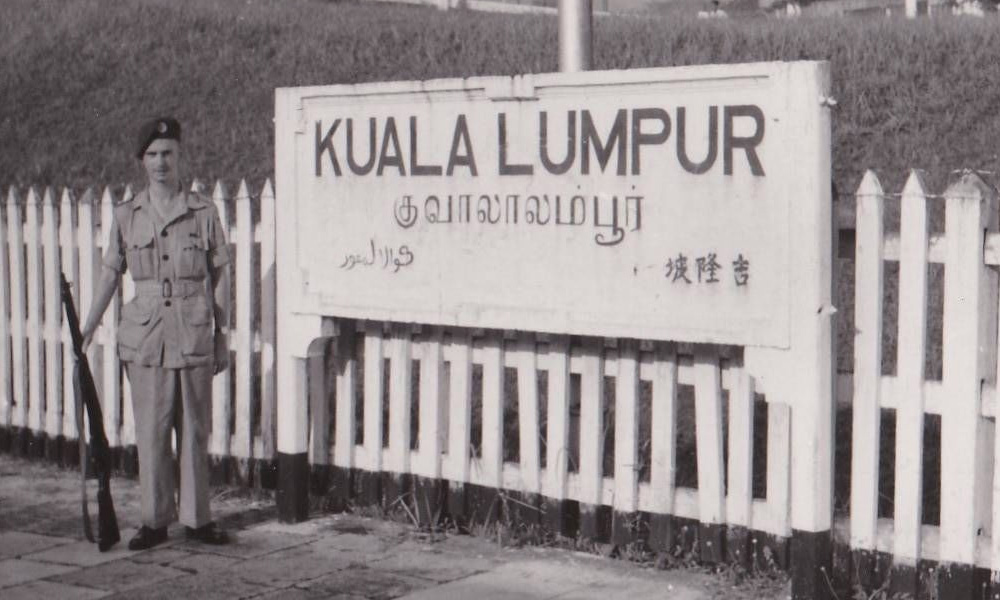
A British colonial solder stands guard amid the Malayan Emergency
It
also means recognising that the road to independence was neither linear
nor uniform, but marked by multiple trajectories and competing visions.
In
the final analysis, the banning of “Memoir Shamsiah Fakeh” and “Komrad
Asi (Rejimen 10)” does a disservice not only to the individuals
concerned but also to Malaysia itself.
It deprives
Malaysians of the opportunity to engage critically with their past and
to appreciate the diversity of experiences that have shaped the nation.
History must never be something we fear - it must be something we confront with honesty and courage.
It
should be rigorously studied, openly debated, and deeply understood in
all its complexity. For it is only when history is told truthfully and
inclusively that it can fulfil its highest purpose: to unite a nation.