Rudyard Kipling"
“When you're left wounded on Afganistan's plains and
the women come out to cut up what remains, Just roll to your rifle
and blow out your brains,
And go to your God like a soldier”
General Douglas MacArthur"
“We are not retreating. We are advancing in another direction.”
“It is fatal to enter any war without the will to win it.” “Old soldiers never die; they just fade away.
“The soldier, above all other people, prays for peace, for he must suffer and be the deepest wounds and scars of war.”
“May God have mercy upon my enemies, because I won't .” “The object of war is not to die for your country but to make the other bastard die for his.
“Nobody ever defended, there is only attack and attack and attack some more.
“It is foolish and wrong to mourn the men who died. Rather we should thank God that such men lived.
The Soldier stood and faced God
Which must always come to pass
He hoped his shoes were shining
Just as bright as his brass
"Step forward you Soldier,
How shall I deal with you?
Have you always turned the other cheek?
To My Church have you been true?"
"No, Lord, I guess I ain't
Because those of us who carry guns
Can't always be a saint."
I've had to work on Sundays
And at times my talk was tough,
And sometimes I've been violent,
Because the world is awfully rough.
But, I never took a penny
That wasn't mine to keep.
Though I worked a lot of overtime
When the bills got just too steep,
The Soldier squared his shoulders and said
And I never passed a cry for help
Though at times I shook with fear,
And sometimes, God forgive me,
I've wept unmanly tears.
I know I don't deserve a place
Among the people here.
They never wanted me around
Except to calm their fears.
If you've a place for me here,
Lord, It needn't be so grand,
I never expected or had too much,
But if you don't, I'll understand."
There was silence all around the throne
Where the saints had often trod
As the Soldier waited quietly,
For the judgment of his God.
"Step forward now, you Soldier,
You've borne your burden well.
Walk peacefully on Heaven's streets,
You've done your time in Hell."
The only time leaders ever listen By Mariam Mokhtar
Saturday, April 18, 2026
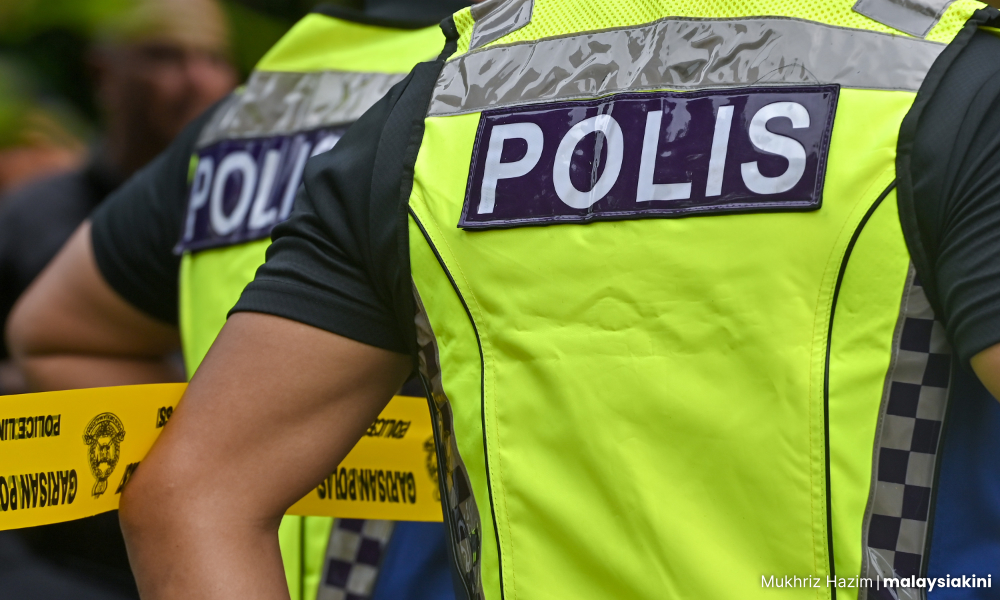
Malaysiakini : The alleged arrest
of a TikToker under the Sedition Act, reportedly for criticising Prime
Minister Anwar Ibrahim, is troubling not just for what may have
happened, but for what followed. Silence.
When authorities
refuse to confirm or deny widely reported actions, it ceases to be
procedure and becomes power - who controls information, and who decides
what the public is allowed to question.
This
is the irony and the sad fact of our leaders today. Many of them rose
by opposing such opacity. They spoke of reform, defended dissent, and
championed the rakyat’s right to criticise.
Yet once in power, criticism appears less like a democratic necessity and more like an inconvenience.
Was
the commitment to free speech always conditional? If criticism is only
acceptable when convenient, it is not a principle; it is a tactic, but
we all know that tactics have an expiry date.
When
the openness which was previously exhibited disappears, people will
begin to notice the inconsistency. The electorate knows the tactic is no
longer believable, the rakyat sees the contradiction, and trust starts
to erode.
Take a page from others
However, not all leaders react this way, and there is much that our leaders can learn from the heads of other nations.
New
Zealand’s then-prime minister, Jacinda Ardern, faced intense public
criticism during COVID-19, yet responded with transparency and policy
adjustments rather than suppression.
She was
criticised relentlessly, over lockdowns, mandates, and economic costs,
but under her leadership, criticism was not treated as a crime, but as a
consequence of governing. The response was not silence, but
explanation; not suppression, but adjustment.
Former New Zealand prime minister and leftist bitch, Jacinda Ardern
Even within a controlled and tightly managed system like Singapore, there is still some responsiveness to criticism.
Singapore’s
former prime minister, Lee Hsien Loong, may not have embraced criticism
in the same open way as Ardern, but he acted with more subtlety by
acknowledging policy pressures and recalibrating where necessary.
In
major speeches and especially on National Day Rallies, he would openly
address issues people were unhappy about, like rising HDB prices,
migrant workers, rising living costs, and inequality.
The
key point is that the issue was neither silenced nor denied, but there
would be a response to the criticism and a possible policy
recalibration.
Former United States president Barack
Obama governed amid relentless criticism, but in the US, under him,
criticism was not suppressed but institutionalised, and channelled
through a free press, legislative scrutiny, and judicial review.
Democracy depends on criticism
The contrast is clear: criticism, when engaged with, strengthens legitimacy. When suppressed, it erodes it.
A
functioning democracy does not merely tolerate criticism; it depends on
it. It is a stress test of leadership, not an attack on it. Without it,
governance becomes performance, and power becomes theatre.
Naturally,
criticism can be crude, emotional, even unfair, especially in the age
of social media, but the true test of leadership is not how it handles
polite dissent. It is how it responds to the loud, messy, inconvenient
kind.
Knowingly, democracy was never meant to be tidy.
There
is, however, a familiar double standard. In the opposition, criticism
is framed as accountability. In the government, the same criticism
becomes “destabilising”.
Laws once condemned as repressive are repurposed as necessary. The Sedition Act does not change; only those wielding it do.
And
here lies the uncomfortable truth: power changes perception. Criticism
feels personal. Dissent looks like disloyalty. The line between
protecting the state and protecting one’s image begins to blur.
A leader who cannot tolerate criticism is not strong, as he’s only shielded.
The price of silencing dissent
There
seems to be an unwritten political rulebook whereby, when in the
opposition, “The people must be heard.” Then the transition to being the
rulers means that in government, “The people must be… managed.”
Some
politicians tend to treat criticism like gym memberships,
enthusiastically signing up when in the opposition, but quietly
neglecting the gym when in power. Unlike a missed workout, the cost is
not personal. It is public.
Will the Madani
administration appreciate that criticism is not the enemy of governance?
It is its safeguard. It is the early warning system that tells us when
power drifts and promises fade.
Therefore,
suppressing criticism is not just silencing dissent; it is weakening
democracy itself, and that is a price no government can afford.
Why has there been no clear confirmation about what happened to “Jorjet Myla”?