Rudyard Kipling"
“When you're left wounded on Afganistan's plains and
the women come out to cut up what remains, Just roll to your rifle
and blow out your brains,
And go to your God like a soldier”
General Douglas MacArthur"
“We are not retreating. We are advancing in another direction.”
“It is fatal to enter any war without the will to win it.” “Old soldiers never die; they just fade away.
“The soldier, above all other people, prays for peace, for he must suffer and be the deepest wounds and scars of war.”
“May God have mercy upon my enemies, because I won't .” “The object of war is not to die for your country but to make the other bastard die for his.
“Nobody ever defended, there is only attack and attack and attack some more.
“It is foolish and wrong to mourn the men who died. Rather we should thank God that such men lived.
The Soldier stood and faced God
Which must always come to pass
He hoped his shoes were shining
Just as bright as his brass
"Step forward you Soldier,
How shall I deal with you?
Have you always turned the other cheek?
To My Church have you been true?"
"No, Lord, I guess I ain't
Because those of us who carry guns
Can't always be a saint."
I've had to work on Sundays
And at times my talk was tough,
And sometimes I've been violent,
Because the world is awfully rough.
But, I never took a penny
That wasn't mine to keep.
Though I worked a lot of overtime
When the bills got just too steep,
The Soldier squared his shoulders and said
And I never passed a cry for help
Though at times I shook with fear,
And sometimes, God forgive me,
I've wept unmanly tears.
I know I don't deserve a place
Among the people here.
They never wanted me around
Except to calm their fears.
If you've a place for me here,
Lord, It needn't be so grand,
I never expected or had too much,
But if you don't, I'll understand."
There was silence all around the throne
Where the saints had often trod
As the Soldier waited quietly,
For the judgment of his God.
"Step forward now, you Soldier,
You've borne your burden well.
Walk peacefully on Heaven's streets,
You've done your time in Hell."
Is PAS really a 'snake' that bites its friends? By James Chai
Saturday, January 10, 2026
Malaysiakini : However, Akmal went further. He saw the split of Malay parties as a
tragedy, and revived the grand dream of combining the two largest Malay
parties, Umno and PAS, in the Muafakat Nasional tent.
This was opportunistic as PAS leaders now felt betrayed by Bersatu after the Perlis menteri besar crisis, where a coup resulted in the PAS menteri besar being replaced by a Bersatu leader.
Akmal
even had the backing of PAS information chief Ahmad Fadhli Shaari, who
wanted MN to be “immediately” launched after Umno leaves the coalition
government.
Every Malay party leader has tried to unify the Malays
(former Umno president Onn Jaafar’s Kongres Melayu, Tengku Razaleigh
Hamzah’s Angkatan Perpaduan Ummah, Dr Mahathir Mohamad’s “Kongres Maruah
Melayu”, and the current prime minister’s Bumiputera Economic Congress).
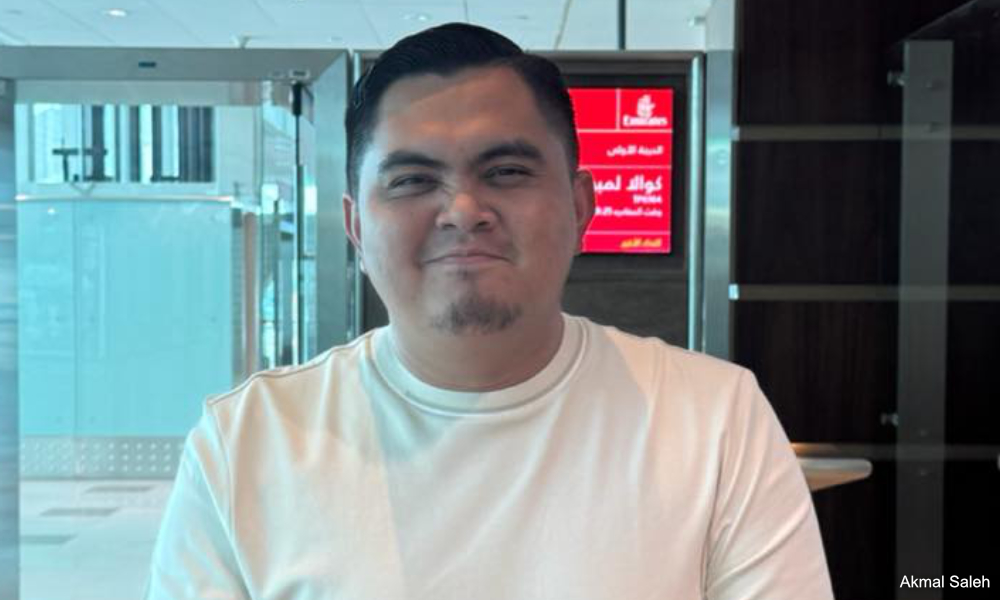
Umno Youth chief Dr Akmal Saleh
The
moves were made because they stoked a profound longing among Malays and
would almost guarantee electoral dominance. Imagine the most prominent
Malay-Muslim leaders seated together with a common Malay agenda.
And
then imagine Akmal as the first proposer. If it worked this time, Akmal
would have achieved a rare feat in Malaysian political history.
However, this was not meant to be.
Zahid
did not seem convinced and urged his party not to “indulge in
nostalgia”, and promised to stay with the coalition government for now.
In Malay culture, snakes are commonly used as imagery to describe a hidden betrayal that is close to you or two-faced behaviour.
For
Zahid to use such a harsh description shows that Umno has not moved on
from its perceived betrayal by PAS after they formed MN in 2019.
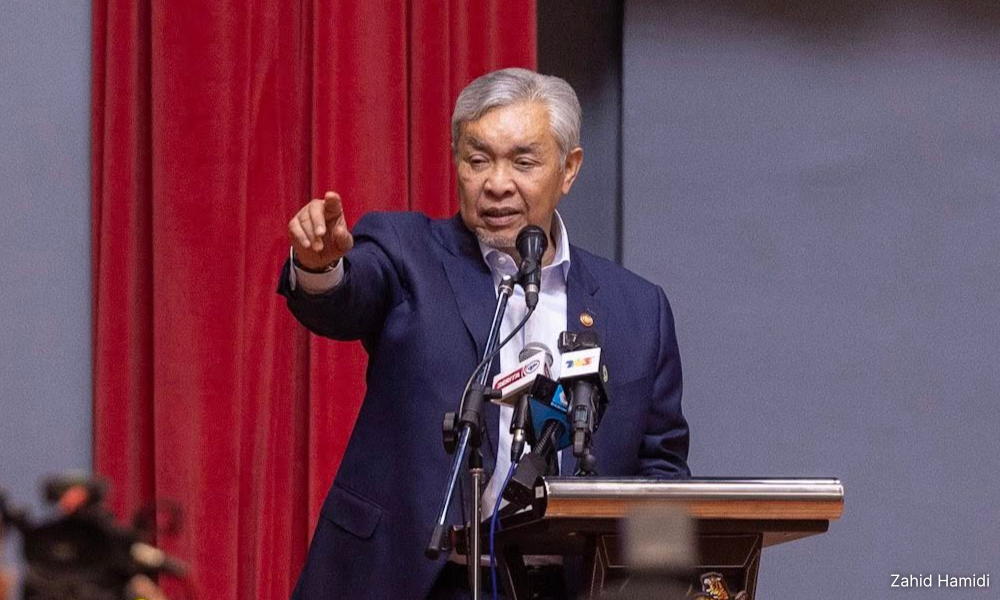
Umno president Ahmad Zahid Hamidi
Notwithstanding the hype around the pact, it was a project that lasted for barely five months. It was not even a formal coalition; it was only a charter signed by both parties to champion Malay-Muslim issues.
Yet,
Umno expected some degree of loyalty from PAS, and felt betrayed when
PAS went on to form a formal political coalition with Bersatu. Even
after five years, Zahid still doubts PAS’ sincerity and accuses them of
abandoning the project.
Most political parties have the right to
be cautious of PAS. The Islamic party has partnered with most major
political parties, and almost all of them ended acrimoniously.
The
only time PAS could work well with its partners was when the others
were small, bordering on insignificant: Gerakan, Pan-Malaysian Islamic
Front (Berjasa), and Malaysia National Alliance Party (Ikatan).
Based on their coalition track records, there seem to be at least three reasons why it is hard for others to work with PAS.
Why PAS always abandons partners
First,
PAS’ long-term thinking sees every partner as merely a tool. What
cannot be taken away from PAS is that it has a clear long-term vision
that has not changed since its founding in 1951.
PAS believes in a
government and society that is led by Islamic leadership, with Islamic
precepts and syariah law governing every aspect. While the zeal and
gradient of this may vary through the decades, the long-term vision did
not change.
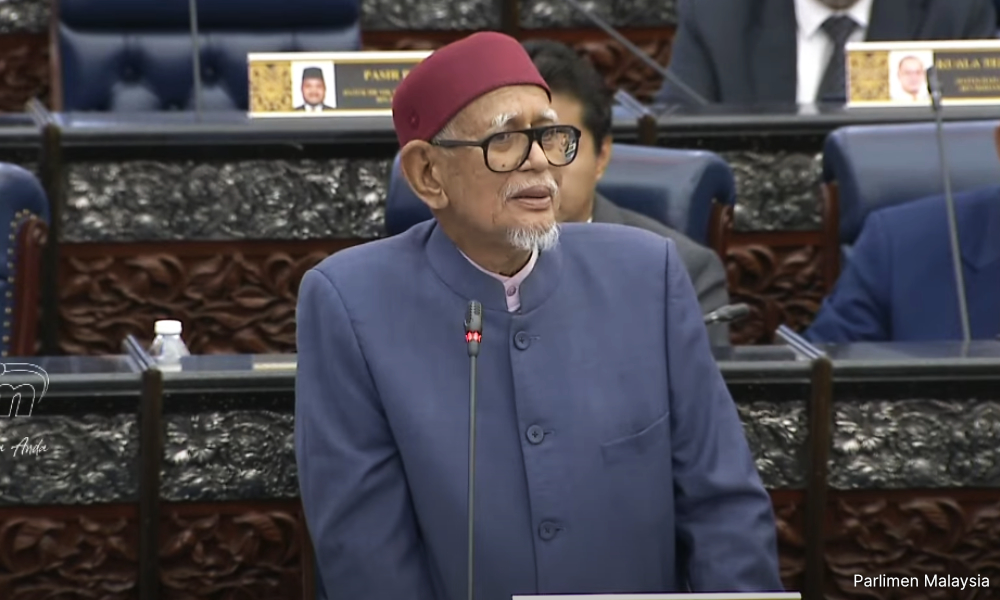
PAS president Abdul Hadi Awang
Under PAS president Abdul Hadi Awang, this takes a more exclusivist tone of marginalising non-believers.
Another proof of PAS’ long-term vision is its launch of the “Wawasan Induk Negara Sejahtera 2051” that lays its grand vision of how Malaysia should be transformed at the party’s 100th year.
That
is why it does not see coalition partnership the same way other parties
do. It does not matter who they work with, as long as it serves them to
get closer to the party’s long-term vision.
PAS used to hold on
to the principle of “tahaluf siyasi” (or political pact) to justify
working with BN (1974), Angkatan Perpaduan Ummah (1990), Barisan
Alternatif (1999), Pakatan Rakyat (2008).
It then changed to a new
strategy called “ta’awun siyasi” (or political cooperation), which is a
looser concept that allows it to work with as many parties as possible -
even at the same time.
It was what helped justify a flexible
partnership with arch-rival Umno, but still formed a political coalition
with Bersatu. It was why this was perceived as a betrayal to Umno but
was logical to PAS and its long-term vision.
‘Big brother’ tendency
Second,
PAS has a “big brother” tendency that is growing by the election. When
times are good, it would not take long before PAS shows how
uncomfortable they are playing second fiddle.
In 1999, when it won
27 seats (from the previous seven seats) as part of Barisan Alternatif
with DAP, Keadilan, and Parti Rakyat Malaysia (PRM), it became
overzealous and started pursuing kharaj land tax
on non-Muslims, mandating Muslim dress codes, banning gambling and
restricting alcohol, and pushed for syariah enactments in Kelantan and
Terengganu.
DAP left the pact. The current rift with Bersatu is
similar, as PAS is not only the largest party in Parliament now, but has
also made breakthroughs in Sabah and Negeri Sembilan to feel confident.
Even
when times are bad, PAS has a track record of making unilateral
decisions and violating coalition principles. Despite rejections by DAP
and PKR, PAS insisted on implementing hudud when it was part of Pakatan
Rakyat.
Similarly, Umno’s main grievance against PAS was that the
Islamic party did not consult Umno before forming Perikatan Nasional,
resulting in the severance of trust and the MN structure.
And
this can be attributed to how PAS works. Its ulama leadership is the
central authority. The veto authority of its ulama outweighs any
coalition discussion.
It is hard for PAS to view its ulama as
being subservient or even equal to other coalition partners. After all,
any partnership is meant to serve PAS’ highest truth of governing the
country with Islam. There could not be anything higher.
Third,
PAS’ ideological stance will not shift. In its party constitution, 2003
Islamic State document, official speeches, and multiple peer-reviewed
journals, it is unambiguous that PAS is intent on an Islamic state that
runs on Islamic precepts and syariah laws.
The short diversion to
use “negara berkebajikan” (welfare state) in 2011 was simply a matter of
relabelling and sequencing (welfare first, to lead to an Islamic
state).
Other parties are aware of this, but were still open to
working with PAS because of what they bring. PAS has one of the most
disciplined party machinery that could be mobilised in an instant.
Its
70-year grassroots infrastructure is mature, covering pre-schools to
secondary schools, youth volunteering corps, and civil society. In a
world where voters are split, a party that could deliver between 30 to
40 MP seats with certainty is a kingmaker.
By this time, every
party knows what it is like to work with PAS. Yet, most parties are
still tempted to consider, given PAS’ seemingly unstoppable electoral
ascendency.
These parties will convince themselves that they could
manage PAS’ behaviour and eventually come out on top. However, they
should ask Bersatu how this turned out.