Rudyard Kipling"
“When you're left wounded on Afganistan's plains and
the women come out to cut up what remains, Just roll to your rifle
and blow out your brains,
And go to your God like a soldier”
General Douglas MacArthur"
“We are not retreating. We are advancing in another direction.”
“It is fatal to enter any war without the will to win it.” “Old soldiers never die; they just fade away.
“The soldier, above all other people, prays for peace, for he must suffer and be the deepest wounds and scars of war.”
“May God have mercy upon my enemies, because I won't .” “The object of war is not to die for your country but to make the other bastard die for his.
“Nobody ever defended, there is only attack and attack and attack some more.
“It is foolish and wrong to mourn the men who died. Rather we should thank God that such men lived.
The Soldier stood and faced God
Which must always come to pass
He hoped his shoes were shining
Just as bright as his brass
"Step forward you Soldier,
How shall I deal with you?
Have you always turned the other cheek?
To My Church have you been true?"
"No, Lord, I guess I ain't
Because those of us who carry guns
Can't always be a saint."
I've had to work on Sundays
And at times my talk was tough,
And sometimes I've been violent,
Because the world is awfully rough.
But, I never took a penny
That wasn't mine to keep.
Though I worked a lot of overtime
When the bills got just too steep,
The Soldier squared his shoulders and said
And I never passed a cry for help
Though at times I shook with fear,
And sometimes, God forgive me,
I've wept unmanly tears.
I know I don't deserve a place
Among the people here.
They never wanted me around
Except to calm their fears.
If you've a place for me here,
Lord, It needn't be so grand,
I never expected or had too much,
But if you don't, I'll understand."
There was silence all around the throne
Where the saints had often trod
As the Soldier waited quietly,
For the judgment of his God.
"Step forward now, you Soldier,
You've borne your burden well.
Walk peacefully on Heaven's streets,
You've done your time in Hell."
'A' for Apandi: How ex-AG avoided accountability By Mariam Mokhtar
Friday, January 02, 2026
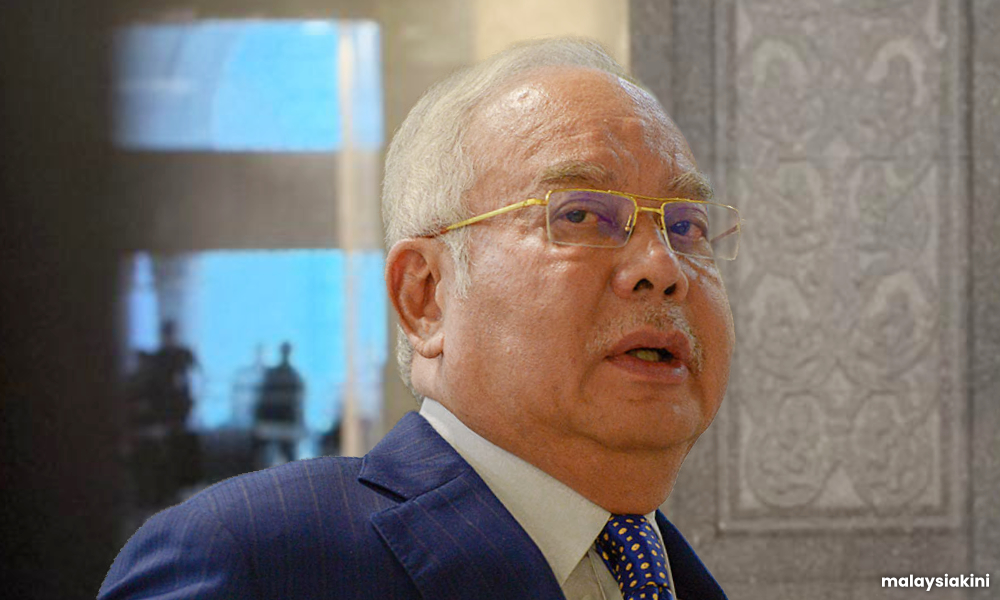
Malaysiakini : The former attorney-general (AG) should not be viewed as a cartoon villain or a political caricature, but he should be examined as a case study in institutional collapse.
How
was it possible that a man with enormous legal power, albeit exercised
without transparency, was able to neutralise justice without ever
stepping into a courtroom?
The most dangerous failures in
governance don’t make headlines. They happen quietly inside offices,
look lawful on paper, and hide behind the shield of discretion.
From 2015 to 2018
The timeline of decisions, from 2015 to 2018, is revealing.
Year
2015 was about "removal and reset": In July 2015, the then AG Abdul
Gani Patail was abruptly removed and replaced by Apandi.
Shortly
after that change, the multi-agency special task force investigating
1MDB, which involved the AG's Chambers, Bank Negara Malaysia, the
police, and MACC, was disbanded or rendered inactive, with key officials
reassigned.
Investigative momentum slowed before fracturing. This was not a courtroom event. It was an institutional decision.
Year
2016 was about "No Further Action": In January 2016, Apandi announced
that Najib had committed no offence in relation to funds that later
proved, in court, to originate from SRC International and 1MDB-linked
sources.
Apandi classified the investigation papers as “No Further Action” (NFA).
Years later, under oath, Apandi testified that he had classified the 1MDB investigation as NFA even though investigations were not completed when he left office.
He
claimed witnesses had absconded, and evidence was missing; however, he
did not dispute that investigations remained unfinished.
As a result, no charges were brought, and no prosecution was tested in court. That distinction matters.
From
2016 to 2018, prosecutorial discretion was exercised in a way that
consistently terminated lines of inquiry rather than advancing them.
Resistance, not cooperation
During
later High Court proceedings, Apandi acknowledged that mutual legal
assistance (MLA) from foreign jurisdictions could assist investigations,
yet he also argued that cooperating with foreign authorities might
prejudice local probes.
This was a position the court found difficult to reconcile.
Court documents
recorded questions as to why Malaysian authorities did not accept or
offer MLA to the Swiss AG or the US Justice Department, despite those
agencies actively investigating 1MDB-linked transactions. International
investigators encountered resistance, not cooperation.
These are
documented decisions and judicially recorded observations, not
speculation. Decisions matter, especially when made by an AG.
This
was more dangerous than acquittal, because justice was not defeated in
court. Justice was neutralised before it reached the court.
An
acquittal can be scrutinised, appealed, criticised, but a prosecution
never brought leaves no judgment, no reasoning, no institutional memory.
This
is why the Court of Appeal later observed that Apandi’s conduct created
the impression that the 1MDB scandal had been covered up.
Impression
matters, because justice depends on public trust, and once public trust
in justice is damaged, the entire system weakens. Najib’s conviction
closes one chapter, but it exposes another.
Silence is not neutrality
In
2022, a police report was lodged concerning Apandi’s role during his
tenure as AG, and investigations were publicly acknowledged.
Since then, there has been no public accounting, no conclusion and no explanation.
Silence is not neutrality. Silence is a decision. Decisions made without explanation are exactly how institutions decay.
In
the post-Najib era of the country, Malaysians were promised reform
after 2018. This meant independence of institutions, the separation of
powers and no more political shielding.
The political shielding
operated as a buffer between power and accountability and effectively
insulated decision-makers from ordinary processes of accountability.
Today, the most important test of reform is not whether we punish villains, but whether we confront the enablers.
So,
if no explanation is required for shutting down investigations, no
accountability follows institutional inaction and no lessons are
publicly articulated, then the system has not learnt any lesson.
In other words, without accountability and transparency, institutions have failed to learn anything from past inaction.
Loyalty safer than law
The message to the rakyat is simple: Loyalty is safer than law. Delay outlasts outrage. Time protects those who do nothing.
This
is precisely what citizens observe in Malaysia today, across successive
administrations, whenever a major scandal erupts: 1MDB, the Scorpene
procurement saga, Altantuya Shaariibuu’s murder, the littoral combat
ships navy scandal, the disappearance of Pastor Raymond Koh, and the
unresolved case of M Indira Gandhi’s daughter.
In each, loyalty appears safer than law, delay outlasts outrage, and time protects those who do nothing.
Apandi matters now, but he is not unique. He is repeatable.
If
Malaysia does not explain what went wrong, and not just who was wrong,
then the next AG inherits the same dangerous ambiguity. Unchecked
discretion. Opaque decisions. No consequences.
More importantly, that is not reform, but it is a relapse.
So, while Najib’s conviction tells us who benefited, it is Apandi’s silence which forces us to ask who enabled.
Until Malaysia answers with honesty, accountability remains incomplete.
If Najib is guilty, what about those who stopped the system from working?