Rudyard Kipling"
“When you're left wounded on Afganistan's plains and
the women come out to cut up what remains, Just roll to your rifle
and blow out your brains,
And go to your God like a soldier”
General Douglas MacArthur"
“We are not retreating. We are advancing in another direction.”
“It is fatal to enter any war without the will to win it.” “Old soldiers never die; they just fade away.
“The soldier, above all other people, prays for peace, for he must suffer and be the deepest wounds and scars of war.”
“May God have mercy upon my enemies, because I won't .” “The object of war is not to die for your country but to make the other bastard die for his.
“Nobody ever defended, there is only attack and attack and attack some more.
“It is foolish and wrong to mourn the men who died. Rather we should thank God that such men lived.
The Soldier stood and faced God
Which must always come to pass
He hoped his shoes were shining
Just as bright as his brass
"Step forward you Soldier,
How shall I deal with you?
Have you always turned the other cheek?
To My Church have you been true?"
"No, Lord, I guess I ain't
Because those of us who carry guns
Can't always be a saint."
I've had to work on Sundays
And at times my talk was tough,
And sometimes I've been violent,
Because the world is awfully rough.
But, I never took a penny
That wasn't mine to keep.
Though I worked a lot of overtime
When the bills got just too steep,
The Soldier squared his shoulders and said
And I never passed a cry for help
Though at times I shook with fear,
And sometimes, God forgive me,
I've wept unmanly tears.
I know I don't deserve a place
Among the people here.
They never wanted me around
Except to calm their fears.
If you've a place for me here,
Lord, It needn't be so grand,
I never expected or had too much,
But if you don't, I'll understand."
There was silence all around the throne
Where the saints had often trod
As the Soldier waited quietly,
For the judgment of his God.
"Step forward now, you Soldier,
You've borne your burden well.
Walk peacefully on Heaven's streets,
You've done your time in Hell."
Why some Malays fear Yeoh as FT minister By Mariam Mokhtar
Friday, December 19, 2025
Malaysiakini : Whoever holds this portfolio inherits tension by design.
Obfuscation
Instead
of interrogating that structure, parts of the public debate obsessed
about Yeoh’s identity, as a Chinese, non-Muslim woman, as though the
race of the minister determines who benefits from urban policy.
This framing is not only inaccurate; it actively shields the real centres of power from scrutiny.
Historically,
every federal territories minister before Yeoh was Malay and Muslim.
Several left office amid allegations of corruption, abuse, or serious
governance failures.
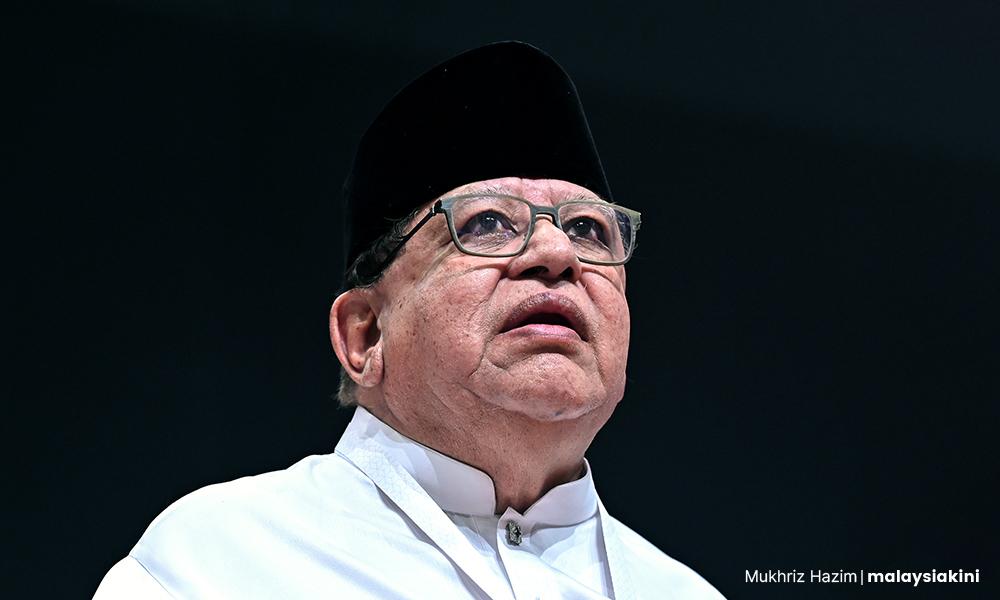
For example, former federal territories minister Tengku Adnan TengkuMansor was found guilty
by the High Court of accepting RM2 million in connection with official
duties during his tenure, and was later sentenced to prison and fined,
but the execution of the sentence was stayed pending appeal.
Tengku Adnan Tengku Mansor
He was then granted a discharge amounting to an acquittal by the Court of Appeal in 2021. The Attorney-General’s Chambers then withdrew its appeal of the acquittal, making it final.
These controversies escaped racial scrutiny. None were framed as a threat to the Malay community.
That
distinction matters. When failure was associated with Malay ministers,
it was treated as individual or institutional. With a non-Malay
appointment, it suddenly becomes existential.
Here is
the uncomfortable irony: the same system that critics claim protects
Malay interests has, in practice, been administered almost entirely by
Malay ministers.
Today, its failures are now being
projected onto a non-Malay appointment. If past mismanagement did not
weaken Malay political standing, why would reform, or continuity under a
different face, suddenly do so?
An unaccountable city government
We
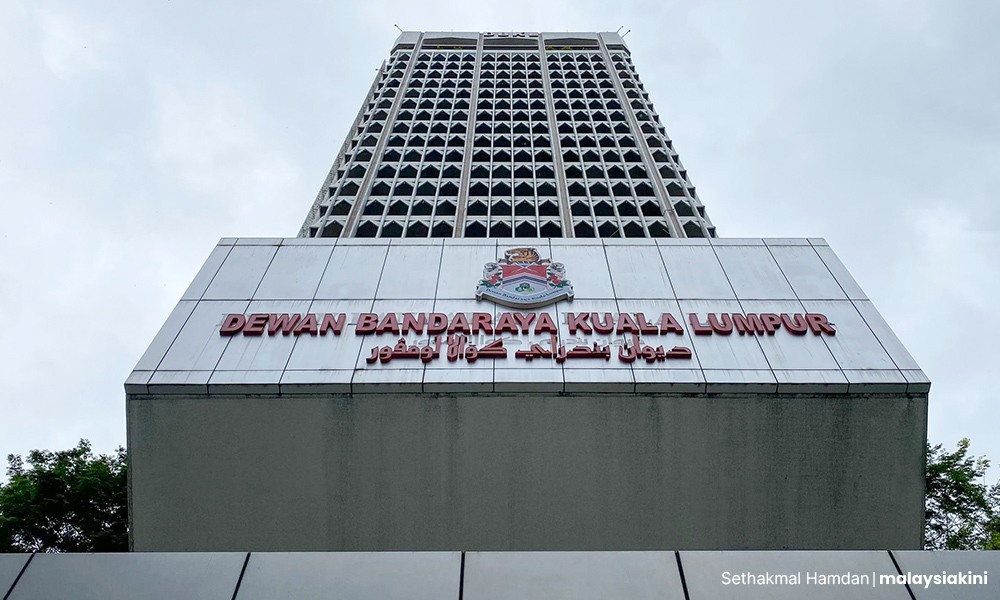
neglect the more serious issue of governance. Kuala Lumpur does not
have local elections. Its mayor is appointed, not elected. Planning,
land use, and development approvals are heavily centralised, with
limited statutory mechanisms for public objection or councillor
oversight.
MPs have publicly described the mayor’s authority as excessively broad, with weak checks and balances.
Setiawangsa
MP Nik Nazmi Nik Ahmad said that the current system “concentrates
authority almost entirely in the hands of the federally appointed
mayor,” with little effective oversight.
The Private Member’s Bill he proposed seeks a councillor-based system to introduce greater transparency, accountability, and public representation in Kuala Lumpur.
In
this context, the absence of an Urban Renewal Act matters. Without a
clear legal framework governing redevelopment, displacement,
compensation, and resident consent, urban renewal becomes ad hoc and
opaque.
Developers operate in a permissive
environment, residents feel marginalised, and political accountability
becomes diffuse. These are structural conditions that would challenge
any minister, irrespective of race.
Scapegoating?
However, a more uncomfortable question emerges: Is Yeoh being placed in a role designed to absorb political fallout?
This is not an accusation but a legitimate question rooted in political logic. The federal territories portfolio is a blame-heavy one.
Public
anger over development, congestion, and governance will not disappear.
If reforms stall or tensions escalate, responsibility will attach to the
minister, and not to the prime minister, not to the system, and
certainly not to entrenched interests.
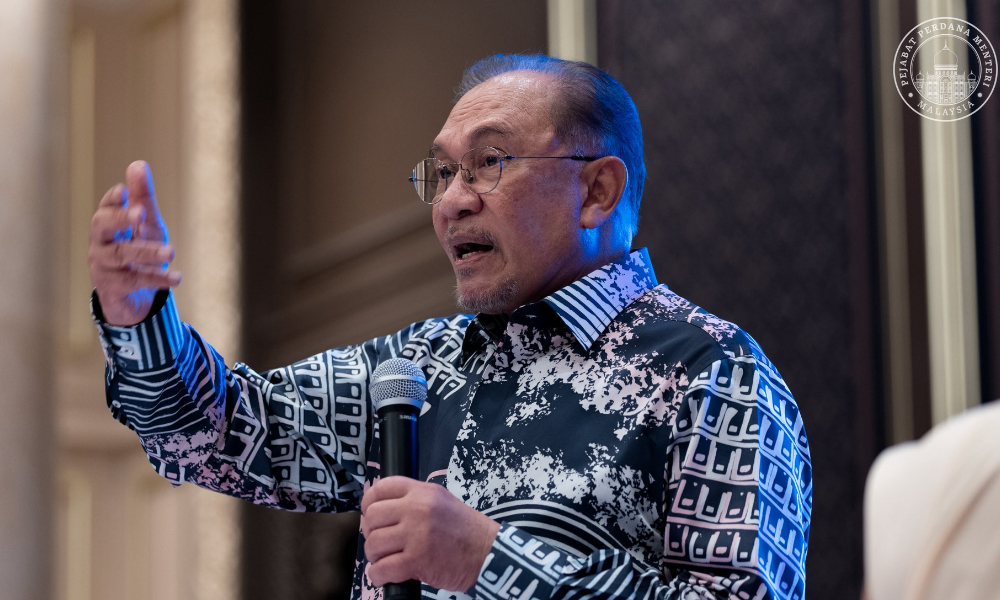
Anwar Ibrahim’s governing style
has consistently prioritised coalition stability and risk avoidance.
Delegating a volatile portfolio while retaining strategic distance is
not unusual in coalition politics.
Whether intentional or not, the effect is the same: the minister becomes the lightning rod.
This
is why racialising Yeoh’s appointment is politically convenient. Race
diverts attention away from structural reform. It personalises what
should be institutional.
It allows those with real
influence, meaning the developers, planners, and federal authorities, to
remain largely unchallenged while public anger is redirected.
Even a minister’s power is limited
No
one is endorsing Yeoh’s record. She is not above criticism. Questions
have once been raised about transparency and accountability during her
ministerial tenure, including matters involving her family that deserve
scrutiny like any other public figure’s.
Acknowledging
this strengthens, rather than weakens, the argument: criticism should
be grounded in conduct and policy, not identity.
Some
of her previous ministerial roles were constrained by the very same
problem now confronting her in the federal territories portfolio: the
limited authority to challenge entrenched systems.
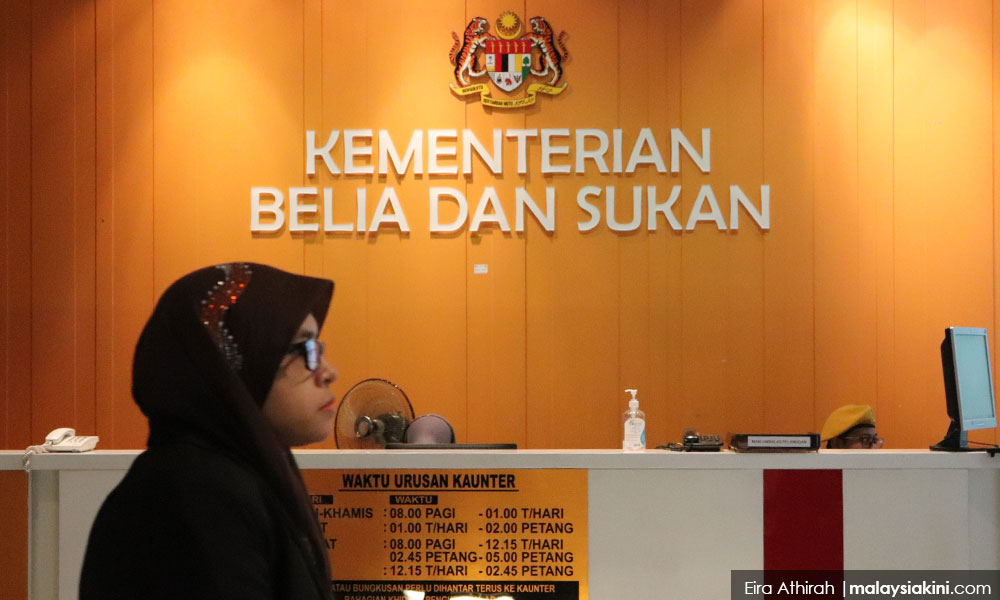
Child marriage reforms stalled not because of one minister’s views but because of religious-political sensitivities. Sporting governance scandals exposed oversight gaps that pre-dated her tenure. These were systemic failures.
So,
if Kuala Lumpur continues to be governed without democratic
accountability, without transparent planning safeguards, and without a
coherent urban renewal framework, then no minister will succeed.
Not a Malay minister. Not a non-Malay minister. Not Yeoh.
The
real danger is not who holds the portfolio. It is that Malaysians are
still debating power as though it were racial, when in reality it is
institutional.
The world is moving forward, towards
accountability, engagement, and rights-based urban governance, but
Malaysia risks moving backwards, retreating into ethnic silos while
cities are reshaped without consent.
Sixty-eight
years on, perhaps the question we should be asking is not why some
Malays fear Yeoh, but why we are still afraid to confront the system
that fails us all.