Rudyard Kipling"
“When you're left wounded on Afganistan's plains and
the women come out to cut up what remains, Just roll to your rifle
and blow out your brains,
And go to your God like a soldier”
General Douglas MacArthur"
“We are not retreating. We are advancing in another direction.”
“It is fatal to enter any war without the will to win it.” “Old soldiers never die; they just fade away.
“The soldier, above all other people, prays for peace, for he must suffer and be the deepest wounds and scars of war.”
“May God have mercy upon my enemies, because I won't .” “The object of war is not to die for your country but to make the other bastard die for his.
“Nobody ever defended, there is only attack and attack and attack some more.
“It is foolish and wrong to mourn the men who died. Rather we should thank God that such men lived.
The Soldier stood and faced God
Which must always come to pass
He hoped his shoes were shining
Just as bright as his brass
"Step forward you Soldier,
How shall I deal with you?
Have you always turned the other cheek?
To My Church have you been true?"
"No, Lord, I guess I ain't
Because those of us who carry guns
Can't always be a saint."
I've had to work on Sundays
And at times my talk was tough,
And sometimes I've been violent,
Because the world is awfully rough.
But, I never took a penny
That wasn't mine to keep.
Though I worked a lot of overtime
When the bills got just too steep,
The Soldier squared his shoulders and said
And I never passed a cry for help
Though at times I shook with fear,
And sometimes, God forgive me,
I've wept unmanly tears.
I know I don't deserve a place
Among the people here.
They never wanted me around
Except to calm their fears.
If you've a place for me here,
Lord, It needn't be so grand,
I never expected or had too much,
But if you don't, I'll understand."
There was silence all around the throne
Where the saints had often trod
As the Soldier waited quietly,
For the judgment of his God.
"Step forward now, you Soldier,
You've borne your burden well.
Walk peacefully on Heaven's streets,
You've done your time in Hell."
Anwar's reform promise undone by political appointments By R Nadeswaran
Tuesday, August 04, 2026
Malaysiakini : I then wrote:
“The appointment of competent and qualified people to the helm will
help restore the prestige and stature of these bodies, which have often
been accused of using them as their personal fiefdom.
“Their
appointments must be decided by an independent and competent body and
the candidates must be selected irrespective of colour or creed and the
KPIs set.”
But
it did not last long. Little by little, political appointments
returned. By May the following year, Umno leader Reezal Merican Naina
Merican was made Matrade chairperson.
His
was among a series of political appointments involving Umno figures
after the 15th general election, part of Umno’s machinations to retain
its influence in government, and later take power.
However, it was the appointment of Nooryana Najwa Najib,
daughter of former prime minister Najib Abdul Razak, to the board of
the Matrade that drew the most attention and indicated Umno’s grip on
Anwar.
From reform pledge to political patronage
This
trend continued, and the Institute for Democracy and Economic Affairs
(Ideas) flagged 238 political appointments to federal statutory bodies
(FSB) and GLCs under Anwar’s administration.
In its report,
titled “Who Sits at the Table: From Political to Public Appointees in
Malaysia’s Federal Statutory Bodies”, released in March, the think tank
found that 222 political appointments were made to FSBs, while another
16 were to GLCs.
“The appointments, made between August and
October 2025, revealed that while Harapan parties largely - though not
entirely - honoured the pledge, BN, particularly Umno, flouted it,
resulting in a flood of its members into plum positions.”
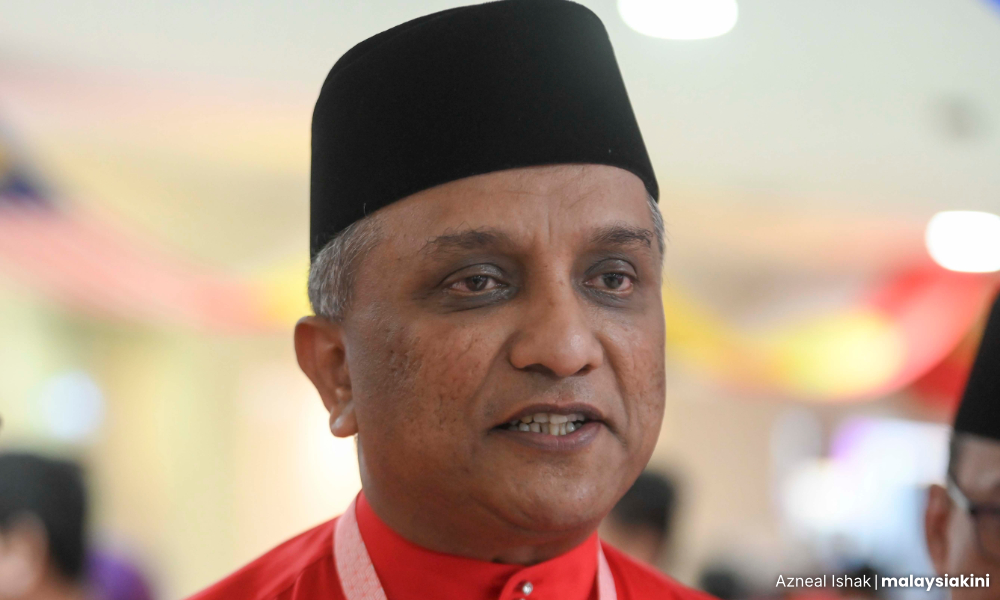
Reezal and Nooryana Najwa Najib
Did
Anwar break his promise? When asked about the appointments in late
2022, he reportedly quipped that the public can expect some political
appointments to be made in GLCs, dismissing suggestions that he is
outright against the idea.
“I never said that individuals involved
in politics cannot be part of (GLC) management. However, they should be
bound by certain conditions and have the required qualifications in the
relevant fields.
“There is a possibility that several political
figures or MPs will be assigned (to GLCs), but we will set the
guidelines on the required level of an individual’s professional
ability, his past performance, and compliance with the rules of
governance.”
Changing stance
But by May last year, he appeared to shift his position.
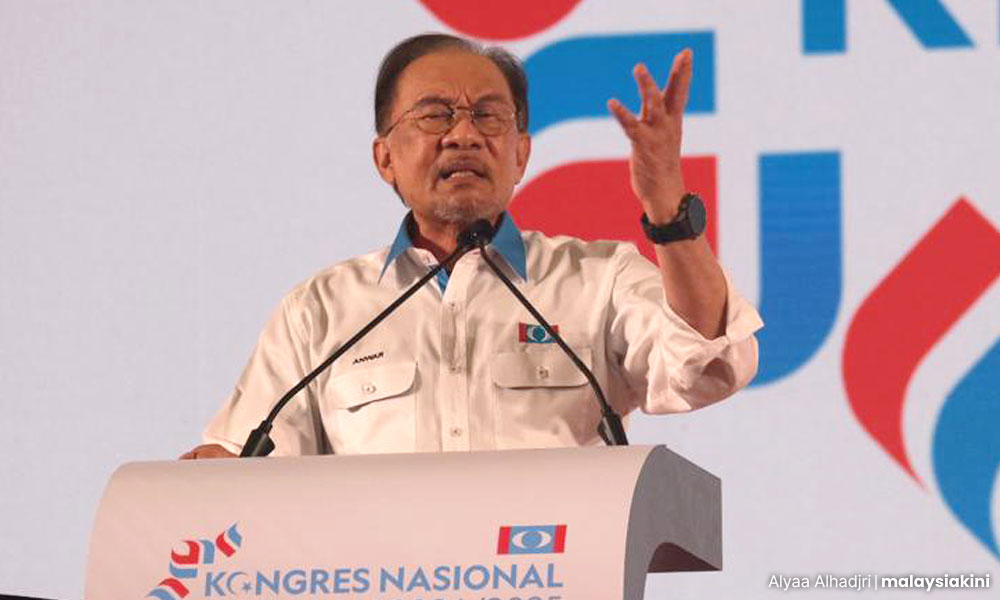
A Malay Mail report cited Anwar during his winding-up speech at the PKR national congress, where he said appointments are a “reward”
that individuals deserve for their service and contributions to the
success of the political party that eventually forms the government.
The
immediate retort came from Ideas: “This narrative sends a dangerous
message that public roles can be handed out like political souvenirs,
rather than earned through merit and competence.”
The royal commission of inquiry report on the mismanagement of Tabung Haji was explicit – apportioning blame, among others, to politicians who sat on the boards of the organisation and subsidiaries.
Political
involvement in its management, which extended to after the change of
government from BN to Harapan in 2018, undermined the institution’s
credibility and influenced key financial decisions, the report noted.
This
exposed the pilgrimage fund’s decisions to political criticism and
ultimately damaged public confidence in the institution, the report
read.
The inquiry found that political considerations influenced
major financial decisions, including the rate of profit distribution, or
hibah, haj payments, and the provision of haj financial support.
A passive director
In response, former Tabung Haji chairperson Abdul Azeez Abdul Rahim maintained that he had no absolute authority over the pilgrimage fund’s management, saying he only played a non-executive role during his 2013-2018 tenure.
Azeez
stressed that he was not involved in the fund’s daily operations or
investment decisions, explaining that all proposals were vetted by
Tabung Haji’s management before being served to the board.
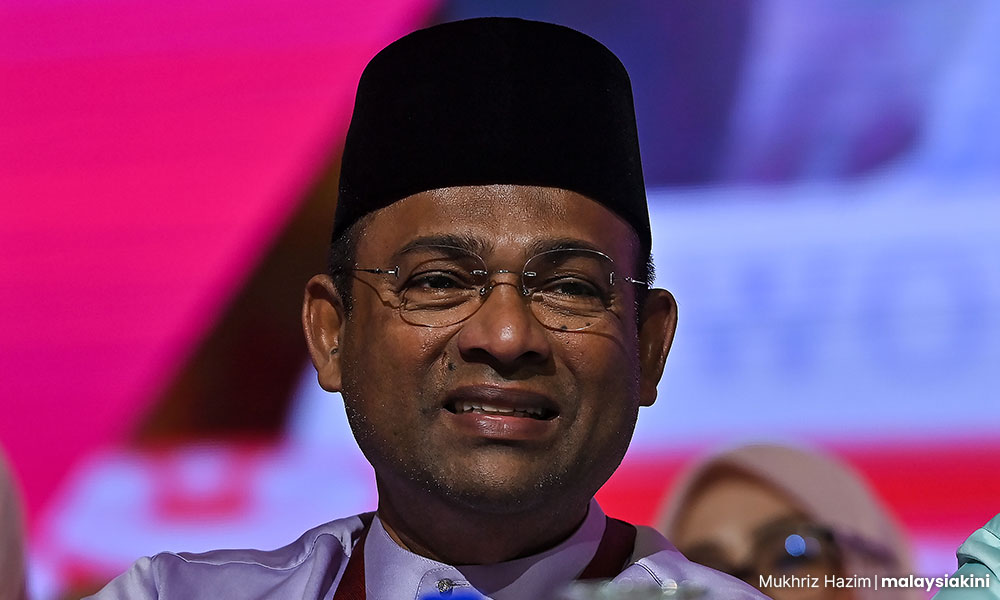
Ex-Tabung Haji chairperson Abdul Azeez Abdul Rahim
According
to the former Baling MP, the board met once a month to deliberate on
papers that covered investment proposals, governance matters, bonus and hibah payments, as well as other administrative issues.
“I
had no authority to sign cheques or ask people what they were doing.
No, no. Everything would only be reported to the board every month,”
Azeez added.
But the Companies Commission states that a director must exercise reasonable care and skill expected of a person of his experience and be diligent in managing the company's affairs.
“Thus,
there is no such thing as a passive director. A director who is passive
by not being involved in the company’s management may have breached his
duty of care, skill, and diligence.
“When evaluating significant
deals, contracts, new hires, investors, and business partners, directors
may rely on the advice or opinion of the board member, engage experts
or professional consultants who are believed to be reliable and
competent to provide information.”
So, Azeez’s assertions and
excuses are indefensible. Is he admitting incompetency or a breach of
the Companies Act by being ignorant of his statutory duties?
Test of Anwar’s reform credentials
Anwar
came to power promising to dismantle the patronage system. Less than
three years later, that promise lies in tatters. The revolving door of
political appointees has swung wide open, ushering in Umno warlords and
party loyalists who treat statutory bodies and GLCs as spoils of
victory.
The Tabung Haji scandal is proof of what happens when
politics infects governance: credibility collapses, financial decisions
are warped, and public trust evaporates.
To describe appointments
as “rewards” is to reduce public institutions into political spoils - a
contradiction of the reformist agenda Anwar campaigned on and a
dangerous precedent for Malaysia’s future.
The question now is whether Anwar is willing to confront this contradiction.
Will
he review these appointments and follow the principle of merit-based
governance, or will he allow Umno’s grip to tighten and let reform
remain only a slogan?
If he fails to confront this rot, history
may not remember him as the leader who promised change, but as the prime
minister who allowed political expediency to overwhelm reform.
Malaysia deserves better than recycled patronage presented as governance.