Would Malaysia say, "We understand. Territorial integrity is important?"
Of course not. We would call it a threat to Malaysian sovereignty. And that is the mirror Anwar's Taiwan argument creates.
Anwar's
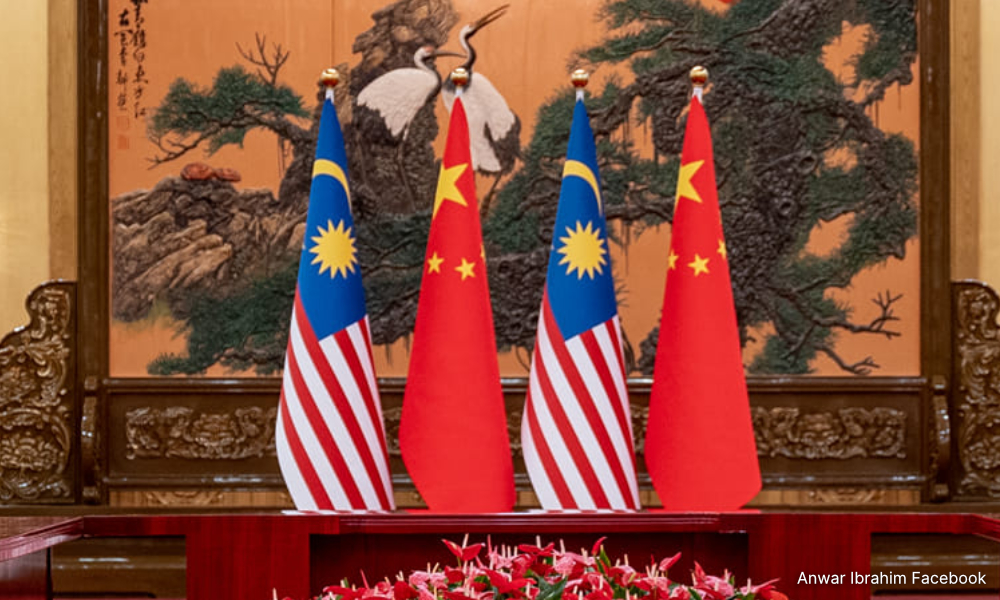
declaration that Taiwan is part of China is broadly consistent with
Malaysia's established One China policy. The problem came when the
discussion moved from who owns Taiwan to whether force can be used to
achieve reunification.
Asked whether China should be condemned for
reserving the right to use force, Anwar invoked Malaysia. If one of our
provinces tried to break away, he said, he would protect the nation's
unity.
Would he use force?
"Yes."
That single word is the gaffe.
Malaysia
could have said: We recognise the One China policy, but disputes should
be resolved peacefully, and Malaysia does not support the use of force.
Instead, Anwar appeared to legitimise force as a means of protecting territorial integrity.
If territorial integrity justifies force, does that principle also apply to Washington and Greenland,
Spain and Gibraltar, or even the United Kingdom and Scotland if its
people chose independence? Some Malaysian nationalists might even look
closer to home, at the red dot down south.
We don't need to settle any of those disputes.
Sovereignty issues
The point is simpler: a principle should survive if being taken out of its original context.
And
if that principle makes us uncomfortable when applied elsewhere,
perhaps we should be careful about endorsing it in the first place.
This isn't Gaza or Palestine, where Anwar can comment from considerable geographical distance.
China
and Taiwan are practically on our doorstep. We have direct strategic,
maritime, and economic interests in the same region, and we know what it
is like to have a much more powerful country assert claims in waters
Malaysia considers its own.
Look at the Luconia Shoals, or Beting Patinggi Ali, off Sarawak.
Malaysia has maintained a presence there amid continuing Chinese activity.
We protest. We invoke sovereignty. We want international law respected, and rightly so.
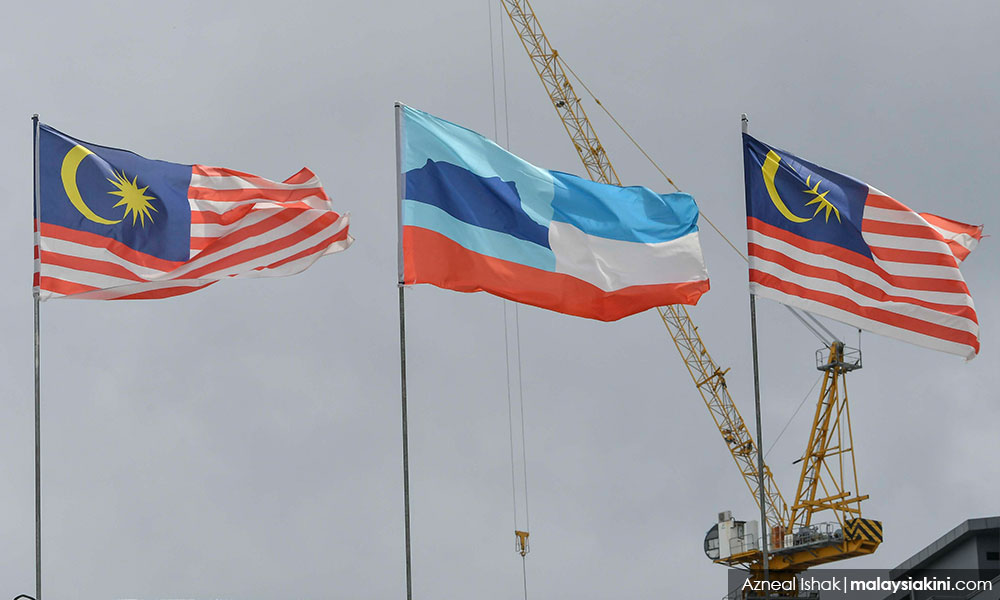
Then there is Sabah.
The Philippines continues to assert a claim over Sabah, while Malaysia
insists that Sabah's position within the federation is final.
So
imagine Manila saying: "Sabah historically belongs to us. Malaysia's
control is illegitimate. Peaceful efforts have failed. Therefore, we
reserve the right to use force."
Would Malaysia accept that? Of course not.
We would demand that the international community respect Malaysian sovereignty.
Human rights credentials
Anwar's human rights credentials inevitably enter the discussion.
Taiwan's government
has pushed back by asking him to consider democracy, freedom, human
rights, the rule of law and, most importantly, the wishes of the
Taiwanese people.
That raises an uncomfortable question. How much weight should the wishes of the people living in a disputed territory carry?
Territorial
integrity is one principle, self-determination is another. And when
those principles collide, simply declaring that territorial integrity
wins, and that force may therefore be justified, doesn't make the
underlying problem disappear.
It merely decides which principle gets priority.
Taiwan
is also not merely a geopolitical abstraction. It is a major trading
partner, particularly in electrical and electronic goods. Taipei has now
warned that Anwar's remarks could undermine Taiwanese business
confidence in Malaysia.
Malaysia needs China. Malaysia needs Taiwan. Malaysia needs the United States.
We do not need to turn pragmatic diplomacy into a choice of friends and enemies.
Anwar says he is "soft with all my neighbours".
Fine.
But being friendly with China is diplomacy. Appearing to endorse military force is something else.
Engagement, not confrontation
This is perhaps the question Anwar should have considered before answering "Yes".
If
Malaysia were ever confronted with a serious threat to Sabah, Sarawak,
or our maritime territory, what would we want from the international
community?
Would we want other countries saying: "The other side
believes the territory is historically theirs, and territorial integrity
gives them the right to use force."
Or would we want them to say: "This is Malaysian territory. Whatever the dispute, it must not be changed by force."
We
know which answer Putrajaya would want. So, Malaysia can support One
China. It can maintain close relations with Beijing. It can pursue
engagement rather than confrontation.
But it should be very careful about normalising a principle that could one day be turned against Malaysia itself.
Sovereignty is a wonderful thing, especially when it is your own. And that is why Anwar might have been wiser to leave this particular hornet's nest alone.