Rudyard Kipling"
“When you're left wounded on Afganistan's plains and
the women come out to cut up what remains, Just roll to your rifle
and blow out your brains,
And go to your God like a soldier”
General Douglas MacArthur"
“We are not retreating. We are advancing in another direction.”
“It is fatal to enter any war without the will to win it.” “Old soldiers never die; they just fade away.
“The soldier, above all other people, prays for peace, for he must suffer and be the deepest wounds and scars of war.”
“May God have mercy upon my enemies, because I won't .” “The object of war is not to die for your country but to make the other bastard die for his.
“Nobody ever defended, there is only attack and attack and attack some more.
“It is foolish and wrong to mourn the men who died. Rather we should thank God that such men lived.
The Soldier stood and faced God
Which must always come to pass
He hoped his shoes were shining
Just as bright as his brass
"Step forward you Soldier,
How shall I deal with you?
Have you always turned the other cheek?
To My Church have you been true?"
"No, Lord, I guess I ain't
Because those of us who carry guns
Can't always be a saint."
I've had to work on Sundays
And at times my talk was tough,
And sometimes I've been violent,
Because the world is awfully rough.
But, I never took a penny
That wasn't mine to keep.
Though I worked a lot of overtime
When the bills got just too steep,
The Soldier squared his shoulders and said
And I never passed a cry for help
Though at times I shook with fear,
And sometimes, God forgive me,
I've wept unmanly tears.
I know I don't deserve a place
Among the people here.
They never wanted me around
Except to calm their fears.
If you've a place for me here,
Lord, It needn't be so grand,
I never expected or had too much,
But if you don't, I'll understand."
There was silence all around the throne
Where the saints had often trod
As the Soldier waited quietly,
For the judgment of his God.
"Step forward now, you Soldier,
You've borne your burden well.
Walk peacefully on Heaven's streets,
You've done your time in Hell."
COMMENT - Historians want to protect their rice bowl, Khairy By Mariam Mokhtar
Saturday, May 09, 2026
Malaysiakini : Khairy was possibly referring to International Islamic University
Malaysia (IIUM) academic Solehah Yaacob, whose claims about ancient
Romans learning about shipbuilding from the Malays made Malaysia a
laughing stock, yet again.
She is not the only lecturer to distort early Malayan history. Even once respected historians have been known to “jaga periuk nasi” (guarding one’s rice pot) and toe the official line.
Challenging narratives
I
once attended a lecture in Ipoh in 2011, called “Peristiwa Bukit
Kepong, Siapa Wira Sebenar?” (Bukit Kepong Incident, who were the real
heroes?)
Two of the speakers were former police chief Haniff Omar
and historian Khoo Kay Kim, who said Malaya was never colonised by the
British. The audience stared dumbfounded, but few dared to counter them.
A majority of the audience were police officers and members of the
security forces.
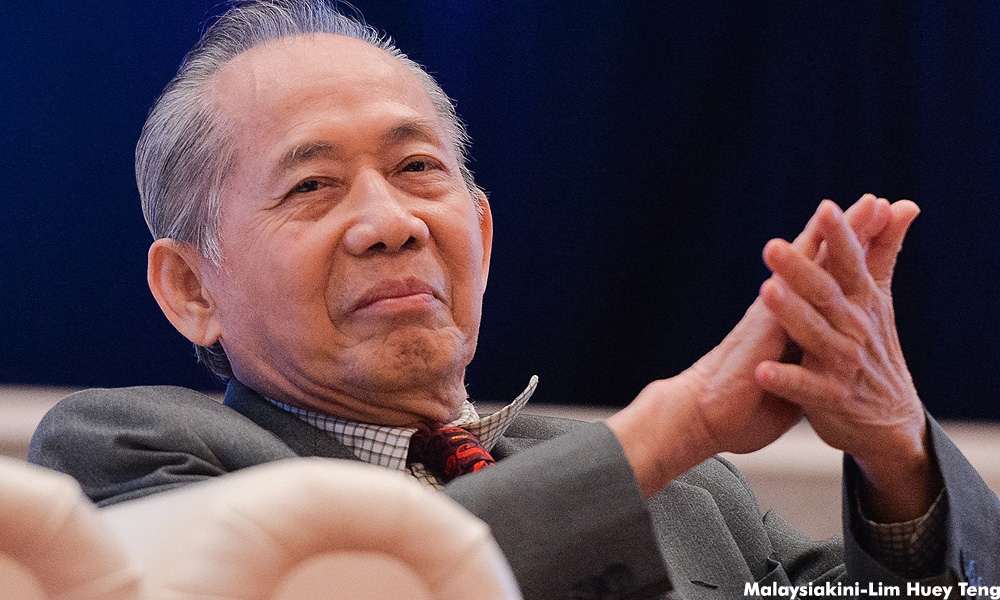
Historian Khoo Kay Kim
Khoo’s
comments did not go unnoticed because his former student, Rachel Leow,
wrote him an open letter, which went viral. She was a PhD student at
Cambridge, and she dared to correct him.
Umno policies of the
1980s-1990s shaped institutional behaviour. Public narratives were
tightly controlled. Some were encouraged, others were treated
cautiously, and those that generated controversy were banned.
Self-censorship and silence became the new norm.
So when people
ask why historians appear silent or restrained, the answer they give is
not just fear. It is also because of structure.
Post 1969, the
political atmosphere punished perceived challenges to sensitive identity
frameworks. In time, institutions naturally learned to operate
carefully within those boundaries. Public history then took shape.
Non-Malay erasure
Take Kuala Lumpur.
Critics
claim that Yap Ah Loy, one of the key founders of modern Kuala Lumpur,
has been reduced to little more than a passing mention in school
narratives.
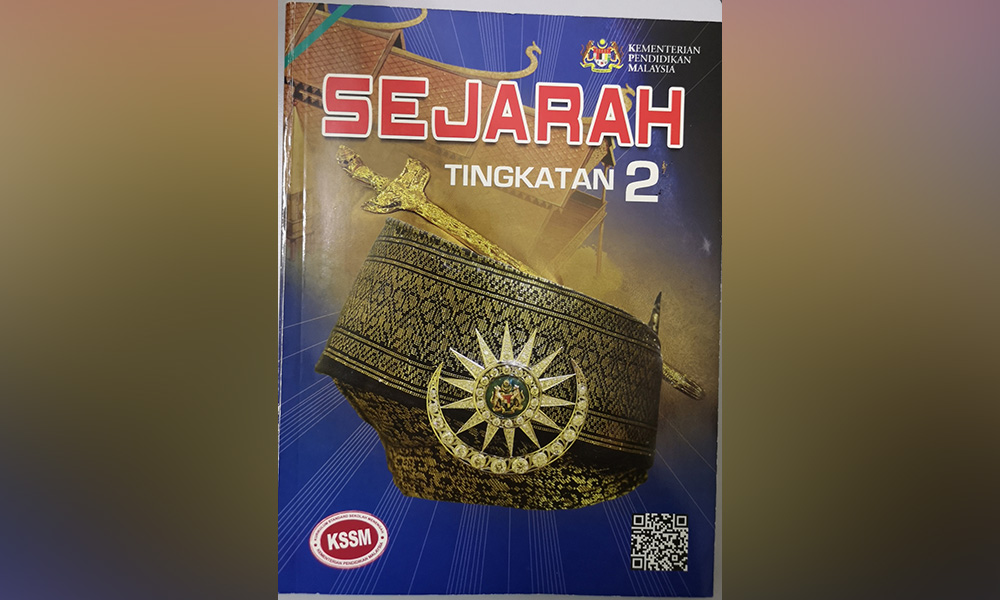
The parents who complained about this distortion of
our early history say this is not about one missing name. They worry
about how stories get flattened over time.
The narrative promoted
by some Umno leaders five decades ago was that non-Malays were
relatively recent arrivals to the country, having come only within the
last 200 years.
Critics argue that this framing ignored the much
older presence of Chinese and Indian communities in the Malay peninsula
as miners, traders, and spice merchants who arrived through the monsoon
trade networks centuries earlier.
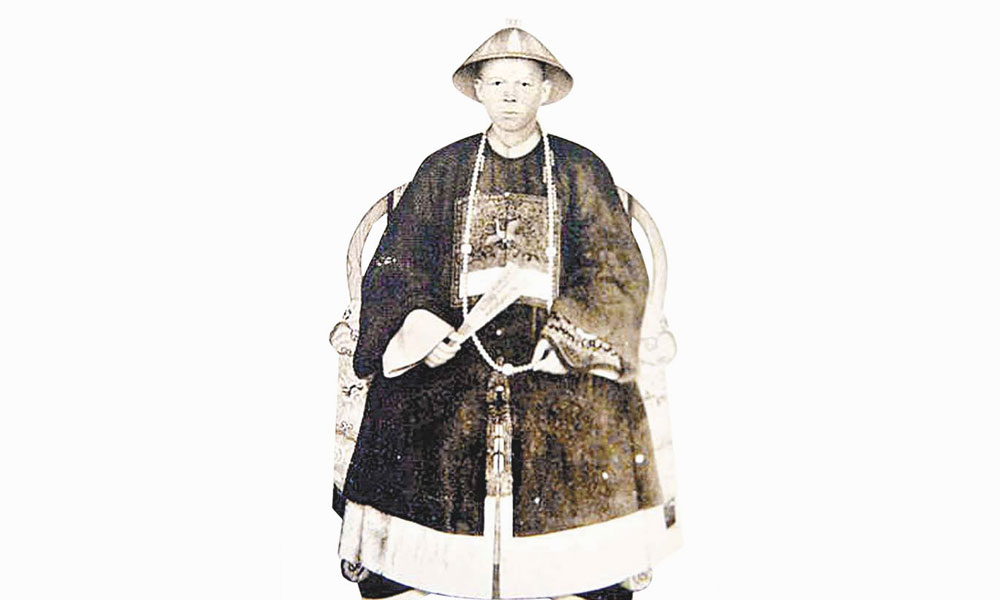
Yap Ah Loy
Then there is the deeper past.
Sites
such as Bujang Valley in Kedah reflect a long archaeological history of
trade, industry, settlement, and Hindu-Buddhist cultural influence in
early Southeast Asia.
Had this heritage been more fully preserved
and allowed to flourish, with its many artefacts and ancient structures
protected, Malaysia might today rival historical treasures such as
Angkor Wat in Cambodia or Borobudur in Indonesia.
To many
observers, the lack of urgency in preserving these sites gave the
impression that the authorities preferred not to draw too much attention
to the country’s non-Islamic historical roots.
Furthermore, the Orang Asli are the original settlers of Malaya, but they remain as a mere footnote in history books.
Inheriting an environment of caution
What
many parents and some teachers describe to me is not a conspiracy. It
is a caution. Certain historical topics, especially those touching on
identity, origin narratives, or competing interpretations of early
civilisation, may not be discussed freely in institutional settings.
Not
because it is formally forbidden, but because, over time, a culture
develops where stepping too far outside accepted framing feels risky,
unnecessary, or professionally unwise.
Khairy
may have criticised historians, but academic caution is not the root
problem. This pattern of silence among experts is not unique to history.
In
mining, industry, and engineering, warnings about hill development,
slope stability, radiation, and ecological risks are often raised early,
and without drama.
Yet, those warnings frequently gain public attention only after a disaster forces visibility.
Then the same questions return: who knew, who warned, and why was it not acted on sooner?
The
issue is not simply “cowardly professors”. That framing is too easy. It
shifts attention away from the longer political and institutional
history that shaped what could be safely said, and what could not.
Historians did not design that environment. They inherited it.
And
when political actors now express frustration at historical confusion,
the harder question is not why some academics are quiet, but how the
boundaries of acceptable speech were formed in the first place, and by
whom.
History is not only written in books.
It is shaped by
political frameworks, institutional incentives, and the long shadow of
national narratives, including “Ketuanan Melayu” as a defining feature
of Malaysia’s post-independence political architecture.