Rudyard Kipling"
“When you're left wounded on Afganistan's plains and
the women come out to cut up what remains, Just roll to your rifle
and blow out your brains,
And go to your God like a soldier”
General Douglas MacArthur"
“We are not retreating. We are advancing in another direction.”
“It is fatal to enter any war without the will to win it.” “Old soldiers never die; they just fade away.
“The soldier, above all other people, prays for peace, for he must suffer and be the deepest wounds and scars of war.”
“May God have mercy upon my enemies, because I won't .” “The object of war is not to die for your country but to make the other bastard die for his.
“Nobody ever defended, there is only attack and attack and attack some more.
“It is foolish and wrong to mourn the men who died. Rather we should thank God that such men lived.
The Soldier stood and faced God
Which must always come to pass
He hoped his shoes were shining
Just as bright as his brass
"Step forward you Soldier,
How shall I deal with you?
Have you always turned the other cheek?
To My Church have you been true?"
"No, Lord, I guess I ain't
Because those of us who carry guns
Can't always be a saint."
I've had to work on Sundays
And at times my talk was tough,
And sometimes I've been violent,
Because the world is awfully rough.
But, I never took a penny
That wasn't mine to keep.
Though I worked a lot of overtime
When the bills got just too steep,
The Soldier squared his shoulders and said
And I never passed a cry for help
Though at times I shook with fear,
And sometimes, God forgive me,
I've wept unmanly tears.
I know I don't deserve a place
Among the people here.
They never wanted me around
Except to calm their fears.
If you've a place for me here,
Lord, It needn't be so grand,
I never expected or had too much,
But if you don't, I'll understand."
There was silence all around the throne
Where the saints had often trod
As the Soldier waited quietly,
For the judgment of his God.
"Step forward now, you Soldier,
You've borne your burden well.
Walk peacefully on Heaven's streets,
You've done your time in Hell."
Eight points on Hindu temple controversy by Andrew Sia
Sunday, February 08, 2026
Malaysiakini : Jokes aside, the issue of Hindu temples without land ownership
is a very old one. So why the sudden upsurge of verbal assaults in 2026?
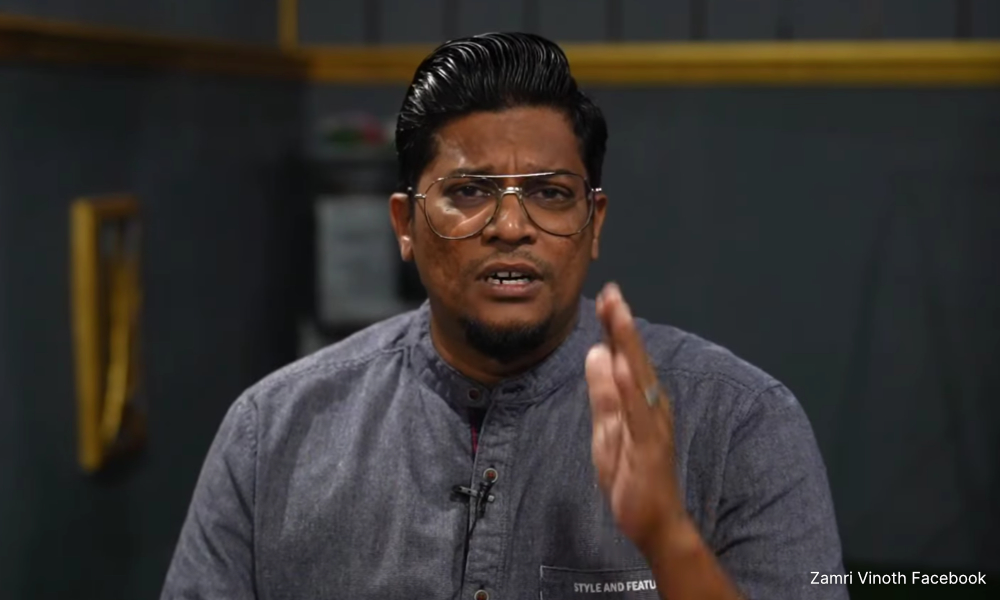
Are some “dalang” or puppet masters cunningly using a Hindu convert to crack open yet another religious wedge issue?
This
suggests there is a political agenda, similar to another virulent
doctor from Malacca, who has been stoking one racial issue after another
for months.
In January, his motive was finally made
public - to pressure Umno to leave the Madani government and strengthen
PAS. Does Zamri have similar goals?
Zamri Vinoth
These
firebrands know that Prime Minister Anwar Ibrahim has been rather timid
about clamping down on racial hate speech, probably for fear of losing
Malay votes.
It was only at the last minute, just hours before the planned provocative protest against “kuil haram” (illegal temples) led by Zamri, that Anwar finally found his voice and courage.
He issued a stern warning of “maximum action”,
including arrests, against anyone inciting racial hatred (against
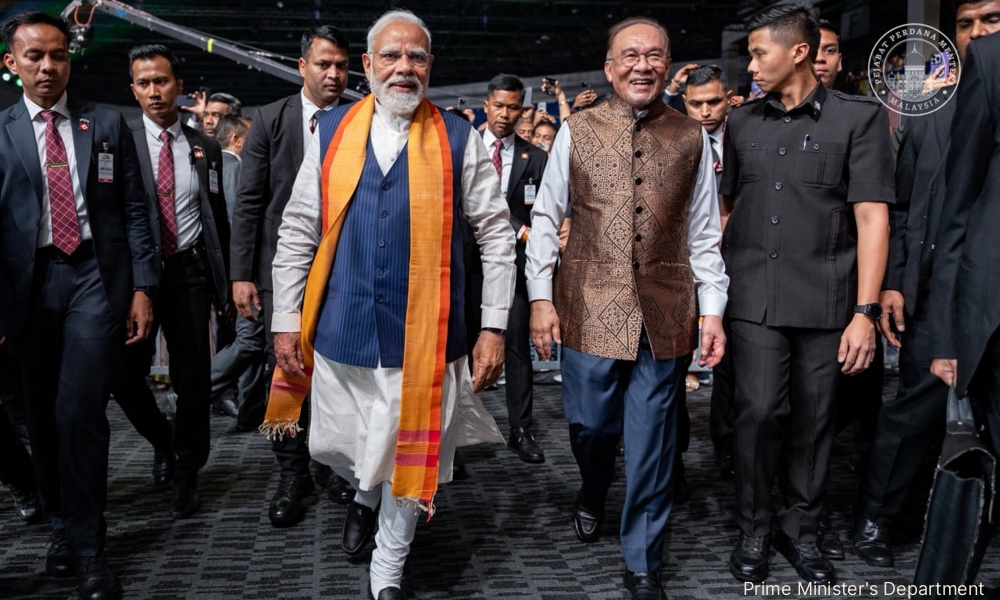
Hindus) while Malaysia was hosting Indian Prime Minister Narendra Modi.
And Zamri was arrested.
Indian Prime Minister Narendra Modi and Prime Minister Anwar Ibrahim
I
sincerely hope that Anwar’s very belated warning was done from a
genuine desire to stop hate speech, especially against racial
minorities.
Or was his primary motive to avoid “losing face” on a diplomatic level during Modi’s visit, as political analyst James Chin suggested?
Here are eight points on this issue.
1) Colonial legacy
The
British allowed Indian workers to build temples in rubber estates and
near government buildings, but were too stingy to provide land.
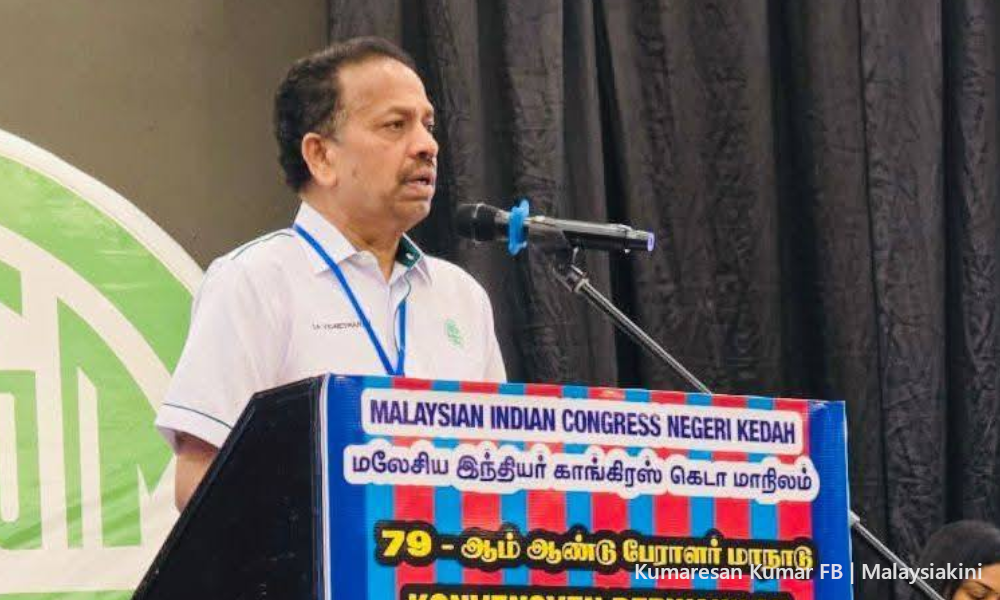
MIC president SA Vigneswaran said temples were built in good faith, governed more by mutual trust and tolerance than by paperwork.
MIC president SA Vigneswaran
The
temples were not built illicitly or secretly but stood “in plain
sight”, and their presence was known and accepted, he added.
Many rubber estates have now become towns. Was the Malaysian government more generous than the British after Merdeka?
Under
the law, anybody seeking to develop former plantation land must obtain
approval from the Estate Land Board (ELB), usually chaired by the state
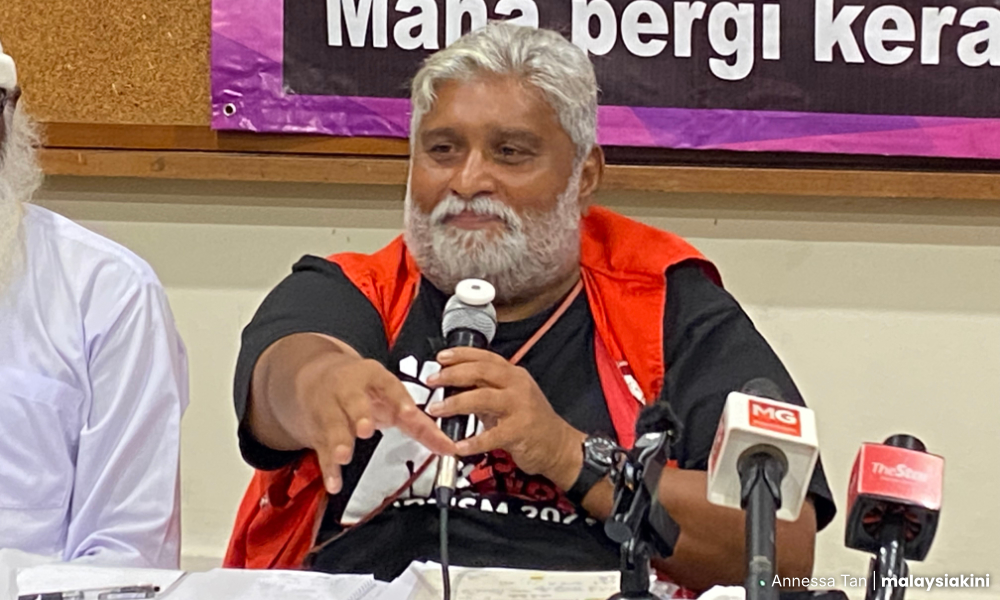
menteri besar, as PSM deputy chairperson S Arutchelvan pointed out.
Why didn’t the ELB provide a bit of land to more existing temples before approving development projects?
2) Compulsory land for mosques
Current
laws mandate that property developers must allocate land only for
mosques and suraus in new projects, but not for temples or churches.
This is an indirect subsidy for mosques by developers, which in practice is then passed on to property buyers.
And
so “harmony streets” of mosques, Chinese temples, Hindu temples and
churches are restricted only to the old sections of towns such as
Malacca, Penang, and Seremban.
We see much less of that in new suburban developments. Is this a healthy path to national harmony?
3) Taxpayers’ funding
Taxpayers’ money (from all races) is the main source of funds to build mosques. For example, RM185 million was allocated to build 78 mosques in just one state, Selangor, from 2019 to 2022, so the state assembly was told.
The Chinese have money to buy land and build temples, but the Indian community is smaller and lacks economic power.
It’s
been forgotten that Article 11(2) of the Constitution says no person
must pay any tax if it is allocated to other religions, as activist
Nasri Azhar pointed out.
Apart from that, isn’t it weird to use “tainted” tax money from non-halal businesses to fund mosques?
One
fellow called Irwan Hashim tried to argue that mosques were built using
only zakat money, but that was false. For example, the Pahang Mufti
Department forbids using zakat funds even for mosque maintenance.
4) Learn from Sarawak
Perhaps
it’s time to learn from Sarawak, which supports funding houses of
worship for non-Islamic religions through the Unit for Other Religions
(Unifor).
Since 2017, a total of RM565 million has been allocated to support over 3,000 churches and temples for the 65 percent non-Muslim population of Sarawak.
5) What should Hindus do?
Arutchelvan admits there are also temples built arbitrarily by small groups.
PSM deputy chairperson S Arutchelvan
Given
the community’s limited resources, should Hindus focus more on building
up Tamil schools and their economic strength instead of temples?
This is something for Hindus to ponder.
6) Kuil haram vs tahfiz haram?
The term “kuil haram” used by Zamri and his ilk is loaded and offensive. It’s a word associated with sinful things like pork, gambling, and khalwat.
A more appropriate term is “kuil tanpa hakmilik tanah” (temples without land ownership).
In
contrast, 606 tahfiz schools did not register with the Selangor
authorities since 2008, revealed Fahmi Ngah, the state exco in charge of
Islam, as reported by Astro Awani.
Technically, such tahfiz are also illegal, but nobody is going around calling them “tahfiz haram”.
Instead, Selangor wants to legalise them through the Program Pemutihan Tahfiz, a word which literally means “whitening”.
Can some Hindu temples also be legalised?
7) Settle issue amicably
There are already established ways to settle temple land issues calmly, fairly, and reasonably.
Arutchelvan noted that when Pakatan Rakyat (PKR, DAP, PAS) first governed Selangor in 2008, they did a survey of all temples.
Temples
over a century old were to be preserved onsite; those existing before
2008 were to be relocated to suitable sites, and temples built illegally
after 2008 faced immediate demolition.
“This balanced approach regulated temples effectively - notably, PAS was part of the government (then),” he added.
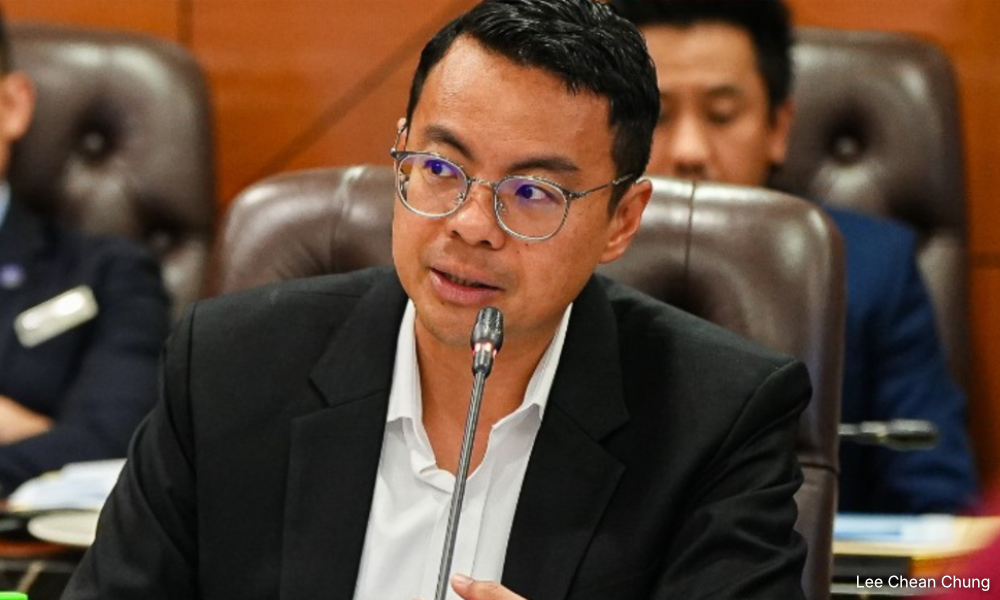
In the present day, PKR’s Petaling Jaya MP, Lee Chean Chung, proposed setting up a state-level mediation platform involving authorities, landowners, and temple representatives.
Petaling Jaya MP Lee Chean Chung
This
should have clear and transparent relocation guidelines, including
notice periods, alternative site allocation, and compensation
frameworks.
Meanwhile, DAP Youth chief Woo Kah Leong noted that land status or building approval is an administrative issue, the Malay Mail reported. Therefore, such matters should be addressed through rational negotiations, rather than provocations against Hindus.
8) Political calculations
Anwar,
in his fixation to be prime minister for a second term, should remember
how a temple demolition in 2007 led to the Hindraf rally and the mass
abandonment of BN by Indian voters.
Last May, Pandan MP Rafizi Ramli warned that core non-Malay support for Harapan is “crashing”. The recent Sabah elections confirmed this trend.
Why? They are angry that some provocateurs seem to have total freedom to keep on intimidating non-Malays.
I wish that Anwar would use his Islamic background to cite some Arabic verses to promote peace and mutual respect.
The late PAS spiritual leader Nik Aziz Nik Mat used to teach Malays that “assabiyah”, or racism, is not Islamic.
This
means it’s wrong to support bad or corrupt leaders just because they
are of the same ethnic group. But sadly, PAS has since changed to play
the racial card.
Anwar may be chasing Malay votes, but PKR can never be “more Muslim” than PAS or “more Malay” than Umno. It’s a losing game.
Why
not create a clean, fair, and prosperous Middle Malaysia that all races
can rally around? Indeed, a country that is “madani” or “civilised”.
Because our beloved country cannot afford religious battles for the narrow political gain of some quarters.