Rudyard Kipling"
“When you're left wounded on Afganistan's plains and
the women come out to cut up what remains, Just roll to your rifle
and blow out your brains,
And go to your God like a soldier”
General Douglas MacArthur"
“We are not retreating. We are advancing in another direction.”
“It is fatal to enter any war without the will to win it.” “Old soldiers never die; they just fade away.
“The soldier, above all other people, prays for peace, for he must suffer and be the deepest wounds and scars of war.”
“May God have mercy upon my enemies, because I won't .” “The object of war is not to die for your country but to make the other bastard die for his.
“Nobody ever defended, there is only attack and attack and attack some more.
“It is foolish and wrong to mourn the men who died. Rather we should thank God that such men lived.
The Soldier stood and faced God
Which must always come to pass
He hoped his shoes were shining
Just as bright as his brass
"Step forward you Soldier,
How shall I deal with you?
Have you always turned the other cheek?
To My Church have you been true?"
"No, Lord, I guess I ain't
Because those of us who carry guns
Can't always be a saint."
I've had to work on Sundays
And at times my talk was tough,
And sometimes I've been violent,
Because the world is awfully rough.
But, I never took a penny
That wasn't mine to keep.
Though I worked a lot of overtime
When the bills got just too steep,
The Soldier squared his shoulders and said
And I never passed a cry for help
Though at times I shook with fear,
And sometimes, God forgive me,
I've wept unmanly tears.
I know I don't deserve a place
Among the people here.
They never wanted me around
Except to calm their fears.
If you've a place for me here,
Lord, It needn't be so grand,
I never expected or had too much,
But if you don't, I'll understand."
There was silence all around the throne
Where the saints had often trod
As the Soldier waited quietly,
For the judgment of his God.
"Step forward now, you Soldier,
You've borne your burden well.
Walk peacefully on Heaven's streets,
You've done your time in Hell."
Zahid's NFA gives new meaning to reform By Mariam Mokhtar
Saturday, January 10, 2026
Malaysiakini : Today, many of us will feel that the Madani administration has
crossed that line when prosecutorial discretion replaced judicial truth,
and Malaysians are asked to accept Zahid's NFA as reform.
This
is the moment when patience stops being a virtue and becomes
complicity. This is no longer about guilt or innocence, because that
question was never allowed to reach a proper conclusion.
For
many Malaysians, Zahid’s NFA feels less like legal closure and more
like a betrayal of the Pakatan Harapan coalition’s GE15 promises on
governance and the rule of law.
What matters is how the system
behaved, when it acted, and who benefited. Forty-seven charges,
involving criminal breach of trust, corruption, and money laundering,
were never tested before a judge. There was no verdict, no public scrutiny, just administrative finality.
Malaysians are told the evidence is “insufficient” after “further investigations” and “internal prosecutorial assessments”. Really?
If the evidence was weak, why were charges filed? Why did the case
progress to defence? Why did insufficiency become definitive only when
political circumstances made it convenient? These are not conspiracies,
but legitimate questions any member of the rakyat, who values the rule
of law, would ask.
How many million ringgits did the Malaysian
government waste in pursuing this case, which we are not shocked that it
ended nowhere?
How much of the nation's resources were wasted in
manhours, such as the court's time, lawyers’ fees, judges, researchers,
security detail, witnesses, gathering evidence, police time, and other
necessary preparations needed to go to trial? Have we so much money to
fritter away?
Obvious pattern
The DNAA, to
NFA, to a full acquittal pipeline, exposes the gap between process and
principle. The case hasn’t been fully tested in court, but it is moving
step by step toward being cleared entirely without a trial.
At
least on paper, it looked like the law was being followed. However, the
ethical or moral purpose of justice has not been fulfilled.
As
the attorney-general has decided to drop the case, it is effectively
closed for now. It is sickening when the powerful protect the powerful.
As their cases simply drag on, for them, delay is a defence. Put simply,
the long waiting time protects powerful people.
Discretion is
absolution because, as we have seen, the prosecutors’ choices let
powerful figures avoid legal consequences. Time provides a protective
shield for the political elite.
The
government claims institutions are independent, but only when it
furthers their agenda. When it doesn’t, independence vanishes into thin
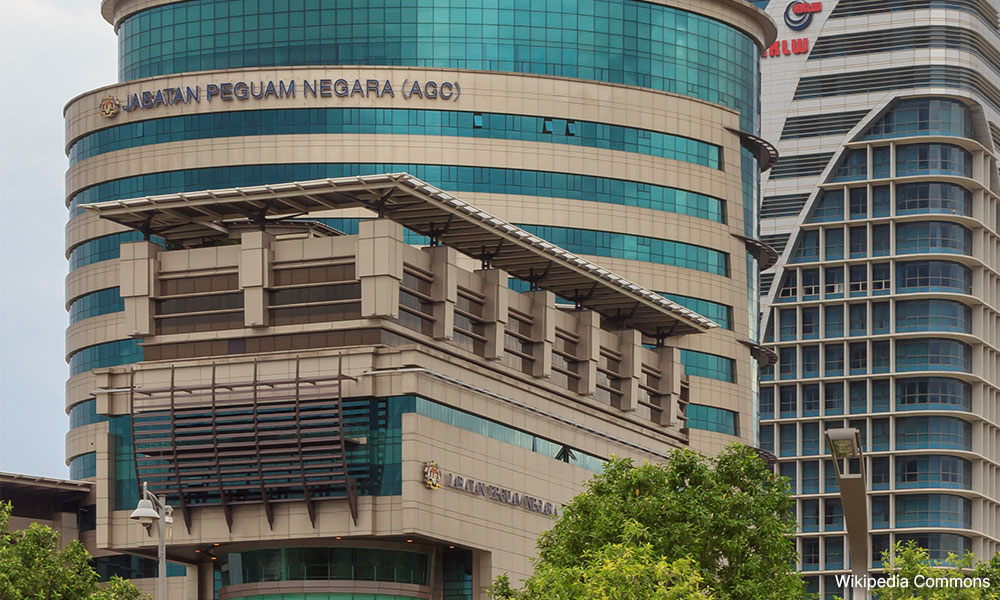
air. It is disgusting how the government treats the AG’s decision not to
continue the Zahid case as untouchable; more importantly, it refuses to
challenge it.
Ordinary Malaysians who question these decisions
are ignored or told their concerns don’t matter. This is a recipe for
disaster for Malaysia, because we see clearly what is happening when
institutions move decisively against the weak and tiptoe cautiously
around the powerful.
The pattern is obvious. The public anger that persists is justified.
Prime
Minister Anwar Ibrahim’s silence compounds the failure. This was the
moment for transparency, for moral leadership, for insisting on open
judicial scrutiny.
Prime Minister Anwar Ibrahim
Instead,
quiet acceptance signals that reform has limits, and those limits
appear to be determined by political necessity, selfish personal agendas
and not principle.
Stark contrast
Meanwhile,
Malaysians are shown selective economic indicators, investor
confidence, and market optimism, while families write about shrinking
pay cheques, rising prices, and the daily arithmetic of survival. The
contrast is stark: if you have capital, you can thrive; if you do not,
you are told to endure.
We are inundated with messages that the economy
is doing well, political stability matters, but deep down in society,
the cost of crisis living bites. Many are suffering. The rewards from a
thriving economy have not yet filtered down to the masses.
Growth
that reassures investors while normalising hardship is not progress. If
you're a successful exporter of electronic items, life is great. A
reform agenda that asks the struggling majority to wait patiently while
the powerful are quietly unburdened has lost its moral compass.
When
Zahid said that “truth has prevailed”, the question is: whose truth,
determined by whom? In a democracy, truth is tested in court, not in
private evaluations. What has prevailed is not truth because we saw that
it is finality without judgment.
The law may have been followed,
but reform was never about doing the bare minimum legally. It was about
restoring trust in how power is exercised. On that measure, the Madani
government has failed.
If the price of reform is silence, then it
was never reform at all. The Madani administration needs to be reminded
that reform belongs to the people who refuse to stop demanding it.