Rudyard Kipling"
“When you're left wounded on Afganistan's plains and
the women come out to cut up what remains, Just roll to your rifle
and blow out your brains,
And go to your God like a soldier”
General Douglas MacArthur"
“We are not retreating. We are advancing in another direction.”
“It is fatal to enter any war without the will to win it.” “Old soldiers never die; they just fade away.
“The soldier, above all other people, prays for peace, for he must suffer and be the deepest wounds and scars of war.”
“May God have mercy upon my enemies, because I won't .” “The object of war is not to die for your country but to make the other bastard die for his.
“Nobody ever defended, there is only attack and attack and attack some more.
“It is foolish and wrong to mourn the men who died. Rather we should thank God that such men lived.
The Soldier stood and faced God
Which must always come to pass
He hoped his shoes were shining
Just as bright as his brass
"Step forward you Soldier,
How shall I deal with you?
Have you always turned the other cheek?
To My Church have you been true?"
"No, Lord, I guess I ain't
Because those of us who carry guns
Can't always be a saint."
I've had to work on Sundays
And at times my talk was tough,
And sometimes I've been violent,
Because the world is awfully rough.
But, I never took a penny
That wasn't mine to keep.
Though I worked a lot of overtime
When the bills got just too steep,
The Soldier squared his shoulders and said
And I never passed a cry for help
Though at times I shook with fear,
And sometimes, God forgive me,
I've wept unmanly tears.
I know I don't deserve a place
Among the people here.
They never wanted me around
Except to calm their fears.
If you've a place for me here,
Lord, It needn't be so grand,
I never expected or had too much,
But if you don't, I'll understand."
There was silence all around the throne
Where the saints had often trod
As the Soldier waited quietly,
For the judgment of his God.
"Step forward now, you Soldier,
You've borne your burden well.
Walk peacefully on Heaven's streets,
You've done your time in Hell."
Malay coalition realignment and DAP's exit By R Paneir Selvam
Wednesday, December 31, 2025
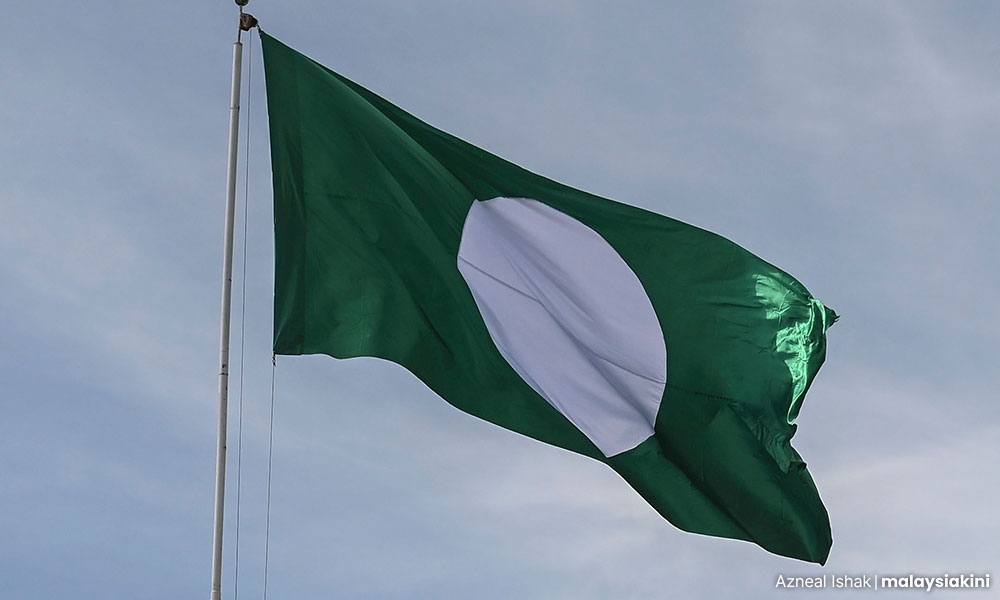
Malaysiakini : PAS’ conduct is particularly revealing. Despite positioning itself as
the principal opposition force following the 15th general election, PAS
has noticeably softened its rhetoric against the Madani government and
Prime Minister Anwar Ibrahim.
The
party’s attacks are selective, restrained, and often focused more on
symbolic issues than on direct challenges to federal authority. This
restraint should not be mistaken for moderation. It reflects strategic
calculation.
PAS-governed states continue to receive substantial
federal allocations, development funding, and administrative
cooperation. In practical terms, PAS is benefiting materially from the
Madani government while maintaining just enough opposition posture to
preserve its identity.
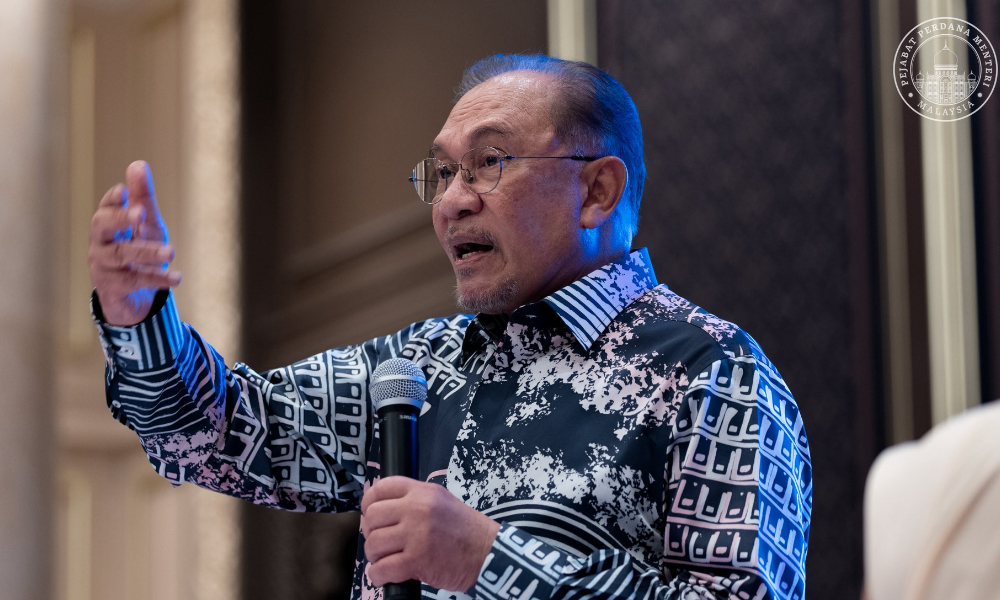
PM Anwar Ibrahim
This
arrangement points to an emerging understanding: opposition does not
necessarily mean exclusion from resources. In Malaysia’s political
culture, access to federal largesse often matters more than ideological
consistency.
PAS appears to have concluded that outright
confrontation with Anwar carries fewer benefits than calibrated
engagement. This pragmatic posture also positions PAS as a viable future
partner rather than a permanent adversary.
Anwar’s political history
To
understand why such accommodation is possible, one must consider
Anwar’s political history. As a former president of the Malaysian
Islamic Youth Movement (Abim), Anwar built networks that cut across
ideological and party boundaries long before today’s alignments
solidified.
Many figures who once shared that formative
Islamist-reformist space now occupy senior positions across PKR, Umno,
and PAS. These informal relationships, rooted in shared experiences
rather than party platforms, facilitate back-channel communication,
trust, and compromise.
In Malaysian politics, these personal
networks often lubricate realignments long before they become visible at
the institutional level.
Against this backdrop, Umno’s aggressive
posture toward DAP, particularly through its youth leadership, takes on
deeper strategic meaning. The sustained “DAP-bashing” of recent months
appears far too systematic to be dismissed as spontaneous populism.
Youth
leaders such as Dr Akmal Saleh have repeatedly invoked racially and
religiously charged narratives that frame DAP as hostile to Malay-Muslim
interests. The absence of firm rebuke from Umno’s top leadership
suggests that these attacks serve a broader purpose.
The objective
is not merely to weaken DAP electorally, but to delegitimise it as a
coalition partner. By repeatedly associating DAP with cultural threat,
religious insensitivity, or political disruption, Umno helps create an
environment where DAP’s continued presence in government becomes a
liability rather than an asset.
This is a familiar method in
Malaysian coalition politics: parties are rarely expelled outright.
Instead, pressure is applied until withdrawal appears “voluntary,”
justified, and even necessary for stability.
Studied silence
This
approach also explains PKR’s studied silence. As the anchor party of
the Madani government, PKR has both the authority and the incentive to
intervene. Yet its reluctance to defend DAP robustly suggests a
strategic choice.
By allowing Umno to take the lead on identity
politics while keeping PAS engaged through material cooperation, PKR
preserves flexibility. It avoids alienating Malay voters while keeping
open a possible future realignment that does not depend on DAP.
Amanah’s
position in this evolving equation is even more precarious. As a
splinter group from PAS, it lacks PAS’ grassroots discipline and Umno’s
institutional depth. It commands neither dominant rural Malay support
nor decisive urban backing.
In
a coalition increasingly shaped by ethnic arithmetic rather than
ideological pluralism, Amanah becomes surplus to requirements; too weak
to anchor Malay support, yet insufficiently distinct to mobilise
non-Malay voters.
The emerging alternative is a Malay-dominated
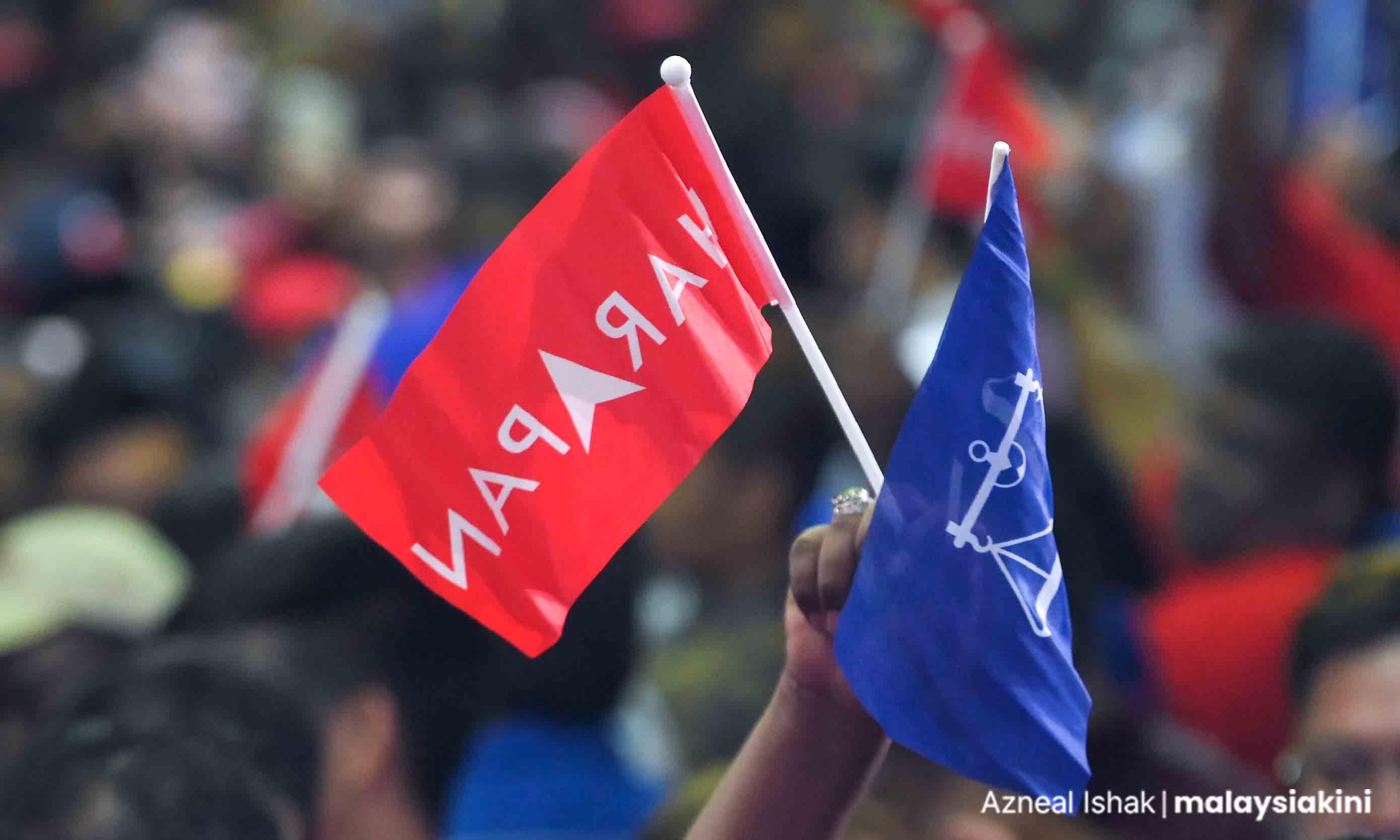
coalition anchored by PKR, Umno, and PAS. Each party brings
complementary strengths. Umno retains extensive institutional memory,
administrative experience, and entrenched local networks.
PAS
commands a disciplined base in rural areas and has steadily expanded its
appeal among conservative urban Malays. PKR provides national
leadership legitimacy, international acceptability, and a reformist
veneer that softens the coalition’s image.
Such a configuration
could plausibly dominate Peninsular Malaysia’s Malay-majority
constituencies. From a purely electoral standpoint, it offers a powerful
arithmetic advantage. In this structure, DAP is not merely
inconvenient, but it is structurally incompatible.
Its multiracial
ideology, strong non-Malay base, and insistence on institutional
accountability complicate efforts to consolidate Malay support under a
single narrative. Removing DAP simplifies messaging, voter targeting,
and coalition management ahead of GE16.
East Malaysian parties
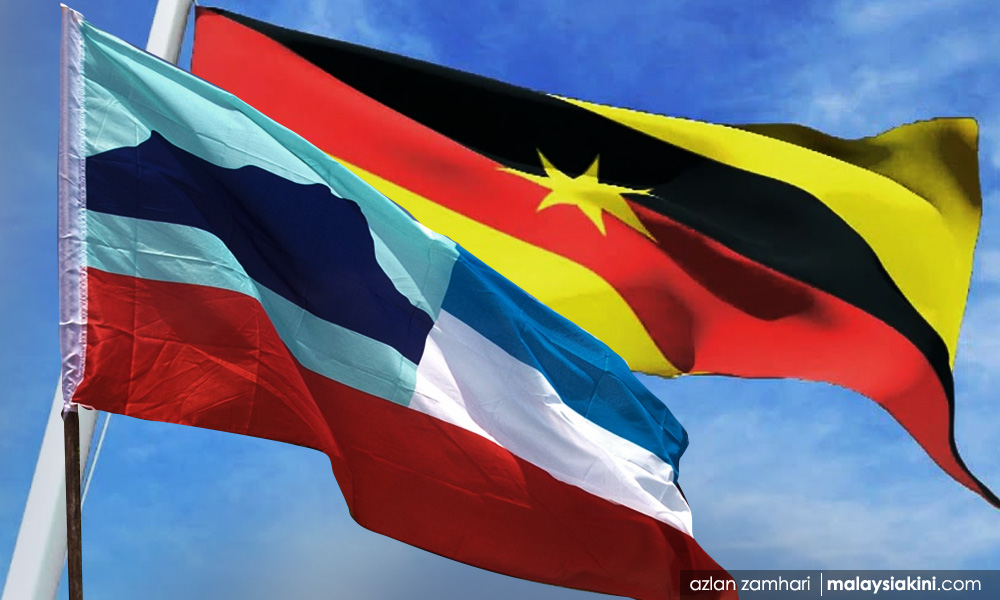
further ease this realignment. Gabungan Parti Sarawak (GPS) and Gabungan
Rakyat Sabah (GRS) have consistently demonstrated ideological
flexibility.
Their
operating principle is pragmatic: support whichever coalition can form
the federal government while safeguarding state autonomy and access to
resources. Their participation is not anchored to Pakatan Harapan, BN,
or Perikatan Nasional, but to power itself.
This makes them natural stabilisers in any future coalition configuration.
Volatile times
All
of this makes the current political moment particularly volatile. With
GE16 projected for 2027, there is ample time for recalibration,
defections, and gradual repositioning. Malaysian politics rarely waits
for election cycles to enact change. Realignments are often completed
long before voters are called to the polls.
For DAP, the challenge
is existential. Can it remain relevant within a coalition increasingly
shaped by ethnic pragmatism rather than multiracial principle? Or is it
being manoeuvred toward an exit that allows others to consolidate Malay
power while discarding the complexity of pluralism?
For Malaysia,
the implications are even more profound. The erosion of Harapan’s
multiracial character risks normalising a return to race-based
governance: rebranded, but fundamentally unchanged.
If Madani was
meant to represent a departure from old political habits, the current
trajectory suggests continuity rather than transformation.
The
coalition map is being redrawn not through press conferences, but
through calculated silences, selective confrontations, and strategic
restraint.
In Malaysian politics, these signals often matter more
than formal statements. Taken together, they suggest that the real
contest for GE16 may not be waiting in the future, as it may already be
unfolding.