Communities
become strong because they have strong institutions. They have
businesses. They have networks. They have educational opportunities.
They have organisations capable of opening doors for the next
generation.
That is why he devoted so much of his life to moulding
young leaders, including establishing Gopio. He understood that Indians
across the world shared common aspirations. They wanted dignity. They
wanted opportunity. They wanted a future for their children.
Most importantly, he understood that no community can survive on political promises alone.
And that is why his legacy remains so relevant today. Because there is still “the other Malaysia”.
The
phrase comes from Michael Harrington’s famous book “The Other America”.
In the early 1960s, Harrington exposed a reality that many preferred
not to see.
While politicians celebrated prosperity and progress,
millions of Americans remained trapped in poverty and exclusion. They
were invisible to those in power.
We have our own “other
Malaysia”. A Malaysia that exists beyond official speeches and political
slogans. A Malaysia that does not appear in glossy government
brochures. A Malaysia that is seen during election campaigns and
forgotten immediately afterwards.
It
is not hidden. It is not invisible. It exists in plain sight. The
tragedy is not that we cannot see it. The tragedy is that we have become
accustomed to it.
For many Indian Malaysians, this “other Malaysia” is a lived reality.
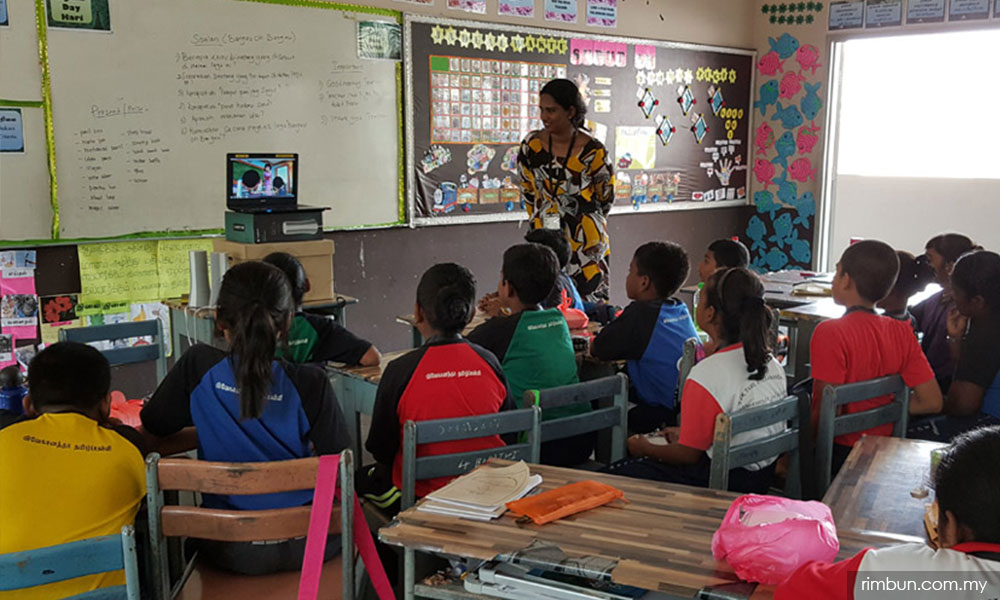
It is the child attending an under-resourced Tamil school while politicians boast about national achievements.
It is the graduate who discovers that hard work alone does not always translate into opportunity.
It is the small entrepreneur struggling to obtain financing, contracts and support.
It is the family trapped in cycles of economic insecurity despite generations of sacrifice.
It is the plantation worker’s grandchild who was promised social mobility but still finds too many doors closed.
This is not about victimhood. It is about reality.
Let me share some numbers, and they are damning, and they have been damning for decades.
Indian
Malaysians, who make up approximately 6.5 percent of the national
population, account for roughly 22 percent of the prison population and
22 percent of the inmates on death row.
Gangsterism
among Indians. According to Bukit Aman’s data, 71.75 percent of all
identified active gang members in Malaysia are of Indian descent. This
is what happens when young men grow up with no credible path forward; no
matriculation quota, no business grant, no government contract, no
civil service fast track.
Economist Muhammad Abdul Khalid says Indian Malaysians earned, per capita, some 76 percent more than the Malays in 1970.
However,
by the mid-2000s, the advantage narrowed to 27 percent, and for the
bottom half of the community, it has since collapsed. The Indian story
is therefore not one of uniform poverty, but a catastrophic downward
mobility for those at the bottom.
Only nine percent of Indian
candidates received interview call-backs compared to 44 percent of
Chinese applicants, thus creating an additional barrier to fair wages,
career progression and most importantly, employment.
A 2021
Discrimination in Education Survey revealed that nine in 10 Indian
students felt discriminated against because of their ethnicity. About 73
percent of these students were discriminated against by fellow
students, and 74 percent of Indian students were discriminated against
by their teachers.
And unless we are prepared to confront reality, we cannot change it.
Hope is not weakness
For
decades, Indians have been told to wait. Wait for development. Wait for
reform. Wait for inclusion. Wait for opportunities. Wait for the next
policy. Wait for the next government. Wait for the next election.
We
have waited through different administrations, different coalitions and
different political eras. Yet many of the structural challenges facing
Indians remain stubbornly familiar.
Our educational inequalities
remain. Our economic vulnerabilities remain. Our underrepresentation in
key sectors remains. The question is no longer whether politicians
recognise these problems.
The question is whether they are willing to solve them.
Many
Indians placed tremendous hope in the reform movement that eventually
brought Pakatan Harapan to power. They believed a new political culture
would emerge. They believed long-neglected issues would finally receive
sustained attention.
Those hopes were understandable.
Hope
is not a weakness. Hope is what drives democratic participation. But
hope must eventually be measured against outcomes. And many ordinary
Indians today are asking difficult questions.
Where is the comprehensive economic strategy for Indian entrepreneurs?
Where is the bold plan to build Indian-owned businesses capable of competing nationally, regionally and globally?
Where is the transformation in educational outcomes?
Where are the institutions that can uplift communities regardless of who occupies Putrajaya?
Where is the structural change that was promised?
Many
Indians voted for reform. What they received was often administration.
They voted for transformation. Too often, they got management. They
voted for structural change. Too often, they got announcements.
These
are not questions born of hostility. They are questions born of
disappointment. There is a difference. Criticism is not betrayal.
Accountability is not disloyalty.
Democracy demands that citizens
ask difficult questions of those who seek their votes. And Indians must
ask those questions now more than ever. Because one of the greatest
mistakes any community can make is becoming a guaranteed vote bank.
The moment politicians believe your vote belongs to them automatically, they stop earning it. They begin assuming it.
And
when votes are assumed, accountability disappears. Politicians start
believing that symbolic gestures are enough. A speech here. A photo
opportunity there. A committee. A task force. An announcement. A
promise. Another promise. And another.
Meanwhile, communities continue struggling with the same challenges year after year.
Influence in democracy
There
is another reality we must confront honestly. Today, Indian Malaysians
make up roughly 6.5 percent of the population. Some hear that figure and
see weakness. I see leverage.
In a democracy, influence is not
merely a matter of numbers. It is a matter of organisation,
participation, purpose and vision. A community that votes strategically,
builds institutions and contributes to national life can exercise
influence far beyond its numerical size.
But we must also confront
an uncomfortable reality. We may not always be 6.5 percent. One day, we
may be five percent. Perhaps less. When that day comes, our future will
not depend on how many we are. It will depend on how organised we are.
That
is why the next generation matters so profoundly. Young Indian
Malaysians cannot afford political apathy. They cannot afford to
withdraw from public life or believe that their voices do not matter.
They
must become entrepreneurs, professionals, academics, innovators, civil
servants, community leaders and elected representatives. They must
organise, participate and lead.
The future will not be secured by
nostalgia for what previous generations achieved. It will be secured by
what young Indians build from this moment onward.
Selva built platforms. Our younger generation must build power.
The
question facing us is therefore not whether our community will become
smaller. The question is whether it will become stronger.
Selva
understood this. As a visionary leader, he understood results and
outcomes. He knew that intentions alone do not build companies and
communities. Vision alone does not create jobs. Good speeches do not
generate wealth. Only execution does.
The same applies to
politics. Governments should not be judged by slogans. They should be
judged by outcomes: How many businesses were created? How many young
people were empowered? How many opportunities were opened? How many
barriers were removed? How many institutions were strengthened?
These are the measurements that matter.
Because
the future of Indian Malaysians cannot depend on political patronage.
It cannot depend on waiting for favours. It cannot depend on hoping that
someone else will solve our problems.
It must be built upon
entrepreneurship. It must be built upon education. It must be built upon
economic participation. It must be built upon institutions.
Vote as investment
That
was Selva’s vision. He believed in connecting people. He believed in
creating opportunities. He believed in building networks that could help
future generations succeed. He understood that economic empowerment is
not a luxury. It is the foundation of dignity.
A community that
controls its own economic destiny speaks with confidence. A community
that depends entirely on others speaks with uncertainty.
And so,
as we approach the next general election, I believe Selva would have
asked these questions: Who is building institutions? Who is helping
small businesses grow? Who is investing in entrepreneurs? Who is
creating opportunities for young people?
Who understands that
communities need empowerment rather than dependency? Who is thinking
about the next generation rather than the next election? Who is prepared
to do the difficult work of nation-building instead of merely
campaigning?
Those are the questions that matter. Not personalities. Not slogans. Not tribal loyalties. Not fear.
For
too long, Indian Malaysians have often been encouraged to vote out of
fear. Fear of one coalition. Fear of another coalition. Fear of
instability. Fear of losing what little we have.
But fear has
never built a school. Fear has never built a business. Fear has never
created wealth. Fear has never transformed a community. Only vision can
do that. Only leadership can do that. Only courage can do that.
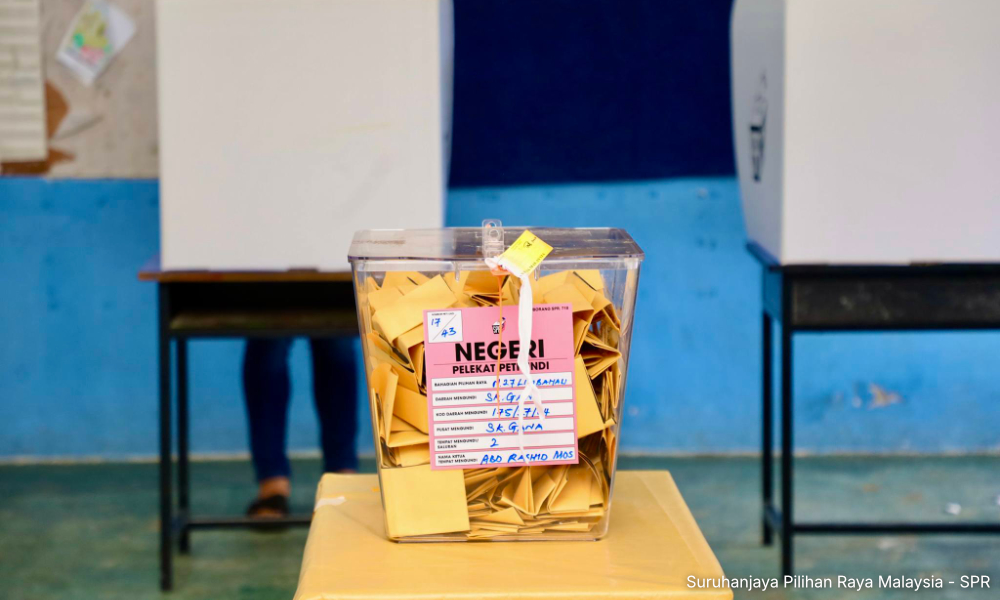
This
election, our votes matter not because politicians need them. Our votes
matter because our future depends on how we use them.
Every vote
should be treated as an investment. And like every investment, it should
demand returns. Not in the form of handouts. Not in the form of
tokenism. Not in the form of symbolic recognition. But in the form of
genuine opportunities.
Selva did not spend his life building Gopio
so that future generations could become spectators. He built it because
he believed Indians could be participants. Builders. Employers.
Leaders. Institution-makers.
The “other Malaysia” does not have to
remain the “other Malaysia”. But that will require courage. The courage
to ask difficult questions. The courage to reject empty promises.
The
courage to demand accountability. The courage to think beyond the next
election. And the courage to take responsibility for our own future.
Because in the end, communities are remembered for what they created. They are remembered for what they left behind.
Selvarajoo Sundram built. The question before us is simple: Will we?