Articles, Opinions & Views: COMMENT - KJ knows the state wants citizens to practise self-censorship By Commander S THAYAPARAN (Retired) Royal Malaysian Navy
Fighting Seventh
The Fighting Rangers On War, Politics and Burning Issues
Rudyard Kipling"
“When you're left wounded on Afganistan's plains and
the women come out to cut up what remains, Just roll to your rifle
and blow out your brains,
And go to your God like a soldier”
General Douglas MacArthur"
“We are not retreating. We are advancing in another direction.”
“It is fatal to enter any war without the will to win it.” “Old soldiers never die; they just fade away.
“The soldier, above all other people, prays for peace, for he must suffer and be the deepest wounds and scars of war.”
“May God have mercy upon my enemies, because I won't .” “The object of war is not to die for your country but to make the other bastard die for his.
“Nobody ever defended, there is only attack and attack and attack some more.
“It is foolish and wrong to mourn the men who died. Rather we should thank God that such men lived.
The Soldier stood and faced God
Which must always come to pass
He hoped his shoes were shining
Just as bright as his brass
"Step forward you Soldier,
How shall I deal with you?
Have you always turned the other cheek?
To My Church have you been true?"
"No, Lord, I guess I ain't
Because those of us who carry guns
Can't always be a saint."
I've had to work on Sundays
And at times my talk was tough,
And sometimes I've been violent,
Because the world is awfully rough.
But, I never took a penny
That wasn't mine to keep.
Though I worked a lot of overtime
When the bills got just too steep,
The Soldier squared his shoulders and said
And I never passed a cry for help
Though at times I shook with fear,
And sometimes, God forgive me,
I've wept unmanly tears.
I know I don't deserve a place
Among the people here.
They never wanted me around
Except to calm their fears.
If you've a place for me here,
Lord, It needn't be so grand,
I never expected or had too much,
But if you don't, I'll understand."
There was silence all around the throne
Where the saints had often trod
As the Soldier waited quietly,
For the judgment of his God.
"Step forward now, you Soldier,
You've borne your burden well.
Walk peacefully on Heaven's streets,
You've done your time in Hell."
COMMENT - KJ knows the state wants citizens to practise self-censorship By Commander S THAYAPARAN (Retired) Royal Malaysian Navy
Monday, May 18, 2026
Malaysiakini : “It is evidently clear that Umno Youth has no guts to debate in
public; they only like closed-door debates. I wanted to show the public
the kind of people you have in Umno. Everyone now knows what a coward
Khairy is,” he had said.
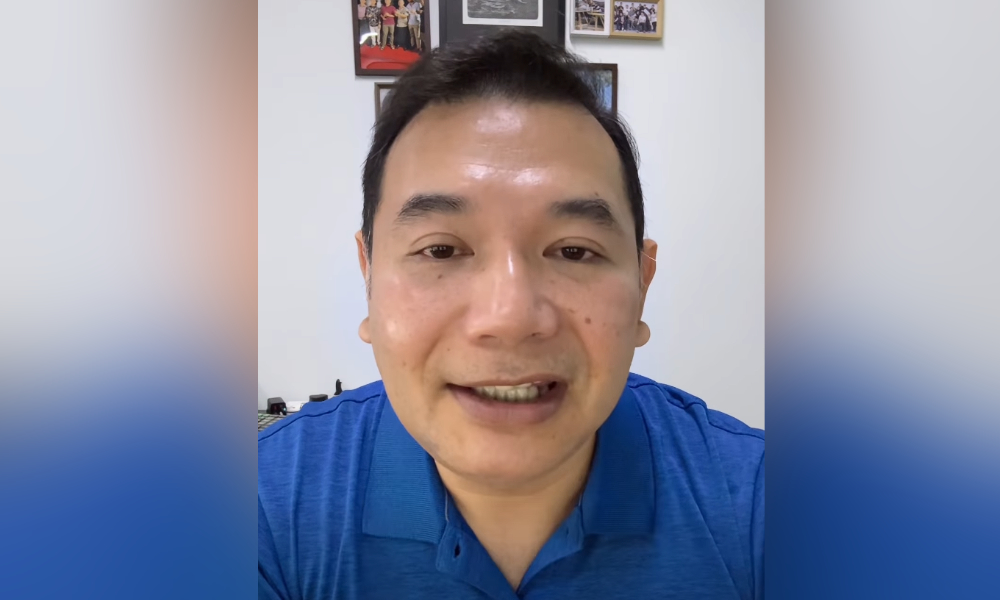
But then again, these are politicians, and a couple of years later, Khairy was teaching Rafizi how to use Instagram filters.
Rafizi Ramli
This
is not about “cowardice” but rather how the state wants citizens to
practise self-censorship. Khairy knows this. Journalists know this, and
you better believe that academics know this.
International Islamic
University Malaysia (IIUM) academic Syaza Shukri said, “Even something
minor, perhaps just an objective question that we genuinely want to
understand, or maybe even a complaint from outside, can be turned into a
3R (race, religion, and royalty) issue.”
Actually, her statement echoes what PKR MP Hassan Abdul Karim had lamented,
that the 3R ban is masking the systemic dysfunction when it comes to
the kind of crony capitalists orbiting Prime Minister Anwar Ibrahim.
“These people seem to enjoy immunity and cannot be touched due to the 3R ban,” Hassan reportedly said.
Every policy decision is based on the 3Rs; it is just that people who disagree with the 3Rs should not talk about it.
From
Anwar to PAS president Abdul Hadi Awang, political operatives using the
3Rs for political purposes are not sanctioned by the state.
But
if you are the unlucky dissenter who points out that the 3Rs are part of
the problem, then the state comes down on you like a ton of bricks.
Impractical, difficult to monitor
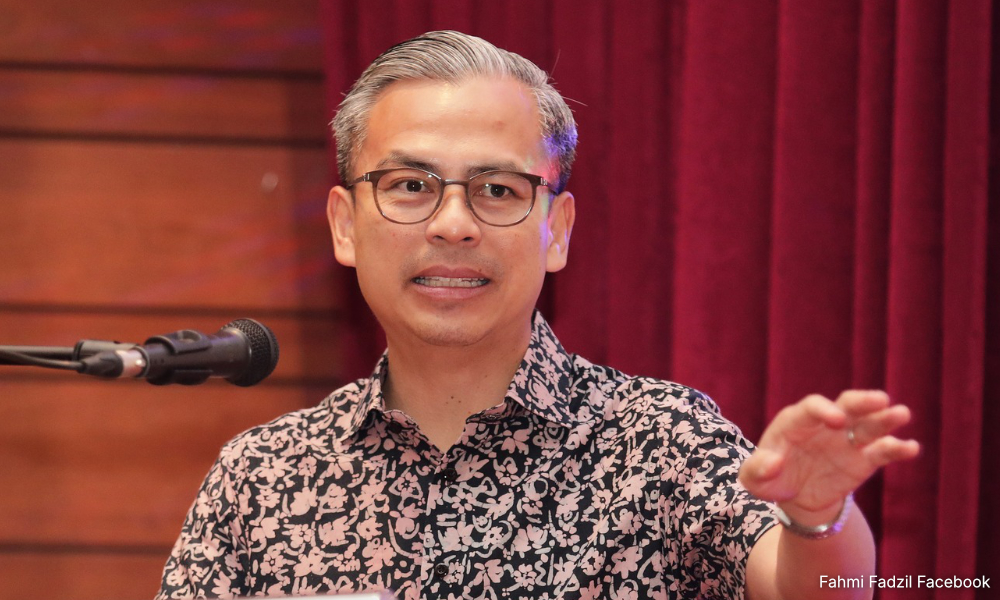
Look, all governments want the rakyat to practise self-censorship. Two years ago, as reported in the press, Fahmi Fadzil
“…told participants to behave themselves, warning that they were being
‘monitored by authorities’ and may be visited by the police”.
When
Fahmi claimed that it was a miscommunication about watching your words
and being monitored by the authorities, National Human Rights Society
(Hakam) president M Ramachelvam said: “As the communications and digital
minister, he should have used his position to answer the comments left
by viewers rather than to say the authorities will come after them.
“Threats
by government ministers against freedom of expression leave a negative
perception of the government (which has a duty) to uphold this
fundamental constitutional right guaranteed to citizens.”
And
all this is not new. Fahmi is just echoing what then-communications and
multimedia minister Salleh Said Keruak said nearly a decade ago.
“It
is impractical and difficult to monitor or control a user’s access to
the massive amount of content found online. So, it is left to us, the
user, to exercise self-censorship and to verify all news shared over our
social media feeds.”
At
one time, legacy media practised self-censorship as some sort of
misguided idea of nation-building - at least, that’s what they told us.
Indeed, all instruments of colonial legislation were and are used to
stifle every facet of Malaysian public life.
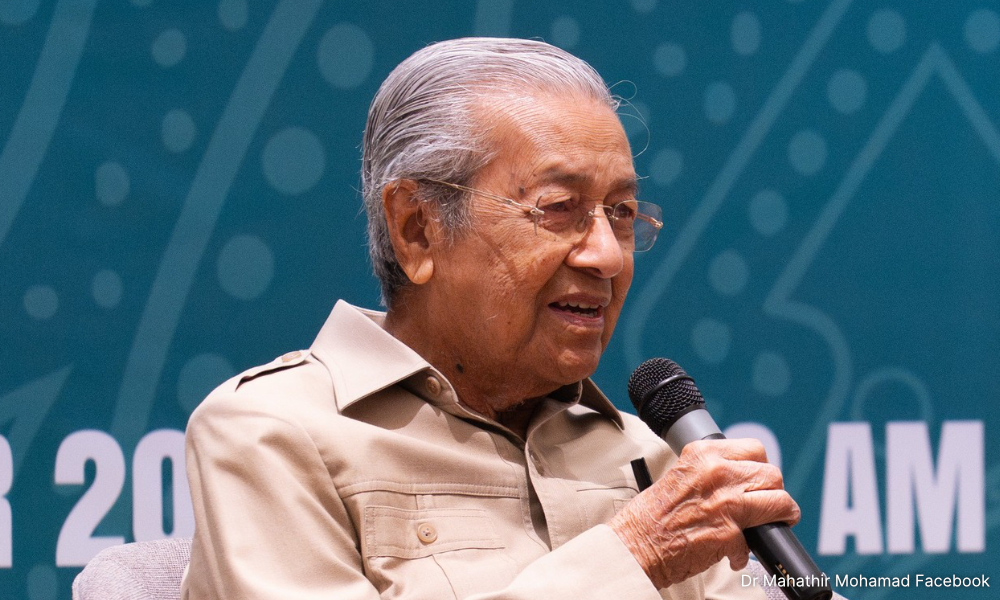
Former prime minister Dr Mahathir Mohamad
once said, "When I was the prime minister, there was press freedom, but
it is the media itself who did self-censorship, as if they didn't want
to hurt leaders' feelings. This is the habit that we have in Malaysia.”
Which
sounds civilised, as if the media were not operating under the
possibility of the Internal Security Act or a history of state
intervention into the so-called “Fourth Estate”.
Insidious kind of censorship
Self-censorship
is the most insidious kind of censorship, because its coerciveness
becomes voluntary - this is how we become complicit in our own
subjugation.
Then again, self-censorship has a karma-like effect - especially here in Malaysia.
This is best illustrated when Mahathir bemoaned
the fact that, “Soon after (Abdullah Ahmad Badawi took over as PM), I
was cut off from the press... reporters were not allowed to interview
me... and they were not allowed to print anything I said.”
Dr Mahathir Mohamad
Remember
the so-called media blackout on the e-hailing driver episode? Deputy
Communications Minister Teo Nie Ching played coy about self-censorship
by some of the media, “It (ordering media to censor) never happens on my
level. I never heard about the so-called government orders.”
Apparently, it was all “internal decisions”.
Gerakan Media Merdeka (Geramm) spokesperson Radzi Razak had the perfect response when asked by Malaysiakini about Teo’s comment.
“Let’s
not pretend that there are no ‘friendly texts or calls’ to the editors
from someone in the office of the powers that be. Let’s not pretend
writers and publishers are not being ‘gently’ reminded of how a story or
headline should be written by someone not in the industry.”
No sanctions
But
here is the important part. Self-censorship only extends to speech and
ideas that the state deems offensive. Ideas that seek to reinforce the
narrative of racial and religious superiority are enabled by the state.
This
means that politicians, preachers, and academics who conform to
hegemonic ideas or religion and race are free to say what they want, and
there are no sanctions by the state.
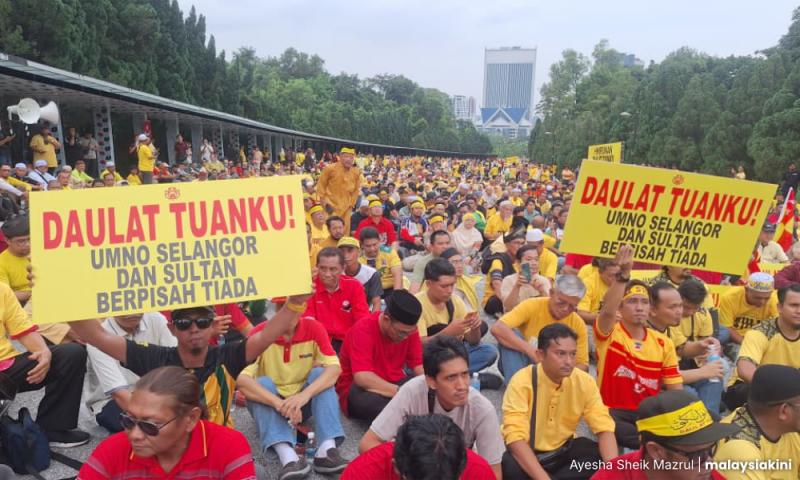
Take this PAS-led, Umno-endorsed Daulat Tuanku rally. Keep in mind that PAS has gone against the diktats of the Selangor sultan and Umno over the decades, and has curtailed the power of the royalty.
But of course, this kind of hypocrisy
is par for the course for these types of religious people. The fact
that the mainstream Malay establishment and the royal institution say
nothing about this hypocrisy should tell rational people what this game
is all about.
Meanwhile, progressive voices and those who seek to
nurture democratic or secular values are punished by the state, and more
often than not. resort to self-censorship for personal and economic
safety.
It is easy to be brave when you have the protection of the state.