Rudyard Kipling"
“When you're left wounded on Afganistan's plains and
the women come out to cut up what remains, Just roll to your rifle
and blow out your brains,
And go to your God like a soldier”
General Douglas MacArthur"
“We are not retreating. We are advancing in another direction.”
“It is fatal to enter any war without the will to win it.” “Old soldiers never die; they just fade away.
“The soldier, above all other people, prays for peace, for he must suffer and be the deepest wounds and scars of war.”
“May God have mercy upon my enemies, because I won't .” “The object of war is not to die for your country but to make the other bastard die for his.
“Nobody ever defended, there is only attack and attack and attack some more.
“It is foolish and wrong to mourn the men who died. Rather we should thank God that such men lived.
The Soldier stood and faced God
Which must always come to pass
He hoped his shoes were shining
Just as bright as his brass
"Step forward you Soldier,
How shall I deal with you?
Have you always turned the other cheek?
To My Church have you been true?"
"No, Lord, I guess I ain't
Because those of us who carry guns
Can't always be a saint."
I've had to work on Sundays
And at times my talk was tough,
And sometimes I've been violent,
Because the world is awfully rough.
But, I never took a penny
That wasn't mine to keep.
Though I worked a lot of overtime
When the bills got just too steep,
The Soldier squared his shoulders and said
And I never passed a cry for help
Though at times I shook with fear,
And sometimes, God forgive me,
I've wept unmanly tears.
I know I don't deserve a place
Among the people here.
They never wanted me around
Except to calm their fears.
If you've a place for me here,
Lord, It needn't be so grand,
I never expected or had too much,
But if you don't, I'll understand."
There was silence all around the throne
Where the saints had often trod
As the Soldier waited quietly,
For the judgment of his God.
"Step forward now, you Soldier,
You've borne your burden well.
Walk peacefully on Heaven's streets,
You've done your time in Hell."
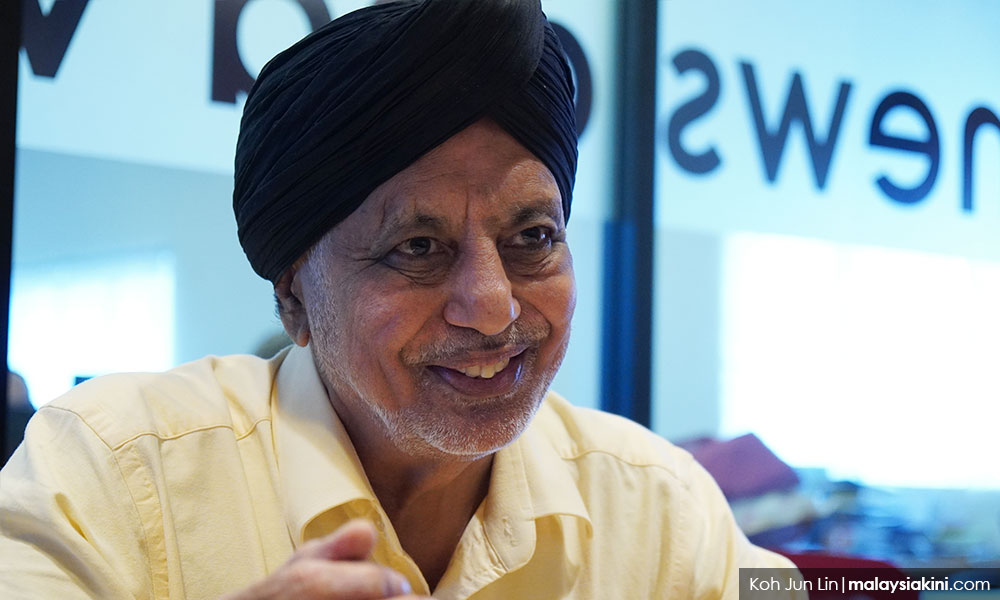
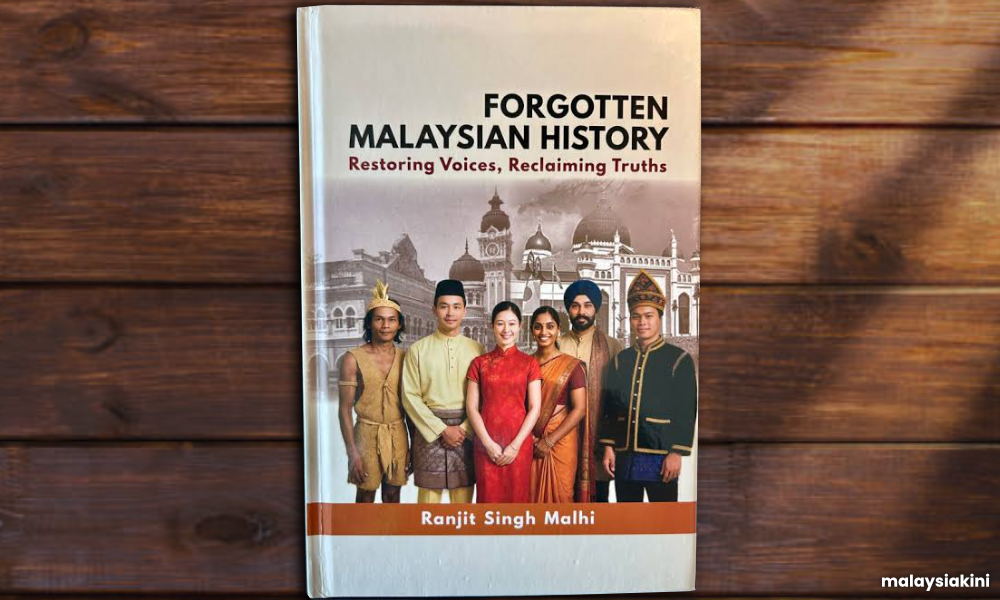
As Ranjit said in the
introduction to the book, each chapter has been “substantially reworked:
expanded with richer detail, sharpened analysis, and supported by
specific citations from authoritative sources.”
Ranjit Singh Malhi
The
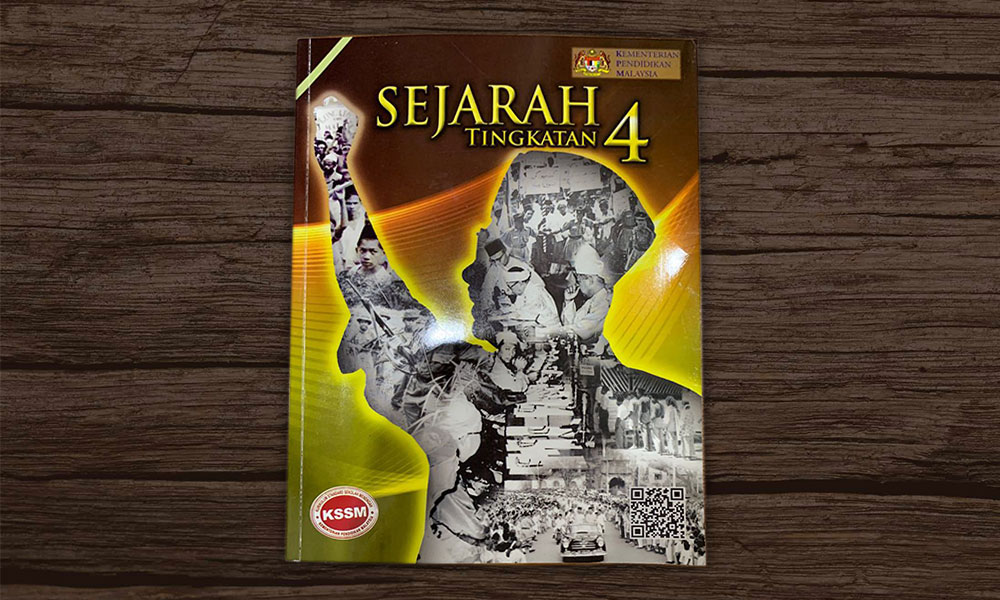
impetus for the book, in Ranjit’s words: “Since 1996, Malaysia’s
secondary school history textbooks have presented a markedly one-sided
narrative - overwhelmingly framed through Malay and Islamic perspectives
- resulting in distortions, half-truths and the omission of important
facts vital to nation-building.
“In effect, many young Malaysians
are likely learning a government-sanctioned version of history framed
largely through the perspective of one ethnic group and perceived by
critics as aligned with the concept of ‘Ketuanan Melayu’ (Malay
supremacy).”
He further goes on to outline what’s missing in the textbooks that merit attention.
First,
the pivotal roles of non-Malays in tin-mining, rubber cultivation,
commercial agriculture and infrastructure development are minimised or
erased.
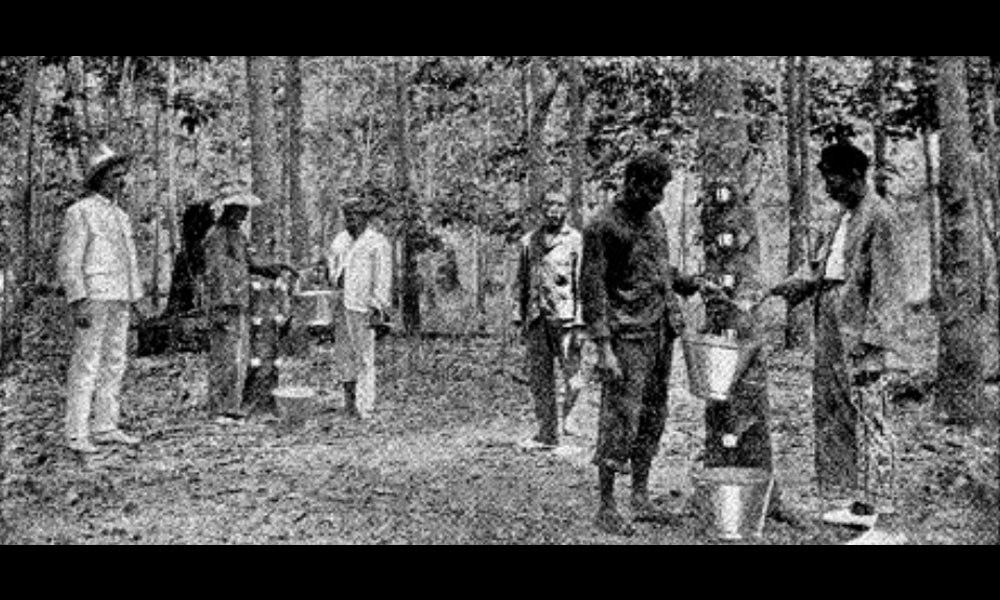
Rubber estate
Second,
civilisational coverage emphasises Islam, minimising Indian and Chinese
civilisation and sidelining the “profound Hindu-Buddhist influence on
Malay language, literature, governance, and culture”.
Third, in
terms of accuracy and attributions, there are occasional errors in
dates, attributions, and the portrayal of historical figures such as
Parameswara, which undermines credibility.
Finally, he takes issue
with the poor representation of the position of the original
inhabitants, the Orang Asli, who “are virtually invisible in the
narratives of the Form 1 to 5 textbooks”.
Common distortions
Chapter
1 kicks it off with a discussion of common distortions in Malaysia’s
textbooks which centre around diminishing the contributions of
non-Malays. This is expanded further in the next seven chapters.
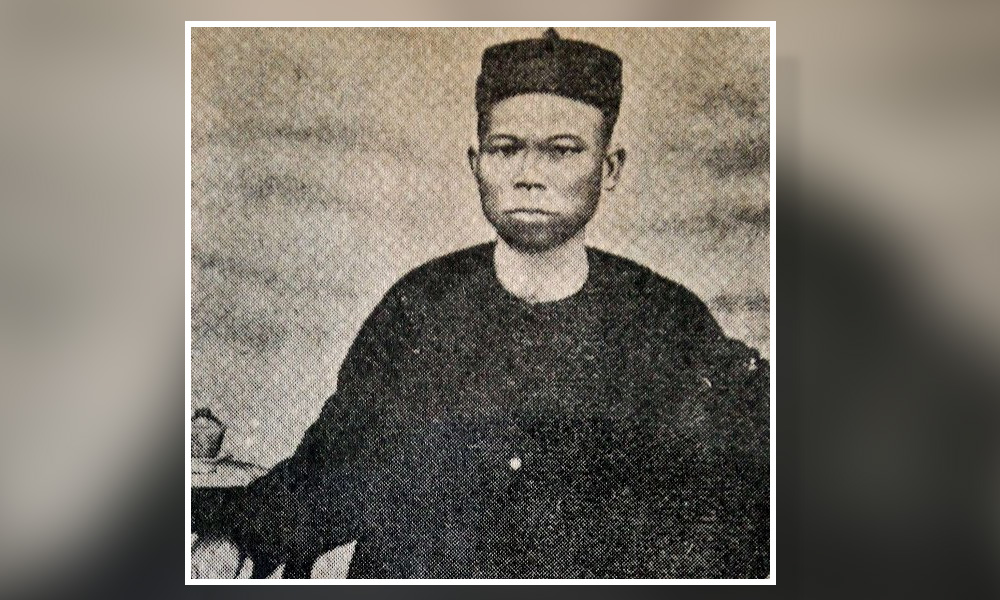
Examples include diminishing the role of Yap Ah Loy’s contributions in founding Kuala Lumpur.
Yap Ah Loy
While
a 1979 edition of the Form Four history textbook devoted three pages to
this, it was reduced to a mention subsequently. “That such a rich
account has been reduced to a perfunctory mention in the latest
textbooks is not merely an oversight; it is an act of historical
diminishment."
Another example is the minimisation of the
treatment of Orang Asli, with the current series of textbooks providing
only minimal coverage. They are no longer explicitly acknowledged as the
first people.
Ranjit said the Form Four textbook (2019, page 225)
explicitly states that the Malays are the “rakyat asal Tanah Melayu”
(the original people of Malaya).
Such omissions matter, and risk obscuring the primacy of the Orang Asli and the peninsula’s deep indigenous heritage, he added.
Parameswara converted?
One
more example is the diminishment of Indian influences on Malay
language, culture and practices and the myth perpetuated in the 2017
Form 2 history book (page 82) that Parameswara (Malacca’s founding
prince) converted to Islam in 1414 and adopted the name Megat Iskandar
Shah.
Ranjit cites Ming Dynasty sources quoted in books to say
that Parameswara and Megat Iskandar Shah were father and son. “This
primary evidence not only debunks the textbook’s claim but also exposes a
troubling disregard for well-established historical facts,” he added.
There
are numerous other examples of misrepresentations in this chapter and
the seven chapters that follow, including the following:
Quoting
one author to say that the real home of the Malays is Sumatera, not the
Malay Peninsula. Most Malays migrated to the Malay Peninsula in
historical times and owe their origin to Sumatera.
In 1931, less than 60 percent of those recorded as “Malay” had resided in Malaya for more than 40 years.
In 2013, Ahmad Zahid Hamidi, then-home minister, declared that “over half of Malaysian ministers are of Indonesian descent”.
Indian presence in Malaya dates back 2,000 years, while Chinese presence is evident from the 15th century
There
are many such snippets of information interspersed within the first
eight chapters. Most of the rest of the chapters cover the minority
communities - even those within the Chinese, Indian and Malay
communities, those in Sabah and Sarawak and the indigenous communities.
They
are all interesting, well-researched and give glimpses into their lives
and history, bringing back echoes of a past era which is in dire danger
of being forgotten altogether in the future.
Chapters 30 to 34
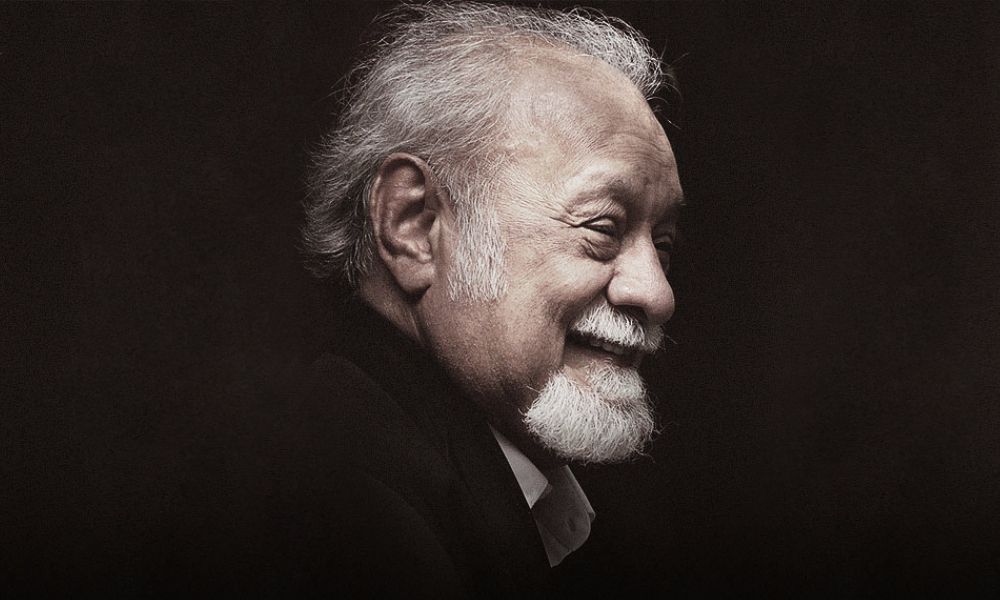
are devoted to five leaders - Social Front activist Karam Singh Veriah
(not many youngsters will remember him), DAP leader Karpal Singh, PAS
leader Nik Abdul Aziz Nik Mat, former deputy prime minister Dr Ismail
Abdul Rahman and former prime minister Dr Mahathir Mohamad.
Karpal Singh
Only Mahathir is still around. There are interesting insights about each of them.
Setting history straight
The
final Chapter 35 is a brief account of May 13, 1969, its origins and
participants, and a discussion of the numerous theories surrounding its
occurrence, the only large-scale outbreak of racial riots in the
country.
It’s an excellent, balanced and informative starting
point for those interested in knowing more about this sad, momentous
episode which reshaped Malaysian history in startling ways.
It’s perhaps the most significant event in post-Merdeka Malaysia, changing its character forever.
This
is a badly needed book for Malaysia simply because it helps to set the
historical record straight and suggests ways and means that this can be
achieved.
One hopes that our leaders pay attention. Distorting history is no way to build a nation.
The only major complaint I have is the price point of the book at RM100. But it is a hard-cover edition.
My hope is that it is produced in a soft-cover edition at perhaps half the price and is available in an e-book version too.
Along
with this, a Malay edition will also improve accessibility and help
foster what I hope is an informed debate about the real history of the
country without the disturbance of politics, racial, religious and
regional differences.
A nation must be built on truth. Ranjit has
made an important contribution here, an attempt to help put history
right by setting it straight.