Rudyard Kipling"
“When you're left wounded on Afganistan's plains and
the women come out to cut up what remains, Just roll to your rifle
and blow out your brains,
And go to your God like a soldier”
General Douglas MacArthur"
“We are not retreating. We are advancing in another direction.”
“It is fatal to enter any war without the will to win it.” “Old soldiers never die; they just fade away.
“The soldier, above all other people, prays for peace, for he must suffer and be the deepest wounds and scars of war.”
“May God have mercy upon my enemies, because I won't .” “The object of war is not to die for your country but to make the other bastard die for his.
“Nobody ever defended, there is only attack and attack and attack some more.
“It is foolish and wrong to mourn the men who died. Rather we should thank God that such men lived.
The Soldier stood and faced God
Which must always come to pass
He hoped his shoes were shining
Just as bright as his brass
"Step forward you Soldier,
How shall I deal with you?
Have you always turned the other cheek?
To My Church have you been true?"
"No, Lord, I guess I ain't
Because those of us who carry guns
Can't always be a saint."
I've had to work on Sundays
And at times my talk was tough,
And sometimes I've been violent,
Because the world is awfully rough.
But, I never took a penny
That wasn't mine to keep.
Though I worked a lot of overtime
When the bills got just too steep,
The Soldier squared his shoulders and said
And I never passed a cry for help
Though at times I shook with fear,
And sometimes, God forgive me,
I've wept unmanly tears.
I know I don't deserve a place
Among the people here.
They never wanted me around
Except to calm their fears.
If you've a place for me here,
Lord, It needn't be so grand,
I never expected or had too much,
But if you don't, I'll understand."
There was silence all around the throne
Where the saints had often trod
As the Soldier waited quietly,
For the judgment of his God.
"Step forward now, you Soldier,
You've borne your burden well.
Walk peacefully on Heaven's streets,
You've done your time in Hell."
The proclamation of
independence did not proclaim Malaya an ethnic or theocratic state. It
declared Malaya a sovereign democratic nation founded upon “the
principles of liberty and justice” and dedicated to the welfare and
happiness of its people.
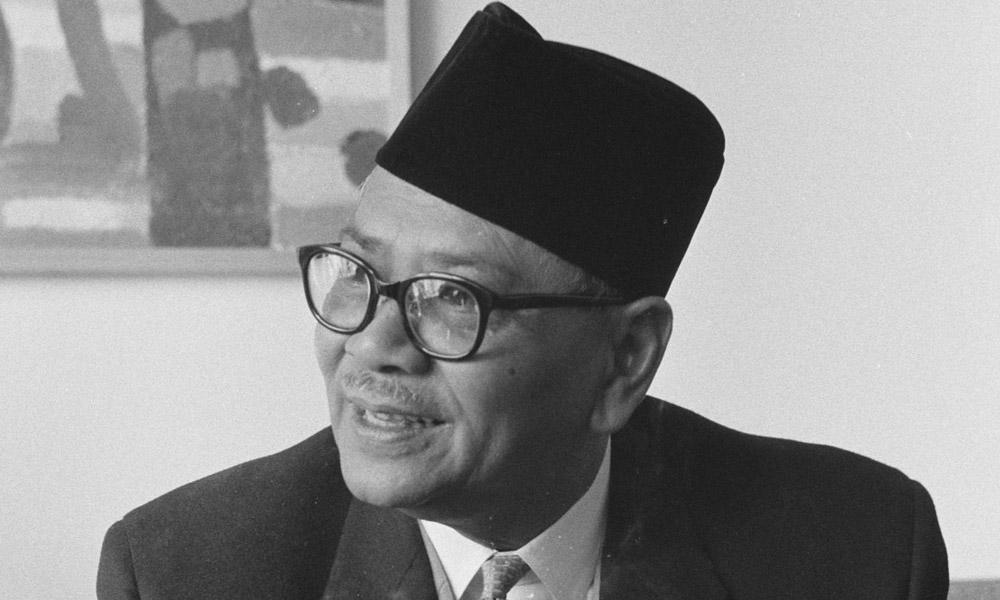
In his historic Merdeka address, Tunku
called upon the people to create a nation inspired by justice and
liberty - “a beacon of light in a disturbed and distracted world”.
A
year later, he said Malaya should show how people of different
ethnicities and creeds could live together as one people, in peace, for
the good of all.
Tunku understood a truth that too many leaders
appear to have forgotten: a plural nation cannot be built through
domination. It requires trust, accommodation and a shared sense of
belonging.
Tunku Abdul Rahman
The
Alliance leaders who made independence possible - Tunku, Abdul Razak
Hussein, Tan Cheng Lock, HS Lee, VT Sambanthan, and their colleagues -
did not agree on everything.
Yet they and the Malay rulers
recognised that independence required compromise and mutual sacrifice.
Every community had to make room for the others.
The resulting
1957 constitutional settlement preserved the Malay rulers, established
Malay as the national language, recognised Islam as the religion of the
federation and safeguarded the special position of the Malays.
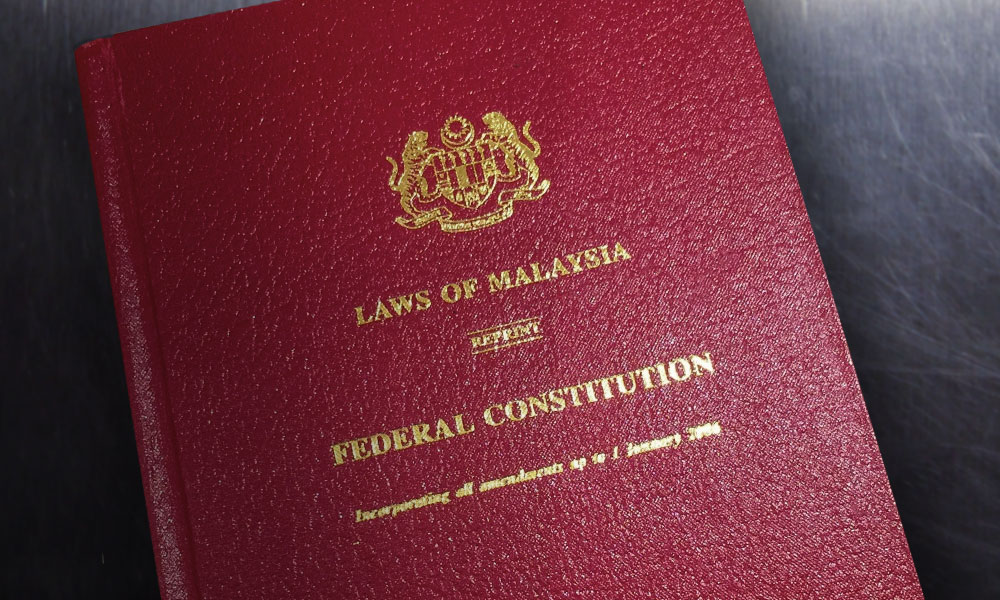
The
Constitution also created a common federal citizenship, protected
fundamental liberties, and guaranteed equality before the law.
Article
153 required the Yang di-Pertuan Agong to safeguard both the special
position of the Malays and the legitimate interests of other
communities.
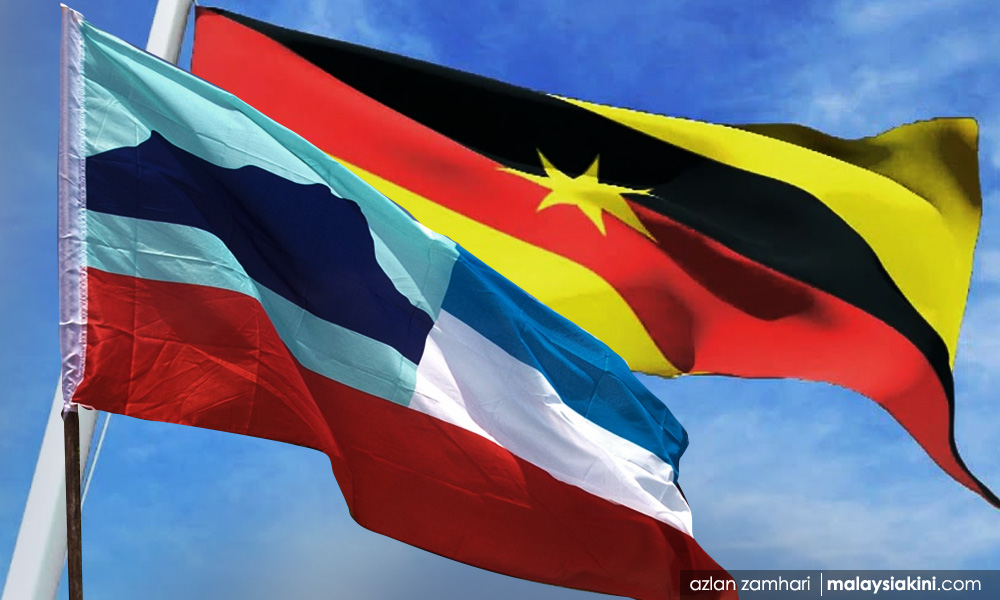
Six years later, the Malaysia Agreement 1963 provided
for Sabah, Sarawak, and Singapore to be federated with the existing
states of the Federation of Malaya, with the federation thereafter
called Malaysia.
The Constitution was amended accordingly, including safeguards for Sabah and Sarawak.
Malaysia’s
founding story therefore rests on two connected but distinct moments:
Malaya’s independence on Aug 31, 1957, and Malaysia’s formation on Sept
16, 1963.
Towards a common nationality
The
Reid Commission Report records the Tunku-led Alliance’s declaration that
all nationals should enjoy equal rights and opportunities, without
racial or religious discrimination.
The Malay rulers likewise hoped that communalism could eventually disappear from political and economic life.
The
commission considered the continuation of safeguards for the special
position of the Malays justified by the serious socioeconomic imbalances
then prevailing.
It envisaged that the need for these safeguards would diminish as the communities became integrated into a common nationality.
It therefore recommended a review after 15 years, with the legislature empowered to retain, reduce or discontinue the quotas.
That review mechanism was not included in the final Constitution, and Article 153 remains fully operative.
It is important to note that the Constitution recognises the special position of the Malays; it does not establish “ketuanan Melayu”. It protects the legitimate interests of all citizens; it does not create masters and guests.
A secular constitutional nation
The 1957 founding record is equally clear about independent Malaya’s constitutional character.
The Alliance memorandum stated that making Islam the religion of the federation would not alter Malaya’s secular character.
The
1957 constitutional White Paper was explicit: the declaration
concerning Islam would “in no way affect” the federation’s position as a
secular state.
Tunku removed any remaining doubt in the Federal
Legislative Council on May 1, 1958: “This country is not an Islamic
state as it is generally understood.”
He explained that the
Constitution merely provided for Islam as the official religion. The
formation of Malaysia in 1963 did not replace that constitutional order
with a theocratic one.
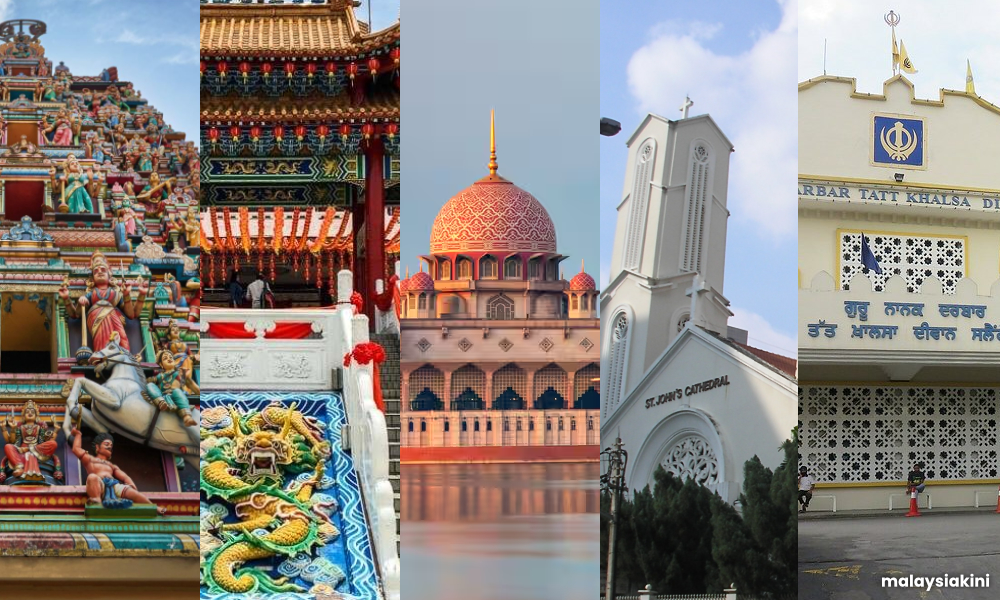
Secular does not mean anti-Islam or hostile
to religion. The Constitution gives Islam a special and honoured
position while allowing other religions to be practised in peace and
harmony.
It subjects all public power, including authority over religious matters, to the Constitution and the law.
Article
4 declares the Constitution the supreme law of the federation.
Political declarations cannot alter it, and no government may disregard
the constitutional division of powers in the name of religious
conviction.
How far we have strayed
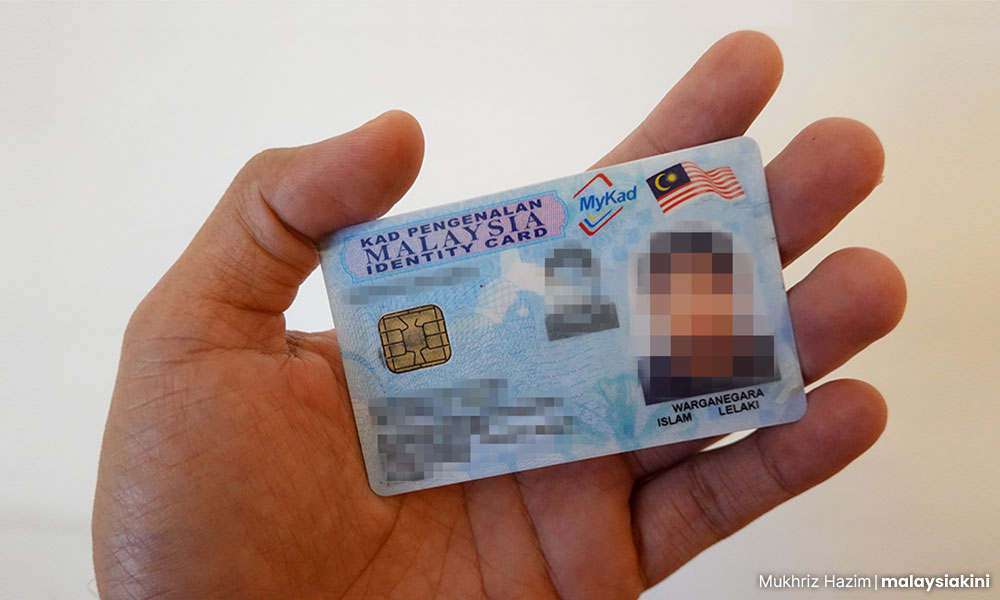
Yet 69 years after Malaya’s Merdeka, we are still arguing over who belongs. The word “pendatang” is used not merely to describe historical migration but to question the loyalty and legitimacy of Malaysian citizens.
Claims that Chinese Malaysians have China and Indian Malaysians have India as their “homeland” reduce citizenship to ancestry.
The
Malay peninsula is the historical homeland of the Malays, whose rulers,
language, culture, and institutions shaped its identity over centuries.
It
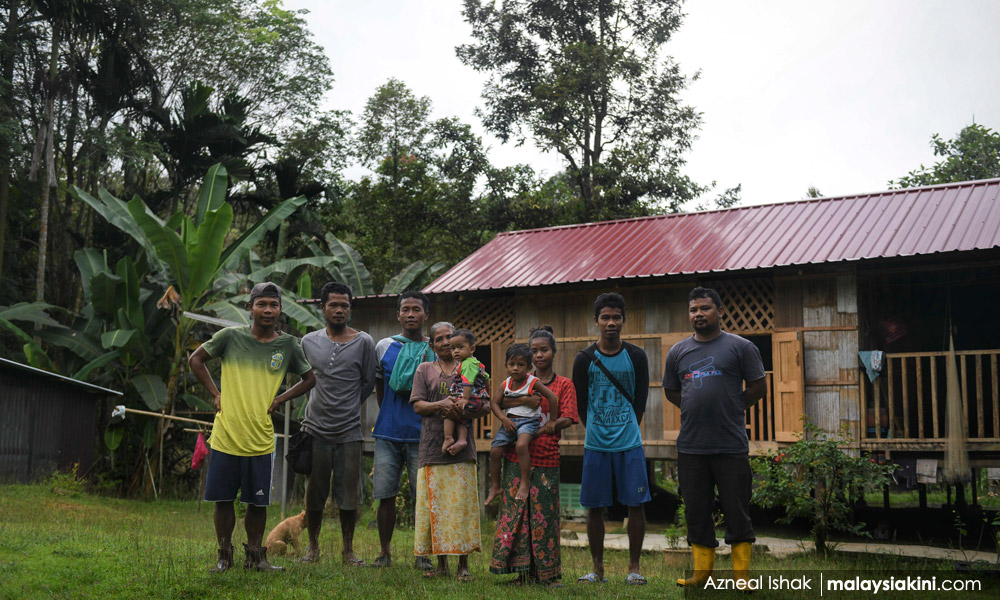
is also the ancient homeland of the Orang Asli, the peninsula’s first
peoples, while modern Malaysia is the constitutional homeland of every
citizen.
These truths are complementary, not contradictory.
A
citizen is not a guest. Citizenship is not a temporary permit that one
community may withdraw from another. Malaysians who have worked, paid
taxes and built the country should not still be asked to prove that they
belong.
Divisive
politicians benefit from keeping Malaysians fearful. When questions
arise about corruption, incompetence, or abuse of power, it is
convenient to declare that one race or religion is under threat.
The formula is familiar: divide the people, distract them from failures of governance and then pose as their protector.
The
end result is a nation rich in talent yet impoverished in trust: a
nation divided when it should be united, regressing when it should be
progressing, and squandering the promise of its people while other
nations confidently forge ahead.
Rule of law cannot be optional
The
damage extends beyond national unity. Our constitutional balance is
also threatened when governments treat the law as an obstacle rather
than a restraint on power.
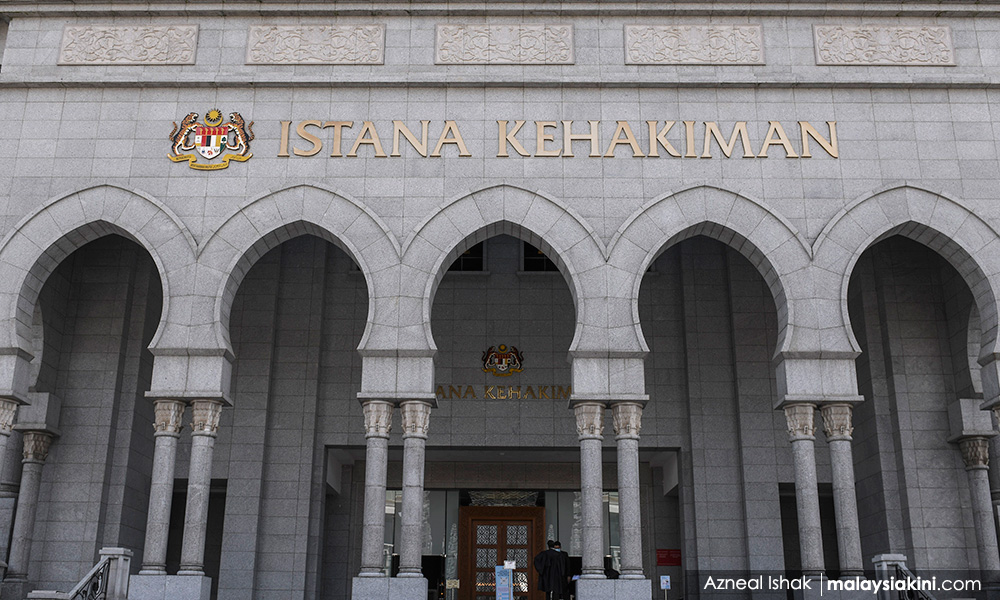
The Kedah gambling-licensing dispute
illustrates this wider danger. The issue is not whether gambling is
morally desirable. Islam prohibits gambling, and the activity may be
strictly regulated.
The question was whether a state could use premises licensing to prohibit an activity regulated and licensed under federal law.
On June 20, 2024, the High Court ruled that Kedah’s blanket non-renewal policy was illegal, irrational and unconstitutional.
A Court of Appeal majority affirmed that decision on Dec 12, 2025, holding that Kedah had exceeded its constitutional powers.
On
Aug 12, 2026, the Federal Court unanimously dismissed Kedah’s
application for leave to appeal. The lower-court rulings therefore
remained undisturbed.
It
is disturbing that Kedah Menteri Besar Sanusi Nor subsequently
suggested that there might be “another way” to preserve the state’s
zero-gambling policy.
He acknowledged that lawyers would have to ensure that any step did not amount to contempt.
Seeking lawful advice is proper. Reproducing the quashed blanket policy through another administrative device would not be.
Governments
may pursue available appeals and adopt lawful policies within their
powers, but a binding judgment must be obeyed unless it is stayed or set
aside.
If governments respect only judgments they like, the rule of law becomes rule by power.
Reclaiming Tunku’s inclusive vision
The
way forward does not require us to erase Malay history, diminish Islam,
or ignore the legitimate needs of the Malays and the indigenous peoples
of Sabah and Sarawak.
It requires us to return to the constitutional balance on which Malaysia rests.
This means moving beyond the politics of “ketuanan Melayu”,
recognising that Orang Asli communities trace their presence in the
peninsula back thousands of years, long before the arrival of later
peoples, and honestly acknowledging the immense contributions of
non-Malay communities to the nation’s economic development.
A
mature nation does not need to distort its history, deny inconvenient
truths, or diminish one community to affirm another. Malaysia can move
forward only when every citizen is regarded not as a guest or rival, but
as an equal stakeholder in our shared homeland.
First,
every government and every political leader must treat the Constitution
as a binding national covenant, not an inconvenience.
Court decisions must be obeyed, public institutions protected from political interference, and laws applied impartially.
Second,
we must reject the politics of ethnic and religious fear. Malaysians
should scrutinise every candidate and reject the corrupt, incompetent,
dishonest, and divisive - regardless of ethnicity, religion, or party.
Loving one’s community does not require hostility towards another.
Third, affirmative-action policies should overcome disadvantage and build capability. Article 153 must be honoured.
Assistance
should be transparent, effective, and directed towards those facing
genuine disadvantage. Such policies must never become a shield for
cronyism, mediocrity, or perpetual dependency.
Helping
disadvantaged Malays and the indigenous communities of Sabah and Sarawak
remains essential; so does ensuring that no poor Malaysian is
abandoned.
Fourth, our education system must teach an accurate and
inclusive history: the central role of the Malays and Malay rulers, the
ancient presence of the Orang Asli, the distinct histories and
constitutional position of Sabah and Sarawak, and the contributions and
sacrifices of every community.
History should deepen belonging, not manufacture resentment.
Finally, national leaders must speak the language of shared citizenship.
Words matter. A leader who casually labels fellow citizens “pendatang” wounds the nation. A leader who defends constitutional rights, even when politically inconvenient, strengthens the nation.
Merdeka
was more than Malaya’s freedom from British rule; it was a commitment
to liberty, justice, democracy, and law. We need the moral courage to
honour that shared promise.
Let this Merdeka mark a national
awakening: no citizen treated as a guest, no community made inferior, no
politician allowed to profit from division, and no government placed
above the law.
Tunku carried Merdeka’s ideals into the formation
of Malaysia. Sixty-nine years later, we must reclaim that inclusive
vision and make every Malaysian feel fully at home.
May God bless Malaysia and keep us united in our diversity.