Rudyard Kipling"
“When you're left wounded on Afganistan's plains and
the women come out to cut up what remains, Just roll to your rifle
and blow out your brains,
And go to your God like a soldier”
General Douglas MacArthur"
“We are not retreating. We are advancing in another direction.”
“It is fatal to enter any war without the will to win it.” “Old soldiers never die; they just fade away.
“The soldier, above all other people, prays for peace, for he must suffer and be the deepest wounds and scars of war.”
“May God have mercy upon my enemies, because I won't .” “The object of war is not to die for your country but to make the other bastard die for his.
“Nobody ever defended, there is only attack and attack and attack some more.
“It is foolish and wrong to mourn the men who died. Rather we should thank God that such men lived.
The Soldier stood and faced God
Which must always come to pass
He hoped his shoes were shining
Just as bright as his brass
"Step forward you Soldier,
How shall I deal with you?
Have you always turned the other cheek?
To My Church have you been true?"
"No, Lord, I guess I ain't
Because those of us who carry guns
Can't always be a saint."
I've had to work on Sundays
And at times my talk was tough,
And sometimes I've been violent,
Because the world is awfully rough.
But, I never took a penny
That wasn't mine to keep.
Though I worked a lot of overtime
When the bills got just too steep,
The Soldier squared his shoulders and said
And I never passed a cry for help
Though at times I shook with fear,
And sometimes, God forgive me,
I've wept unmanly tears.
I know I don't deserve a place
Among the people here.
They never wanted me around
Except to calm their fears.
If you've a place for me here,
Lord, It needn't be so grand,
I never expected or had too much,
But if you don't, I'll understand."
There was silence all around the throne
Where the saints had often trod
As the Soldier waited quietly,
For the judgment of his God.
"Step forward now, you Soldier,
You've borne your burden well.
Walk peacefully on Heaven's streets,
You've done your time in Hell."
Is Malaysia an Islamic state? By Ranjit Singh Malhi
Sunday, August 30, 2026
Malaysiakini : However, the Bar Council’s reliance on the judicial view that Islam’s
constitutional role was primarily ceremonial does not fully capture the
legal position.
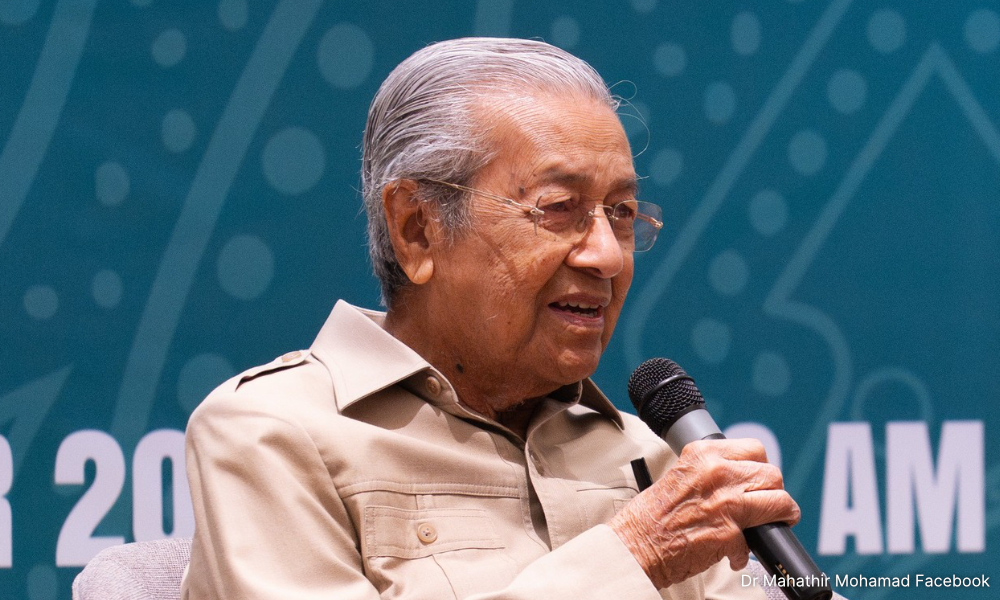
Dr Mahathir Mohamad
The constitutional text, read alongside subsequent judicial decisions, points to a more complex and nuanced conclusion.
Definitions matter
An
“Islamic state” has no universally accepted legal definition. If it
simply means a Muslim-majority country in which Islam is
constitutionally recognised, Islamic institutions receive public funding
and Islamic law is given legal effect in specified areas, Malaysia
qualifies in that broad sense.
However, if it means a state in
which syariah is the supreme law, all legislation derives its validity
from it and any inconsistent law is void, Malaysia does not.
“Secular
state” is equally ambiguous. If secularism requires an impermeable wall
between religion and government, Malaysia is not secular: the Federal
Constitution expressly recognises Islam and provides extensive machinery
for its administration.
If
it means that the legal authority of public institutions ultimately
derives from and is limited by a written Constitution, rather than
directly from religious law, and is exercised through constitutional and
representative institutions subject to review by the civil courts,
Malaysia has a fundamentally civil-constitutional structure.
The answer therefore depends on the definition being used.
What constitutional text says
Article
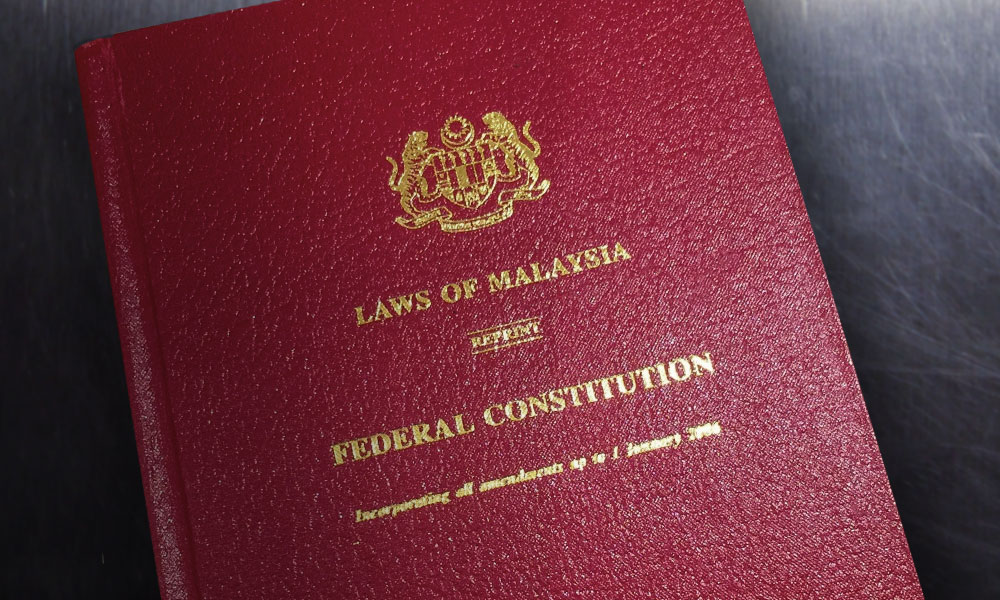
3(1) of the Federal Constitution states: “Islam is the religion of the
Federation; but other religions may be practised in peace and harmony in
any part of the Federation.”
Islam’s position is therefore
constitutionally recognised and institutionally significant; it does not
rest merely on the country’s Muslim-majority population.
Other
provisions give that declaration institutional effect. The Malay rulers
are heads of Islam in their respective states, while the Yang
di-Pertuan Agong holds that position in the federal territories and the
four states without a ruler - Malacca, Penang, Sabah and Sarawak.
Article
12(2) permits public funding for Islamic institutions and instruction.
Article 160 links the constitutional definition of “Malay” to the
profession of Islam.
Religious freedom is also constitutionally
protected, though not without limits. Article 11(1) gives every person
the right to profess and practise a religion and, subject to Article
11(4), to propagate it.
Article 11(4) permits state law, and
federal law in the federal territories, to control or restrict the
propagation of religious doctrines or beliefs among Muslims. Article
11(5) provides that Article 11 does not authorise acts contrary to
general laws concerning public order, public health and morality.
Article
74(2), read with Item 1 of the State List in the Ninth Schedule,
empowers state legislatures to make laws concerning Islamic personal and
family law, mosques, zakat, wakaf, and the creation
and punishment of offences by persons professing Islam against the
precepts of Islam, except in relation to matters within the Federal
List.
This
legislative field also encompasses the Constitution, organisation and
procedure of syariah courts, whose jurisdiction is confined to persons
professing Islam and matters falling within Item 1.
Their
jurisdiction over offences extends only so far as federal law permits.
These constitutional arrangements make clear that Malaysia is not a
polity in which religion is institutionally excluded from public life or
Islam confined to private devotion.
Yet, Article 3 does not stand
alone. Article 3(4) expressly says that nothing in Article 3 derogates
from any other constitutional provision.
Article 4(1) declares the
Federal Constitution to be the supreme law of the Federation. Any
post-Merdeka law inconsistent with it is void to the extent of the
inconsistency. Islam’s protected position must therefore be read
together with fundamental liberties, federalism, representative
government and judicial review.
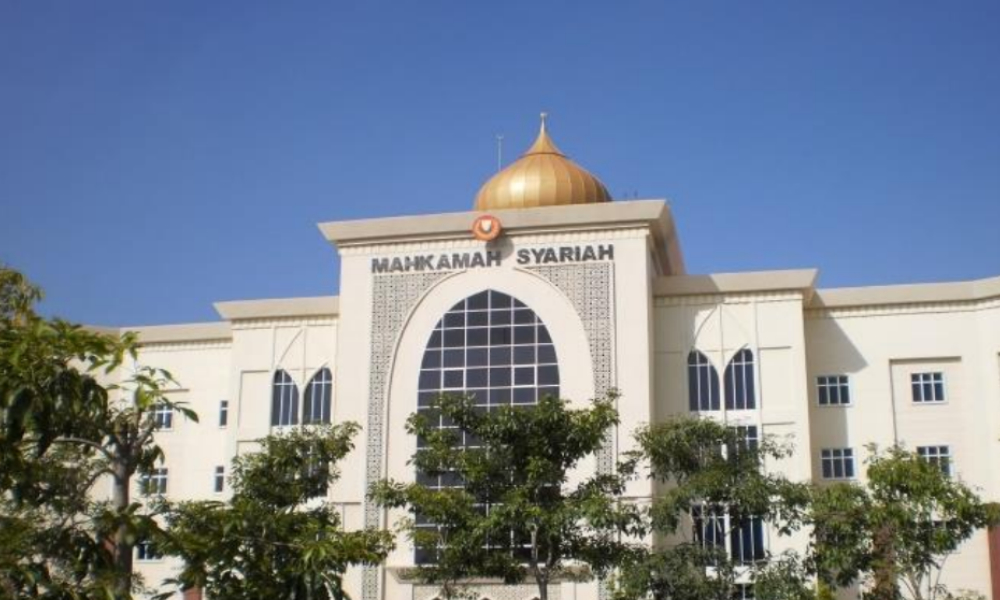
Article 121(1A), inserted in 1988,
provides that the civil courts “shall have no jurisdiction in respect
of any matter within the jurisdiction of the syariah courts”.
It
is sometimes cited as proof that Malaysia has two co-equal and
autonomous judicial systems. That interpretation overstates its effect.
The
provision operates only where a syariah court lawfully possesses
jurisdiction; it does not create or enlarge syariah jurisdiction, expand
the State List or oust the superior civil courts’ power to determine
constitutional and statutory legality.
Syariah court’s
jurisdiction must be conferred by valid legislation, be limited to
persons professing Islam and matters within Item 1 of the State List
and, in respect of offences, remain within the limits conferred by
federal law.
Founding fathers’ constitutional vision
The
constitutional history reinforces this reading. Paragraph 169 of the
1957 Reid Commission Report recorded the Alliance’s proposal that Islam
be the religion of Malaya, together with the assurance that this would
not affect the civil rights of non-Muslims or imply that the state was
not secular.
The commission’s majority did not recommend inserting
such a provision. Judge Abdul Hamid from the Pakistan High Court
supported it in his sole note of dissent, and the present clause was
subsequently adopted through the working party process.
The Reid Commission
The
1957 government White Paper, Federation of Malaya Constitutional
Proposals, was explicit that inserting the declaration on Islam would
not alter the Federation’s existing position as a secular state.
On
May 1, 1958, Tunku Abdul Rahman similarly told the Federal Legislative
Council that Malaya was not an Islamic state in the generally understood
sense, even though Islam had been made the state’s official religion.
Formation of Malaysia
The
formation of Malaysia added another layer. The 1962 Cobbold Commission
recorded serious concerns in North Borneo (Sabah) and Sarawak.
Its
Malayan members agreed that Islam should be the national religion of
the Federation, while concluding that religious freedom would not be
jeopardised and that the Federation would, in effect, remain secular.
These historical sources do not override the Constitution’s enacted text.
They
do, however, show that Article 3 was not intended to establish a
theocracy or make every law subject to a religious validity test.
In this context, “secular” did not mean hostility towards religion or the banishment of Islam from public life.
It
described a civil constitutional polity in which public institutions
derived their powers from the Constitution, non-Muslims retained
religious freedom, and ordinary law did not become invalid merely
because it failed to conform to a religious rule.
What courts have decided
The
starting point remains Che Omar Che Soh v Public Prosecutor (1988) 2
MLJ 55. The Supreme Court rejected the argument that a federal criminal
law became unconstitutional merely because it was inconsistent with
Islamic law.
Then-lord president Salleh Abas held that, in the
context of Article 3, “Islam” meant acts relating to rituals and
ceremonies, and concluded that the law then operating was “secular law”.
Salleh Abas
Che Omar should nevertheless not be read as reducing Islam to pageantry in every constitutional respect.
In
Nik Elin Zurina Nik Abdul Rashid & Anor v Kerajaan Negeri Kelantan
(2024) 2 MLJ 150 (Nik Elin), the Federal Court explained that Malaysia’s
general legal system “leans more towards secularity without being
purely secular”, because the Constitution also permits the limited
enactment and application of Islamic law.
The
controlling point in Che Omar remains that Article 3 does not make
conformity with syariah the general test of validity for every Malaysian
law.
Indira Gandhi’s case
Later Federal
Court decisions have reaffirmed the constitutional hierarchy. In Indira
Gandhi Mutho v Pengarah Jabatan Agama Islam Perak & Ors and other
appeals (2018) 1 MLJ 545, the court held that Article 121(1A) does not remove the civil courts’ power of judicial review.
Civil
and syariah courts operate within their respective constitutional
spheres, and syariah courts cannot acquire jurisdiction beyond what
valid state law confers within constitutional and federal statutory
limits.
In Iki Putra Mubarrak v Kerajaan Negeri Selangor &
Anor (2021) 2 MLJ 323, the Federal Court invalidated a Selangor syariah
offence because its substance fell within federal criminal law.
In
Nik Elin’s case, an 8-1 majority declared 17 Kelantan provisions - 16
complete sections and paragraph 37(1)(b) - invalid because, in pith and
substance, they fell within Parliament’s legislative power over criminal
law.
The court emphasised that the case concerned legislative
competence, not the constitutional position of Islam or the authority of
the syariah courts within their lawful sphere.
On June 19, 2025, a
3-1 majority in SIS Forum (Malaysia) & Anor v Jawatankuasa Fatwa
Negeri Selangor & Ors (2025) 4 MLJ 625 followed the court’s earlier
decision in SIS Forum (Malaysia) v Kerajaan Negeri Selangor; Majlis
Agama Islam Selangor (Intervener) (2022) 2 MLJ 356.
The majority held that paragraph 1 of the fatwa
was valid only insofar as it applied to natural persons, because SIS
Forum, as a corporation, was incapable of professing the religion of
Islam.
It
invalidated paragraphs 2 and 3, which mandated the confiscation of
publications and directed the MCMC to block social-media content,
because those matters lay beyond Selangor’s legislative competence.
Paragraph 4 remained valid. The court expressly declined to rule on the
theological merits of the fatwa’s condemnation.
Judicial secularisation?
Critics
sometimes characterise such rulings as judicial secularisation. That
confuses the subject of a law with the source of legislative power.
A
measure does not become constitutionally valid merely because it is
made in the name of Islam, just as a federal law does not become valid
merely because Parliament enacted it.
Both Parliament and the
state legislatures derive their powers from the Constitution. If the
present division of powers is considered inadequate, the remedy lies in
constitutional amendment through the prescribed democratic process - not
in criticising judges for applying the existing constitutional
allocation of powers.
Hybrid constitutional system with clear legal apex
In
Iseas Perspective 2025/27, “Legal Pluralism in Malaysia: Navigating the
Civil and Shariah Systems”, constitutional scholar Shad Saleem Faruqi
referred to “Malaysia’s hybrid, partly secular, partly religious
constitutional system”.
That description is persuasive because it
acknowledges both sides of the settlement: Islam has an exalted
constitutional and institutional position, while the overall system
rests on constitutional supremacy, parliamentary law-making, federalism
and judicial review by the superior civil courts.
Shad Saleem Faruqi
Malaysia is not secular in the strict separationist sense, but neither is it a theocratic Islamic state.
Political
declarations cannot change that architecture. A prime minister may call
Malaysia an Islamic state, a secular state or something in between, but
such a statement neither amends the Constitution nor binds the courts.
Constitutional identity cannot be created by proclamation.
The
most defensible formulation is this: Malaysia is a constitutional
monarchy and parliamentary democracy in which Islam is the religion of
the Federation and enjoys a special institutional position, while
Islamic law enacted by the states - and by Parliament for the federal
territories - operates within constitutionally defined fields, and the
Federal Constitution remains supreme.
So,
is Malaysia an Islamic state? Malaysia is unquestionably a
Muslim-majority country in which Islam enjoys special constitutional and
institutional recognition.
But in the constitutional sense of a
state governed by the supremacy of syariah, the answer is no. The
Federal Constitution is the supreme law, and any legal answer must
ultimately be anchored in it.
After nearly seven decades of
independence, Malaysians should be celebrating our remarkable diversity,
not allowing this recurring dispute to drive us further apart.
Malaysia
belongs to all its citizens. Our future depends not on endlessly
contesting one another’s place in the nation, but on respecting the
Constitution, embracing our shared citizenship and recognising our
diversity as a source of strength.
That is the Malaysia we should strive to build - and the nation we should be proud to leave to future generations.