Rudyard Kipling"
“When you're left wounded on Afganistan's plains and
the women come out to cut up what remains, Just roll to your rifle
and blow out your brains,
And go to your God like a soldier”
General Douglas MacArthur"
“We are not retreating. We are advancing in another direction.”
“It is fatal to enter any war without the will to win it.” “Old soldiers never die; they just fade away.
“The soldier, above all other people, prays for peace, for he must suffer and be the deepest wounds and scars of war.”
“May God have mercy upon my enemies, because I won't .” “The object of war is not to die for your country but to make the other bastard die for his.
“Nobody ever defended, there is only attack and attack and attack some more.
“It is foolish and wrong to mourn the men who died. Rather we should thank God that such men lived.
The Soldier stood and faced God
Which must always come to pass
He hoped his shoes were shining
Just as bright as his brass
"Step forward you Soldier,
How shall I deal with you?
Have you always turned the other cheek?
To My Church have you been true?"
"No, Lord, I guess I ain't
Because those of us who carry guns
Can't always be a saint."
I've had to work on Sundays
And at times my talk was tough,
And sometimes I've been violent,
Because the world is awfully rough.
But, I never took a penny
That wasn't mine to keep.
Though I worked a lot of overtime
When the bills got just too steep,
The Soldier squared his shoulders and said
And I never passed a cry for help
Though at times I shook with fear,
And sometimes, God forgive me,
I've wept unmanly tears.
I know I don't deserve a place
Among the people here.
They never wanted me around
Except to calm their fears.
If you've a place for me here,
Lord, It needn't be so grand,
I never expected or had too much,
But if you don't, I'll understand."
There was silence all around the throne
Where the saints had often trod
As the Soldier waited quietly,
For the judgment of his God.
"Step forward now, you Soldier,
You've borne your burden well.
Walk peacefully on Heaven's streets,
You've done your time in Hell."
Chai's road from reformasi to reckoning By Mariam Mokhtar
Thursday, March 12, 2026
Malaysiakini : Today, that same hope has collided with the machinery it once sought to reform.
Political
talks by the then opposition, the parties that would later form the
government, were regularly organised to expose wrongdoing and keep
Malaysians abroad informed.
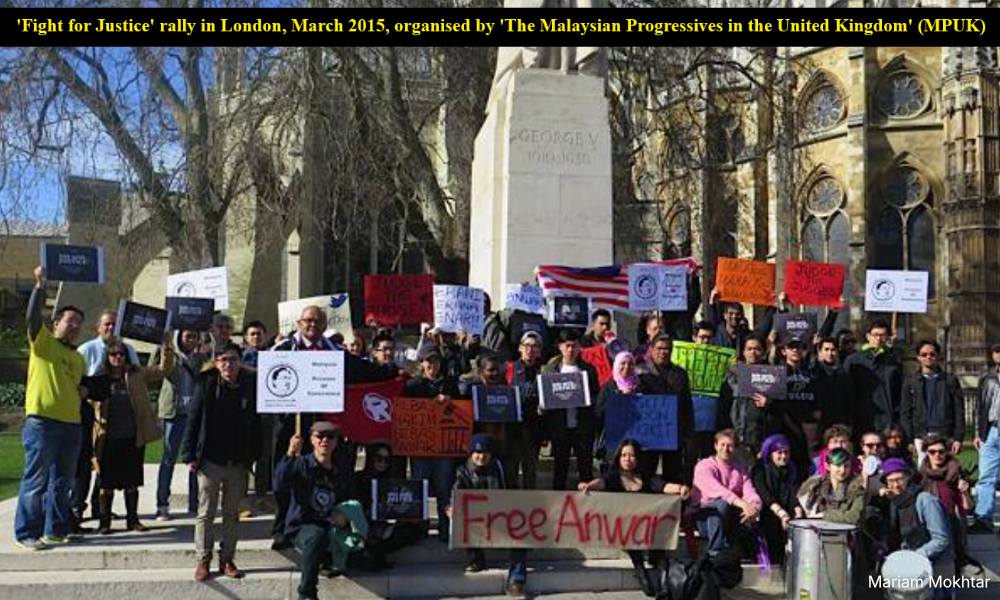
The ‘Fight for Justice’ rally in London, held in March 2015
However,
Malaysian organisers often believed attendance had to be encouraged
with food. Nasi lemak, curry puffs, and other dishes appeared at talks,
sometimes sold cheaply, sometimes offered freely.
It was
hospitality, perhaps a way to recreate home, but it also revealed a
style of leadership reliant on inducement rather than persuasion.
In
sharp contrast, in Britain, student political meetings rarely require
such incentives. People attend because the argument itself is
compelling.
Quiet caution
Among Malaysian
students, a quiet culture of caution existed. Some attendees were
thought to be government observers or informants. Photographs were
sometimes taken.
Some students allegedly received warning letters
from the Malaysian education attaché or scholarship bodies, reminding
them that participation in political activities could jeopardise funding
or result in termination of studies.
Some students attended anyway. Incidentally, this culture of fear continues today.
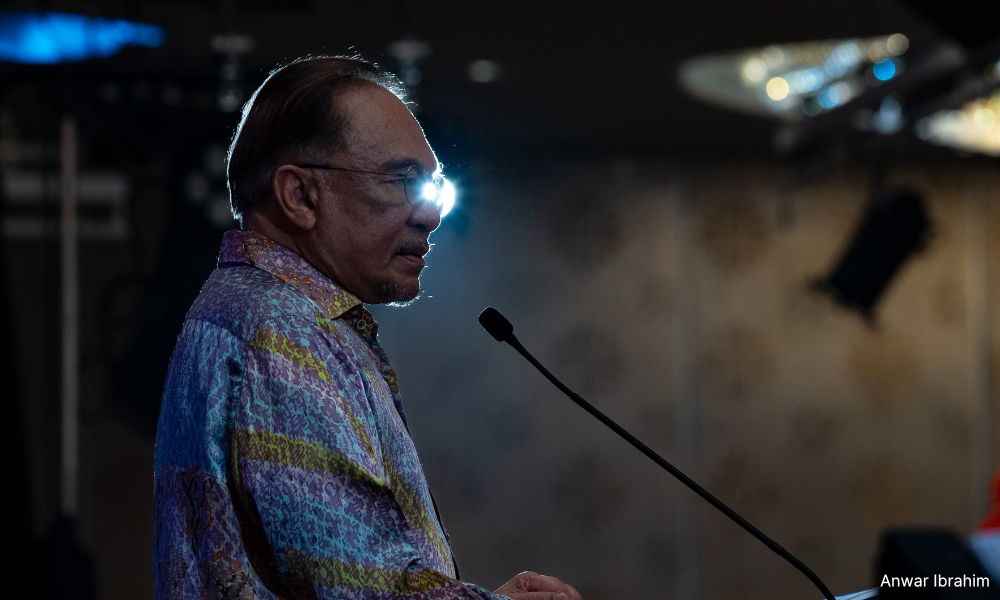
PM Anwar Ibrahim
I
recall meeting Chai during that period, when he was a student activist
in England. Like many of his generation, he was passionate about
reformasi and the belief that Malaysia could be something better than it
had been.
He followed Anwar Ibrahim’s struggles
closely and had been inspired by Anwar’s courage and attention to the
disenfranchised. Chai and his friends in London braved rain and
intimidation to protest injustice, not for reward, but for ideals of
fairness and hope.
Different national conversation
Years later, Chai would find himself at the centre of a different national conversation.
The former aide to ex-economy minister Rafizi Ramli is under MACC investigation in connection with a RM1.1 billion collaboration involving British semiconductor company Arm Holdings.
The MACC states Chai is being sought to assist investigations related to the deal.
Chai has disputed
the public notice and press coverage. He argues authorities made little
effort to contact him privately before issuing the notice and giving
the impression he was a fugitive.
The MACC, however, maintains
they attempted to contact him via WhatsApp starting Feb 24 but received
no response; the number was later blocked.
They stress that such notices do not imply guilt and are routine for any citizen’s cooperation.
At
this stage, the facts remain contested. Chai insists he acted in good
faith, while the authorities maintain their actions were lawful.
The public response, however, points to something broader than a single case.
Disillusioned
For many Malaysians who once invested hope in political reform, Chai's story resonates because it touches on a sense of disillusionment.
The generation that came of age during reformasi believed politics could move beyond patronage, factional rivalry, and the weaponisation of institutions.
Some
idealists returned to serve in government, civil society, or the
private sector. Others discovered how difficult change could be. Many
quietly built lives elsewhere, closing the door behind them.
The
most telling voices are often those who could have benefited from the
system. Many Malay Muslims, who are more likely to face fewer barriers
in education, employment, and public life, spoke of reluctance to
return.
They did not say this with anger, but quiet resignation,
observing a system they did not wish to navigate. These were individuals
who could have prospered comfortably, yet chose distance over
accommodation.
None of this means Malaysia lacks talent. The
country continues to produce remarkable individuals who remain attached
to its future. But the loss of idealism is harder to measure than the loss of people.
People
can leave, but ideals leaving is irreversible and corrosive. Loss of
idealism is invisible, harder to quantify, but arguably more damaging.
When
young, bright, committed people stop believing that the system can
change, the country loses the moral and civic energy needed to push for
reform.
When idealism starts to fade
Chai’s
case will ultimately be decided through investigation and evidence. The
authorities have their account; Chai has offered his own. It is not the
task of a writer to decide here.
What his story reveals is how fragile political idealism can be when it encounters the machinery of power.
For
the generation that once believed reformasi could reshape politics, the
question is not simply who is right or wrong. It is whether the ideals
that animated those struggles still have a place in the country’s life.
Nations
rarely notice the moment when idealism begins to fade. Yet over time,
those moments shape a country’s future as surely as any policy or
election.