Rudyard Kipling"
“When you're left wounded on Afganistan's plains and
the women come out to cut up what remains, Just roll to your rifle
and blow out your brains,
And go to your God like a soldier”
General Douglas MacArthur"
“We are not retreating. We are advancing in another direction.”
“It is fatal to enter any war without the will to win it.” “Old soldiers never die; they just fade away.
“The soldier, above all other people, prays for peace, for he must suffer and be the deepest wounds and scars of war.”
“May God have mercy upon my enemies, because I won't .” “The object of war is not to die for your country but to make the other bastard die for his.
“Nobody ever defended, there is only attack and attack and attack some more.
“It is foolish and wrong to mourn the men who died. Rather we should thank God that such men lived.
The Soldier stood and faced God
Which must always come to pass
He hoped his shoes were shining
Just as bright as his brass
"Step forward you Soldier,
How shall I deal with you?
Have you always turned the other cheek?
To My Church have you been true?"
"No, Lord, I guess I ain't
Because those of us who carry guns
Can't always be a saint."
I've had to work on Sundays
And at times my talk was tough,
And sometimes I've been violent,
Because the world is awfully rough.
But, I never took a penny
That wasn't mine to keep.
Though I worked a lot of overtime
When the bills got just too steep,
The Soldier squared his shoulders and said
And I never passed a cry for help
Though at times I shook with fear,
And sometimes, God forgive me,
I've wept unmanly tears.
I know I don't deserve a place
Among the people here.
They never wanted me around
Except to calm their fears.
If you've a place for me here,
Lord, It needn't be so grand,
I never expected or had too much,
But if you don't, I'll understand."
There was silence all around the throne
Where the saints had often trod
As the Soldier waited quietly,
For the judgment of his God.
"Step forward now, you Soldier,
You've borne your burden well.
Walk peacefully on Heaven's streets,
You've done your time in Hell."
Did 'Mentega Terbang' cause people to question faith? By Commander S THAYAPARAN (Retired) Royal Malaysian Navy
Monday, February 02, 2026
Malaysiakini : So far, no minister or religious bureaucrat has come out and openly
said that they questioned their faith after watching this movie. Indeed,
I wonder if anyone who made these police reports against the filmmakers
did.
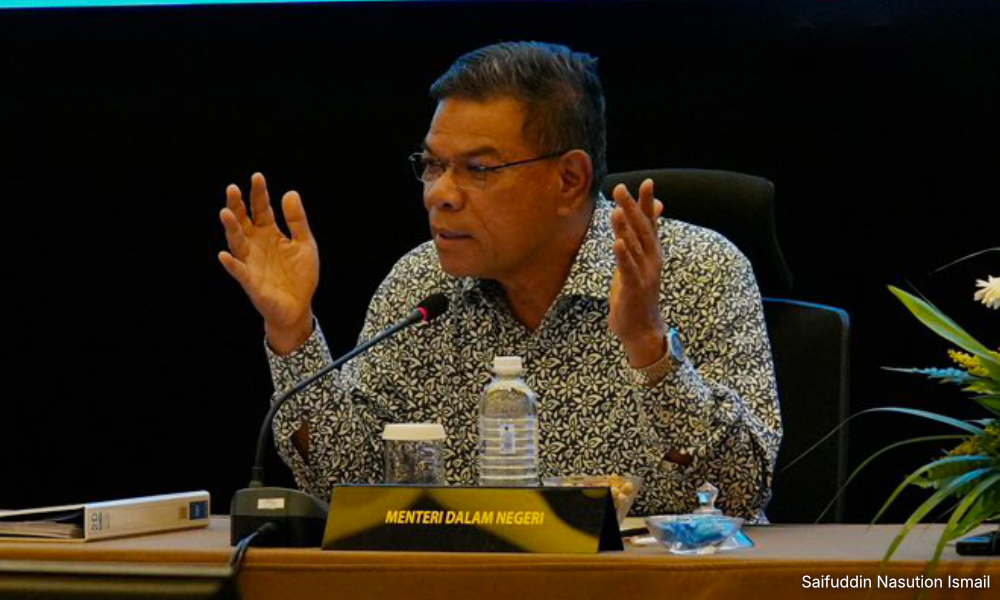
Home Minister Saifuddin Nasution Ismail
One
of the accusations made of this film is that it encourages apostasy,
but seeing how nobody in the film rejects their religion, how can any
rational person claim so?
Perhaps people who make this claim are projecting.
Religious diversity
Admittedly, I am confused. Malaysia is a religious plural society, so how exactly is it wrong to promote religious plurality?
The
filmmakers of “Mentega Terbang”, as reported in the press, claimed “the
Federal Territories Islamic Religious Department’s full evaluation
actually admitted the film is a good effort to raise public awareness of
the plurality of society (masyarakat majmuk) and religious diversity (kepelbagaian agama).”
So what does this mean? Does the state not want to promote religious diversity and social harmony?
Religious
pluralism and liberalism are supposed to be aspirational. If religious
pluralism and liberalism are a big no-no, this is the opposite of what
Rukun Negara teaches us.
We are supposed to ensure a liberal approach toward its rich and diverse cultural traditions.
So
if the home minister did not question his faith, why persecute the
filmmakers? Notice that people will say that their feelings are hurt,
but never that they question their faith.
They will say that they
are concerned that others will question their faith, but they have not
done so themselves. So do they believe that everyone else's faith is
weak?
Religious sensitivity has been weaponised in this country,
and while the discourse revolves around how it has been weaponised
against the non-Malay community, its real purpose is to turn the
Malay/Muslim community into a monolithic polity, which would be easier
to control.
Silencing moderate religious voices
This
film is feared capable of making people question their faith, yet it is
allowed to be shown at trial. Isn’t the state worried that people will
question their faith even in the controlled environment of the
courtroom?
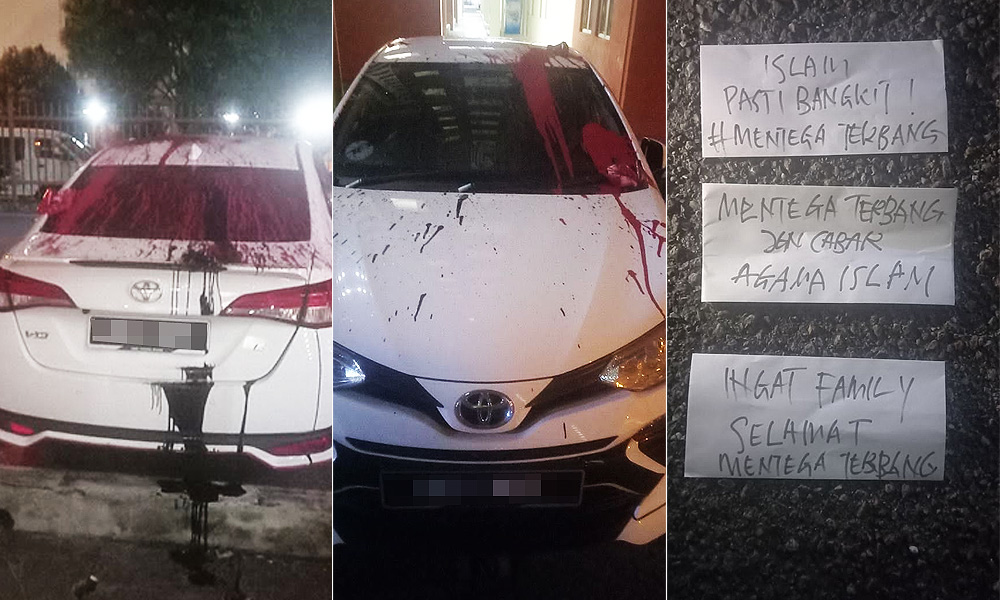
Keep in mind that filmmakers, cast and crew were threatened, and in one case, their property was damaged.
When
civil society groups decried the harassment of the cast, they were
missing the point. The harassment is part of a targeted campaign to
silence moderate religious voices in this country.
The harassment
serves as a warning to moderate believers not to speak up. It is a
reminder that the sole guardians of any kind of religious inquiry are
the state and state-aligned preachers.
Harassment of ‘Mentega Terbang’ filmmakers
You
only have to look at Muslim culture in Malaysia before the religious
bureaucracy, enabled by political cretins, took over to see how diverse
it was.
You only have to look at the scholars, artists, and
thinkers that the religious state goes after to understand why they want
to stamp out plurality in the polity.
Alienating instead of treasuring
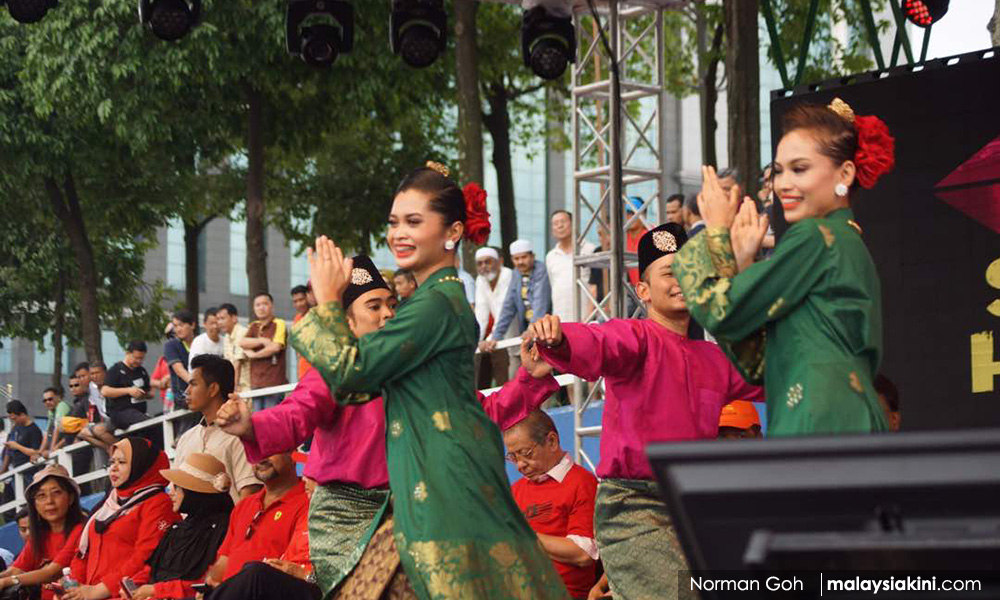
Do people who watch P Ramlee movies suddenly start consuming alcohol and dancing in clubs? Do they change the way they dress?
Why
stop there? Apparently, Bollywood movies are popular, and so is K-pop.
Do Muslims who follow these art forms suddenly change the way they dress
and decide to embrace other faiths?
And what of other traditional art forms now deemed offensive to religious sensibilities?
In an interview I did with Ramli Ibrahim, he said that with the Arabisation of the Malays came the rejection of some of their own indigenous cultural practices.
“The
traditional performing arts in the east coast of Peninsular Malaysia
have been banned, resulting in subsequent generations not being able to
continue these precious art forms,” he added.
Instead
of treasuring these intangible heritages of ours, they are now
alienated from the very communities which once sustained these art
forms.
Abandoned and looked down upon, these traditional art forms are now regarded as "against the teaching of Islam".
Imagine the diverse voices being snuffed out all over the world by theocracies or would-be theocracies.
Ultimately,
these laws are designed to discourage questioning, which says a lot
about Madani and the gatekeepers of the religion of the state.