Rudyard Kipling"
“When you're left wounded on Afganistan's plains and
the women come out to cut up what remains, Just roll to your rifle
and blow out your brains,
And go to your God like a soldier”
General Douglas MacArthur"
“We are not retreating. We are advancing in another direction.”
“It is fatal to enter any war without the will to win it.” “Old soldiers never die; they just fade away.
“The soldier, above all other people, prays for peace, for he must suffer and be the deepest wounds and scars of war.”
“May God have mercy upon my enemies, because I won't .” “The object of war is not to die for your country but to make the other bastard die for his.
“Nobody ever defended, there is only attack and attack and attack some more.
“It is foolish and wrong to mourn the men who died. Rather we should thank God that such men lived.
The Soldier stood and faced God
Which must always come to pass
He hoped his shoes were shining
Just as bright as his brass
"Step forward you Soldier,
How shall I deal with you?
Have you always turned the other cheek?
To My Church have you been true?"
"No, Lord, I guess I ain't
Because those of us who carry guns
Can't always be a saint."
I've had to work on Sundays
And at times my talk was tough,
And sometimes I've been violent,
Because the world is awfully rough.
But, I never took a penny
That wasn't mine to keep.
Though I worked a lot of overtime
When the bills got just too steep,
The Soldier squared his shoulders and said
And I never passed a cry for help
Though at times I shook with fear,
And sometimes, God forgive me,
I've wept unmanly tears.
I know I don't deserve a place
Among the people here.
They never wanted me around
Except to calm their fears.
If you've a place for me here,
Lord, It needn't be so grand,
I never expected or had too much,
But if you don't, I'll understand."
There was silence all around the throne
Where the saints had often trod
As the Soldier waited quietly,
For the judgment of his God.
"Step forward now, you Soldier,
You've borne your burden well.
Walk peacefully on Heaven's streets,
You've done your time in Hell."
In
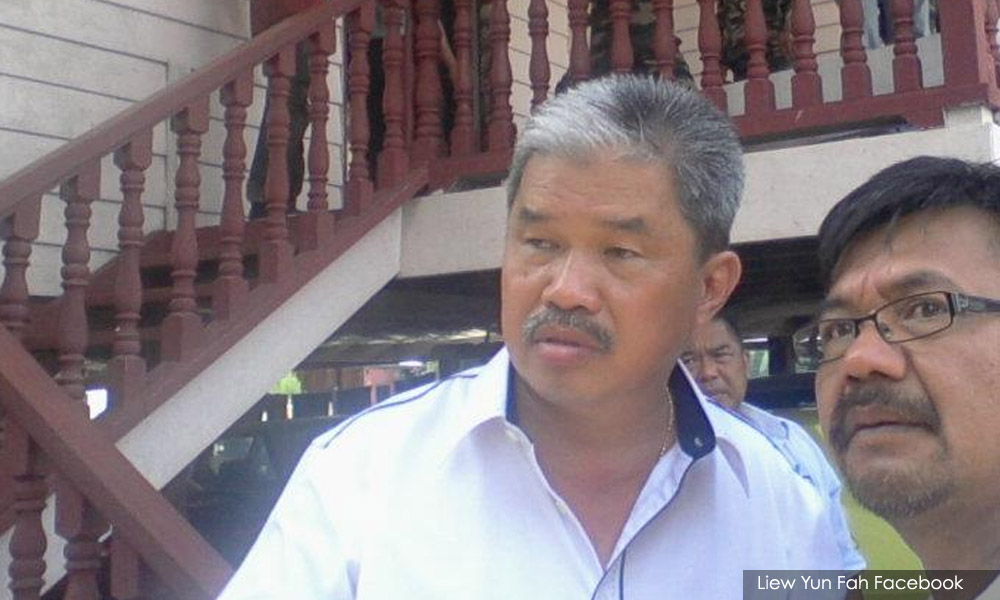
Tawau’s Kukusan, a night ceramah by Parti Harapan Rakyat Sabah leader
Liew Yun Fah drew a modest crowd. He had just secured gazetted status
for Airport Lama residents and moved on to a topic that is usually
treated with caution: the undocumented families living near local
communities.
His message was blunt.
“They can do whatever they want. As long as they do not kacau us. If they do not kacau (disturb) us, why should we kacau them?” he said.
His audience nodded along. No protest, no murmurs. Just an agreement.
Liew Yun Fah
After
the event, one of Liew’s aides, a former journalist, explained it. To
those on the East Coast, this is not an explosive issue. It is the West
Coast and interior that react strongly.
The reasons are straightforward.
Undocumented
migration is part of everyday life in Tawau, Semporna and Lahad Datu.
Late birth registrations are common. Borders remain porous. Enforcement
is uneven.
Communities have, by necessity, learned to live
alongside people whose identities and documents do not always fit neatly
into official categories.
Neighbours become colleagues.
Colleagues become relatives by marriage. The fear that dominates
conversations elsewhere is not present here. Accommodation, not alarm,
shapes the ground sentiment.
This is also why videos of “PTI
sightings” that go viral in Kota Kinabalu or Tambunan barely move the
needle in Tawau. People here have lived with the issue long enough to
treat it as part of the landscape.
Where the issue is remembered, not lived
The tone changes almost immediately when entering Tambunan.
Here,
undocumented migration does not appear in daily interactions. Instead,
it resurfaces through long-standing memories and old political
narratives.
Stories from the Project IC era remain part of the political identity of the interior.
They are retold, sometimes with new details, but always with the same conclusion: “This could change us.”
Project
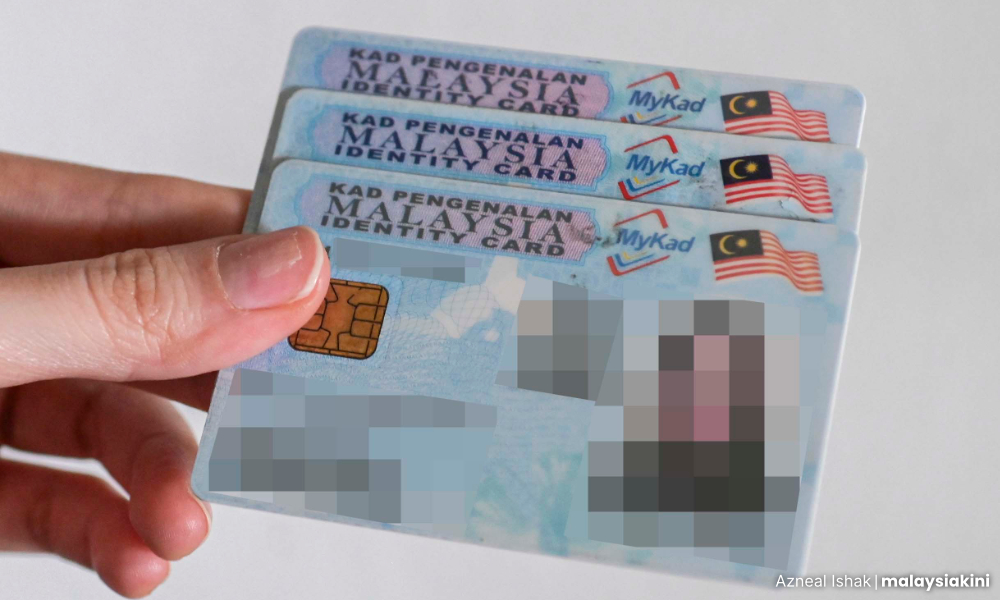
IC refers to the long-standing allegation that identity cards were
systematically issued to non-citizens in Sabah to alter the state’s
demographic and electoral balance.
At the morning market, a
shopkeeper recounted how he had seen “three 12-seater buses” of “PTI”
coming out of a timber camp during the 2018 polls.
Whether the account is accurate or not matters less than how embedded it has become in local political memory.
In
Keningau, where many youths have left for jobs in other towns, most of
the narrative now comes from older residents. They rely heavily on
Facebook reels, WhatsApp forwards and coffeeshop talk.
This creates a loop: old anxieties meeting new digital rumours.
Among
the younger working group, the view is noticeably different. For them,
undocumented migrants are not a political fear. They are workers.
Many
small renovation businesses in Keningau and Tambunan hire them quietly.
In close-knit villages, people know who to call when they need to fix a
pipe or extend a kitchen. A former schoolmate of mine put it plainly:
cutting out the middleman makes the work cheaper and faster.
Keningau
To the younger locals, the undocumented migrants are part of the local economy.
To the older generation, they are part of a political fear that never fully disappeared.
Two realities, one state election
These
opposing experiences, tolerance on the East Coast and anxiety in the
interior, explain why undocumented migration remains both a sensitive
and unavoidable issue.
The reliance is real.
Plantations,
construction sites and even household repairs depend on them. At the
same time, the fear is also real, sustained by older political
narratives and shared widely on social media.
This duality puts
candidates in a complicated position. A line that earns applause in
Tawau could be damaging in Tambunan. Parties know this. They adjust
their messaging accordingly.
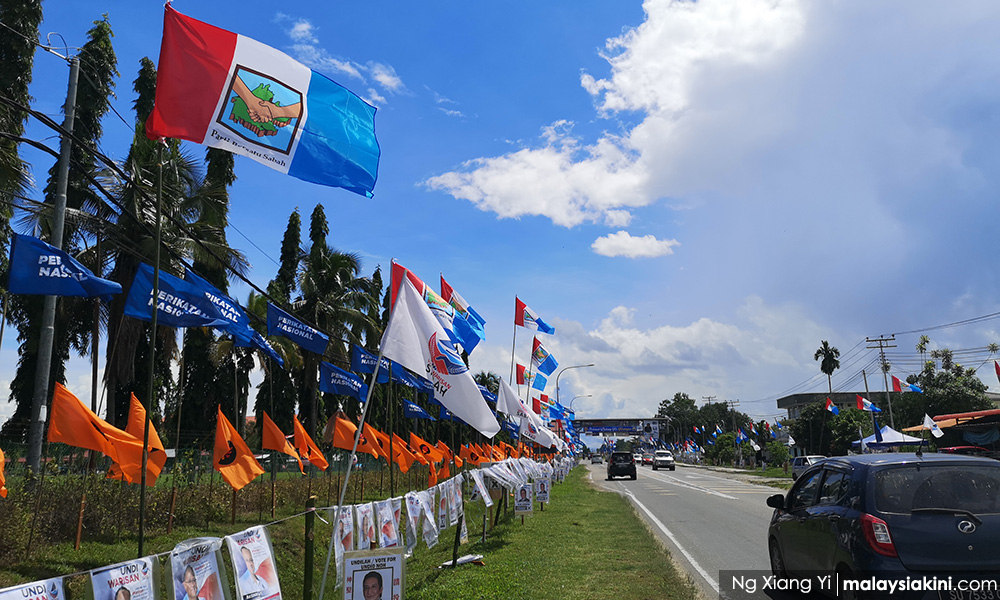
As Sabah approaches polling day on
Nov 29, video clips and forwarded messages about undocumented migrants
continue to circulate. For now, most are aimed at Warisan, a repeat of
what happened during the Kimanis by-election.
But
no matter who wins, the next government will inherit the same problem
that governments before it have struggled to solve. The issue is too old
to disappear overnight and too complicated to treat as a simple
political slogan.
Sabah’s migrant question has never been one story.
It
is two different realities shaped by geography, memory and
circumstance. This election will not settle the debate, but it will show
how deeply it still shapes the way Sabahans think about power, identity
and the future of their state.