Rudyard Kipling"
“When you're left wounded on Afganistan's plains and
the women come out to cut up what remains, Just roll to your rifle
and blow out your brains,
And go to your God like a soldier”
General Douglas MacArthur"
“We are not retreating. We are advancing in another direction.”
“It is fatal to enter any war without the will to win it.” “Old soldiers never die; they just fade away.
“The soldier, above all other people, prays for peace, for he must suffer and be the deepest wounds and scars of war.”
“May God have mercy upon my enemies, because I won't .” “The object of war is not to die for your country but to make the other bastard die for his.
“Nobody ever defended, there is only attack and attack and attack some more.
“It is foolish and wrong to mourn the men who died. Rather we should thank God that such men lived.
The Soldier stood and faced God
Which must always come to pass
He hoped his shoes were shining
Just as bright as his brass
"Step forward you Soldier,
How shall I deal with you?
Have you always turned the other cheek?
To My Church have you been true?"
"No, Lord, I guess I ain't
Because those of us who carry guns
Can't always be a saint."
I've had to work on Sundays
And at times my talk was tough,
And sometimes I've been violent,
Because the world is awfully rough.
But, I never took a penny
That wasn't mine to keep.
Though I worked a lot of overtime
When the bills got just too steep,
The Soldier squared his shoulders and said
And I never passed a cry for help
Though at times I shook with fear,
And sometimes, God forgive me,
I've wept unmanly tears.
I know I don't deserve a place
Among the people here.
They never wanted me around
Except to calm their fears.
If you've a place for me here,
Lord, It needn't be so grand,
I never expected or had too much,
But if you don't, I'll understand."
There was silence all around the throne
Where the saints had often trod
As the Soldier waited quietly,
For the judgment of his God.
"Step forward now, you Soldier,
You've borne your burden well.
Walk peacefully on Heaven's streets,
You've done your time in Hell."
COMMENT | Abang Johari and the Bangsa Malaysia we need By Ranjit Singh Malhi
Sunday, May 24, 2026
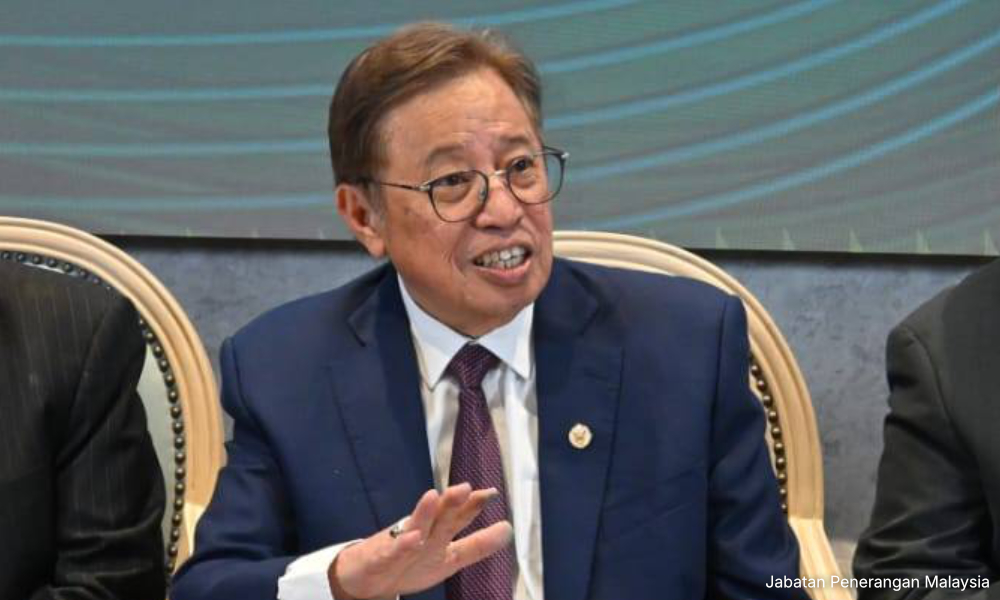
Malaysiakini : Abang Johari Openg became Sarawak’s sixth chief minister on Jan 13,
2017, following the death of the widely respected Adenan Satem.
In
2022, following amendments to the Sarawak Constitution, he assumed the
title of premier, symbolising Sarawak’s growing assertion of its
constitutional position under the Malaysia Agreement 1963 (MA63).
A
veteran leader from Parti Pesaka Bumiputera Bersatu (PBB), Abang Johari
had served in several important ministerial positions before ascending
to Sarawak’s highest office. Upon assuming leadership, he moved beyond
mere continuity.
Abang Johari Openg
While
preserving Adenan’s moderate and Sarawak-centric approach, Abang Johari
has introduced a more ambitious and forward-looking development agenda.
Under
his stewardship, Sarawak has embraced a clear and compelling vision: to
become a developed, high-income, inclusive, digitally driven, and
environmentally sustainable state by 2030.
This vision places
strong emphasis on economic prosperity, social inclusivity, renewable
energy, digital innovation, and sustainable development for the benefit
of all Sarawakians.
What makes Abang Johari’s leadership
especially significant is that it extends far beyond economic
development or political longevity. His greatest contribution may well
lie in his conscious effort to nurture a political culture that rises
above narrow communalism and promotes a shared sense of belonging among
diverse communities.
Sarawak for all Sarawakians
Unlike
many politicians in Peninsular Malaysia who continue to rely heavily on
ethnic insecurities and religious posturing to sustain political
relevance, Abang Johari has consistently projected a broader and more
inclusive vision.
He has repeatedly emphasised that Sarawak belongs to all Sarawakians regardless of ethnicity or religion.
In
September 2025, he declared: “We must firmly reject any form of
extremism or fanaticism that could jeopardise our unity. Inclusivity in
Sarawak is not merely a slogan; it’s a way of life.”
He further
stressed that the government under his leadership remains deeply
committed to honouring and celebrating Sarawak’s rich religious and
cultural diversity (Borneo Post Online, Sept 15, 2025).
These are not empty slogans. They are reflected in governance practices, institutional arrangements, and public policy.
Perhaps
the clearest example is the establishment of the Unit for Other
Religions (Unifor), which provides direct state assistance to
non-Islamic religious bodies for the construction, repair, and
maintenance of churches, temples, and other places of worship.
For
2026, the Sarawak government allocated RM120 million under Unifor to
support non-Islamic religious communities, reaffirming its commitment to
religious harmony and inclusivity (Dayak Daily, May 20, 2026).
This
initiative is profoundly significant within the Malaysian context.
While religious issues in parts of Peninsular Malaysia are often
politicised and exploited to generate division and suspicion, Sarawak
has institutionalised interfaith respect through state policy itself.
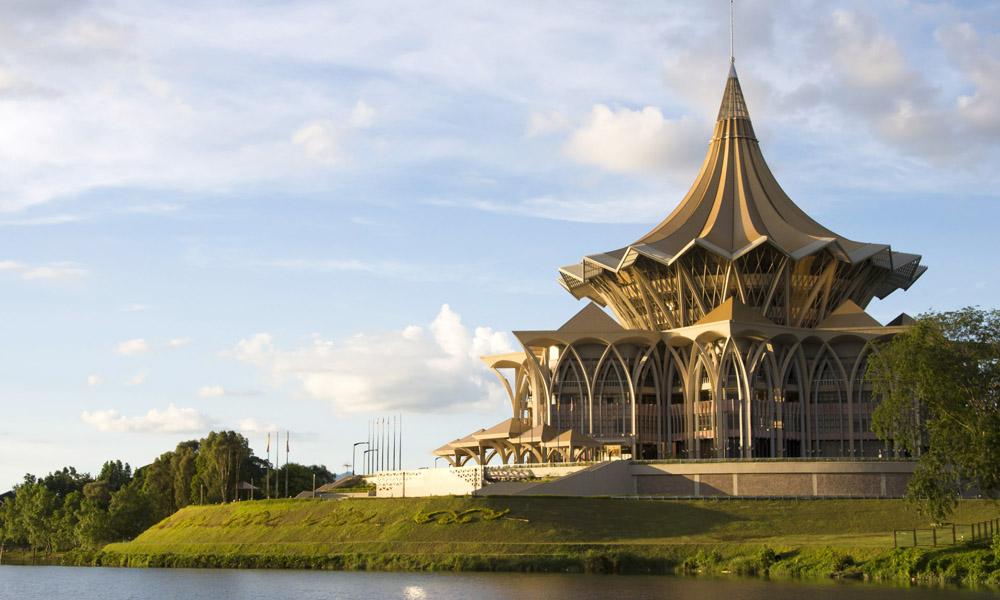
The Sarawak state assembly building in Kuching
Abang
Johari has also openly reaffirmed Sarawak’s multicultural and
multi-religious character. He affirmed that non-Muslims in Sarawak were
free to use the word “Allah” in their religious practices and
publications, wisely reiterating that politicians should focus on major
public issues instead of quarrelling over the usage of the word “Allah”(MalaysiaNow, April 6, 2021).
He
has likewise maintained Sarawak’s opposition to the implementation of
the hudud law, recognising the state’s unique social fabric and
constitutional realities.
Emergence of Bangsa Sarawak
Under
Abang Johari’s leadership, Sarawak has increasingly strengthened a
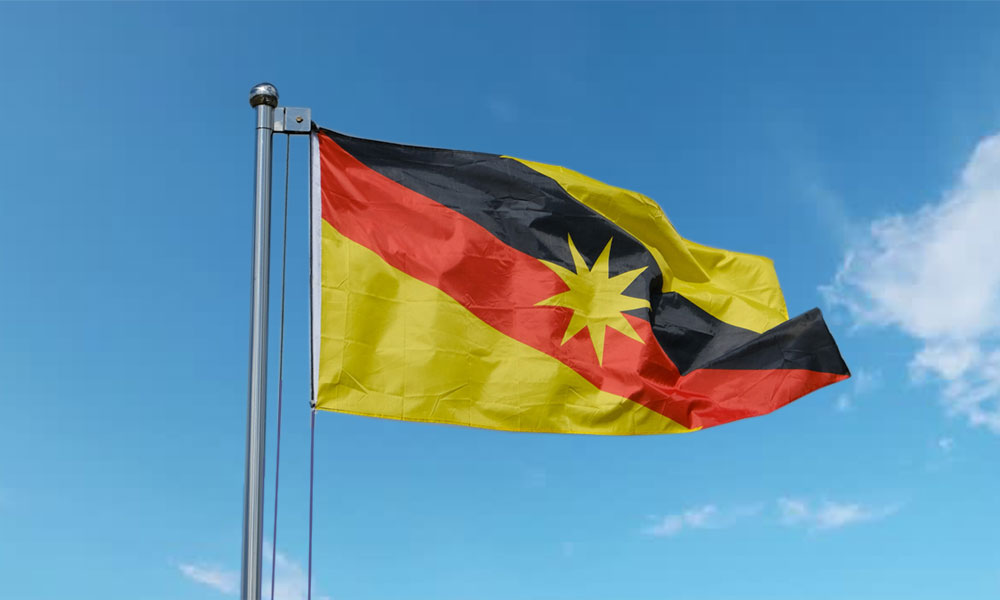
shared sense of Bangsa Sarawak - a common Sarawakian identity that
transcends ethnic and religious boundaries.
In Sarawak, Muslims
routinely attend Christmas celebrations, Christians participate in Hari
Raya gatherings, and people of different ethnic and religious
backgrounds generally interact with a degree of ease and mutual respect
that has sadly become less common in parts of Peninsular Malaysia.
Abang
Johari himself highlighted this social reality when he remarked that
“only in Sarawak do we find Christian and Muslim families living under
one roof” (Dayak Daily, Dec 24, 2022).
More recently, he
described Sarawak as a “convergence point” capable of helping move
Malaysia forward through religious harmony and inclusivity (Borneo Post Online, April 26, 2026).
Sarawak
is certainly not free from challenges. Rural development gaps,
indigenous land issues, and socioeconomic inequalities still require
continued attention.
Nevertheless, and most importantly, the state
has largely avoided the severe racial and religious bickering that
periodically destabilises Peninsular Malaysia and holds us back from
advancing into a mature society.
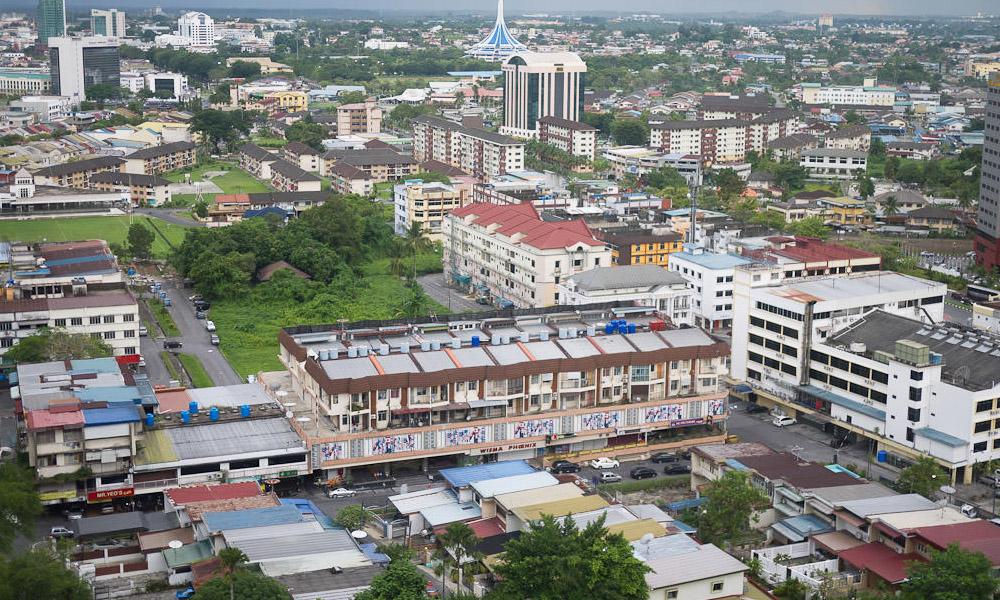
Kuching
The
Sarawak governance model did not happen accidentally. It required
political leadership that consciously refused to inflame communal
sentiments for political advantage.
Economic transformation, shared prosperity
Abang
Johari’s leadership also demonstrates that social harmony and economic
development are not mutually exclusive. On the contrary, they reinforce
one another.
Under his administration, Sarawak has embarked on one
of the most ambitious socio-economic transformation programmes in
Malaysia. His government has aggressively pursued digitalisation,
renewable energy, hydrogen technology, infrastructure development, food
security, and high-value industrial investment.
Sarawak is increasingly positioning itself as a regional leader in green energy and the digital economy.
The
results have been impressive. Sarawak first achieved high-income status
in 2022, with gross national income (GNI) per capita reaching RM56,213.
The figure rose to RM70,536 in 2023 and further to RM73,100 in 2024,
enabling Sarawak to maintain a high-income status for three consecutive
years.
State revenue also increased dramatically. In 2024, Sarawak
recorded a historic revenue of RM14.2 billion - approximately double
the figure before Abang Johari became chief minister in 2017.
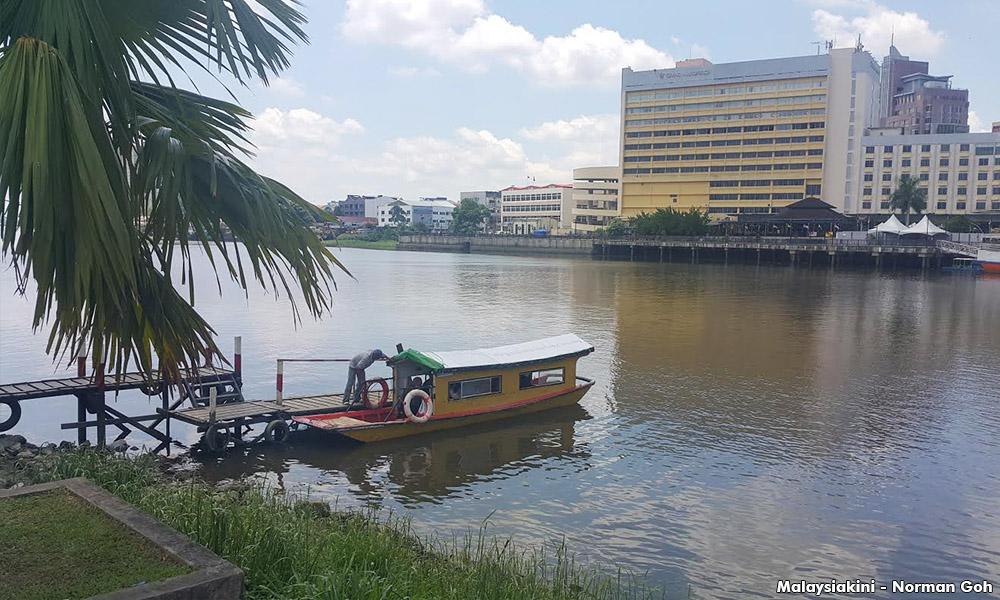
Kuching Waterfront
Infrastructure
development has accelerated significantly, particularly in rural areas
long neglected in the past. Major investments in roads, bridges, water
supply, electricity, telecommunications, and digital connectivity have
strengthened economic opportunities and improved living standards across
the state.
Sarawak has also invested heavily in education and
human capital development. Among the most notable initiatives is the
Free Tertiary Education Scheme beginning in 2026, with an initial
allocation of RM250 million.
The scheme will cover approved
programmes at state-owned higher education institutions and seeks to
expand access to quality education for Sarawakians.
These
initiatives reflect a broader philosophy of developmental inclusivity -
namely, that progress must benefit ordinary people across communities
rather than merely enrich political or economic elites.
Peninsula’s entrenched communal politics
The
contrast between Sarawak’s relatively inclusive and moderate political
culture and developments in parts of Peninsular Malaysia is difficult to
ignore.
For decades, communal politics have remained deeply
entrenched in the peninsula. Political parties and pressure groups
frequently mobilise support through ethnic insecurities, religious
exclusivism, and fear-based narratives.
Issues
involving ethnicity, religion, language, education, and even culture
are routinely politicised. Public discourse has become increasingly
polarised.
This has significantly hindered the emergence of a
genuine Bangsa Malaysia consciousness rooted in shared citizenship,
constitutionalism, justice, and common destiny.
Instead of
nurturing a common Malaysian identity, divisive politics have often
reinforced communal boundaries. Meritocracy is frequently viewed through
ethnic lenses. Religious moderation is sometimes portrayed as weakness.
Calls for inclusivity are occasionally attacked as threats to ethnic or
religious supremacy.
Such politics may produce short-term
electoral gains, but they carry enormous long-term national costs. They
weaken social cohesion, undermine trust between communities, discourage
national integration, and erode confidence among many Malaysians -
especially younger generations who increasingly aspire towards a more
inclusive and progressive national identity.
Lessons for national leaders
Sarawak under Abang Johari offers important lessons for the rest of Malaysia.
First,
nation-building must transcend communal politics. Leaders must stop
treating ethnicity and religion primarily as instruments of political
mobilisation.
Second, inclusivity must extend beyond rhetoric into
institutions, policies, and governance practices. Sarawak’s support for
all religious communities through Unifor demonstrates how governments
can actively institutionalise interfaith respect and equitable
treatment.
Third, moderation is not weakness. Sarawak’s relative
harmony and stability have strengthened social cohesion, investor
confidence, and long-term development.
Fourth, leaders must
articulate a clear and compelling shared vision. Abang Johari’s emphasis
on shared Sarawakian identity demonstrates how leaders can inspire
collective belonging without marginalising minorities.
Finally,
Malaysia’s future depends upon whether it can evolve from communal
nationhood towards civic nationhood - from narrow ethnic politics
towards a truly inclusive Bangsa Malaysia consistent with the spirit of
the Federal Constitution and the aspirations of the nation’s founders.
Paradigm shift urgently needed
Malaysia
urgently needs a paradigm shift: from communal nationhood to civic
nationhood; from religious extremism to religious harmony; from
mediocrity to excellence; and from national drift to a clear,
compelling, and unifying national vision.
Our nation is crying out
for courageous, principled, visionary, and inclusive leadership -
leadership prepared to rise above communal politics and genuinely
promote justice, moderation, shared prosperity, and national cohesion.
At
a time when parts of Peninsular Malaysia continue to grapple with
growing ethnic and religious polarisation, Sarawak’s model of inclusive
governance and shared nation-building offers more than a source of hope.
It
provides a practical example of how moderation, mutual respect,
equitable treatment, and a common civic identity can help build the
Bangsa Malaysia we have long aspired to achieve.